
Electric diaphragm pumps are widely used across industries due to their efficiency, versatility, and ability to handle various fluids. Understanding how these pumps function can help users select the right model for their applications. This article breaks down the working principles, key components, and advantages of electric diaphragm pumps.
An electric diaphragm pump is a type of positive displacement pump that moves fluids using a flexible diaphragm powered by an electric motor. Unlike traditional pumps, it does not rely on impellers or pistons, making it ideal for handling sensitive, viscous, or abrasive liquids.
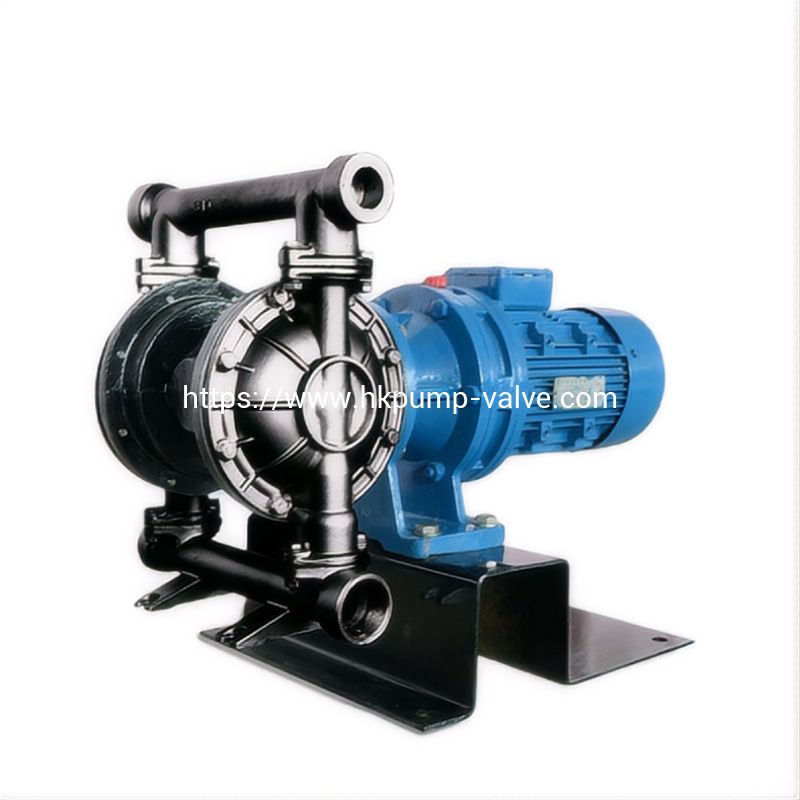
A flexible membrane that expands and contracts to move fluid.
Typically made from materials like rubber, PTFE, or elastomers for chemical resistance.
Provides consistent and reliable power to drive the diaphragm.
Eliminates the need for compressed air, making the pump energy-efficient.
Two chambers separated by the diaphragm.
Control the fluid intake and output during each cycle.
Ensure one-way flow of liquid, preventing backflow.
Located at the inlet and outlet ports of the pump.
The diaphragm moves outward, creating a vacuum in the pump chamber.
This vacuum opens the inlet valve, allowing fluid to enter.
The diaphragm moves inward, compressing the fluid.
The increased pressure closes the inlet valve and opens the outlet valve.
Fluid is pushed out through the discharge port.
The process repeats in a continuous cycle.
The motor drives the diaphragm at a controlled rate, ensuring smooth fluid flow.
Uses electricity instead of compressed air, reducing energy consumption.
Handles a wide range of fluids, including acids, solvents, and slurries.
Can start without manual priming, even with dry suction conditions.
Fewer moving parts reduce wear and tear.
No mechanical seals, minimizing leakage risks.
Gentle pumping action prevents damage to shear-sensitive liquids.
Electric diaphragm pumps provide a reliable, efficient, and versatile solution for fluid handling in various industries. Their unique operation, minimal maintenance requirements, and ability to handle diverse liquids make them a preferred choice for many applications.
Copyright:@2020-2021

Comments Please sign in or sign up to post.
0
0 of 500 characters used