
Shell and tube heat exchangers are among the most commonly used heat transfer devices. They efficiently transfer heat between two fluids without mixing them. Their design ensures durability, reliability, and high thermal efficiency in industrial applications.
The shell is the outer casing that holds the internal tubes. It provides structural support and directs the fluid flow around the tubes.
The tubes carry the second fluid. Heat exchange occurs as one fluid flows inside the tubes and the other around them.
A collection of tubes arranged inside the shell. It includes straight or U-shaped tubes to optimize heat transfer.
Baffles improve efficiency by directing fluid flow across the tubes. This increases turbulence and enhances heat transfer.
Tube sheets hold the tubes in place and separate the fluids. They prevent leakage and ensure stability.
End channels distribute fluids into the tubes. Nozzles control fluid entry and exit, regulating heat transfer efficiency.
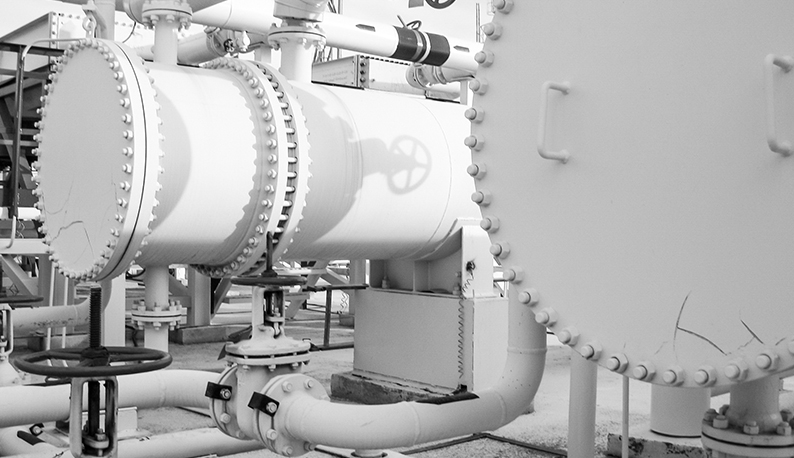
One fluid enters the shell while the other moves through the tubes. They flow in opposite or parallel directions to maximize heat transfer.
As the hot fluid flows, it transfers heat to the cooler fluid through the tube walls. The temperature difference drives this exchange.
After heat transfer, the fluids exit the exchanger at different temperatures. The process ensures energy efficiency and optimal thermal regulation.
This type has stationary tube sheets. It is simple, cost-effective, and ideal for clean fluids.
A U-shaped tube design allows for thermal expansion. It is suitable for applications with high-temperature variations.
The floating head design accommodates thermal expansion and simplifies tube cleaning. It is used in industries dealing with fouling fluids.
High Efficiency: Maximizes heat transfer with minimal energy loss.
Durability: Built to withstand high pressures and extreme temperatures.
Versatility: Works with a wide range of fluids, including gases and liquids.
Easy Maintenance: Designs allow for simple cleaning and repairs.
Power Plants: Used in cooling and steam generation processes.
Petrochemical Industry: Facilitates oil refining and chemical processing.
HVAC Systems: Regulates temperature in heating and cooling systems.
Marine Industry: Provides thermal regulation for ship engines.
Shell and tube heat exchangers play a crucial role in heat transfer applications. Their efficiency, durability, and adaptability make them indispensable in various industries. With proper maintenance, they ensure optimal performance and long service life.
Previous: Key Considerations When Choosing Ducted Dehumidifiers
Next: China Investment Casting Unmasked: 3 Tricks They Don’t Want You to Know
Copyright:@2020-2021

Comments Please sign in or sign up to post.
0
0 of 500 characters used