
With low lumber costs, many developers are now opting for wood-framed construction. When selecting a floor framing system, you’ll likely encounter two popular options: I-Joists and Wood Trusses. Both systems come with unique features, and your choice will have a significant impact on your project's design, efficiency, and costs. Below, we break down the key characteristics of each system to help you make an informed decision.
I-Joists are engineered wood structural members with an “I” shape, designed to be strong, lightweight, and meet strict performance standards. These versatile joists are available in a wide range of depths, typically ranging from 9 ½″ to 24″, and are ideal for supporting floor loads while maintaining minimal weight.
Wood trusses are a type of structural framework built using a triangular arrangement of shorter lumber pieces. They distribute loads efficiently to specific reaction points, ensuring strength and stability for the structure. Trusses are typically spaced at intervals such as 12″, 16″, 19.2″, and 24″ on center, with 16″ being the most common spacing and 12″ offering the longest span capabilities.
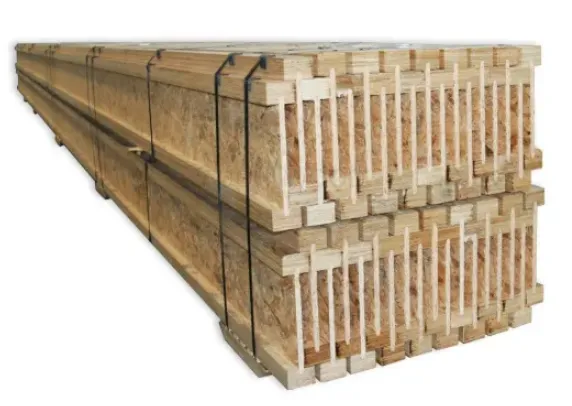
When deciding between I-Joists and Wood Trusses for your construction project, several important elements should be considered. Below is a breakdown of critical factors to evaluate:
- Wood Floor Trusses are generally more efficient than I-Joists for running MEP (Mechanical, Electrical, and Plumbing) components, including HVAC ducts, electrical cables/conduits, domestic water, sanitary, and sprinkler piping, through their truss openings.
- Open web floor trusses often add height to buildings because they are typically used for longer spans, leading to deeper depths.
- This additional height can be mitigated if ductwork is run between the trusses rather than beneath them, which is required when using I-Joists.
- Open web floor trusses allow for footings and bearing walls to be placed along long exterior walls and corridor walls, reducing the number of footings and bearing walls overall. However, this depends on the specific design of the project.
- For projects with longer spans, open web trusses can reduce the need for structural steel over open spaces compared to I-Joists.
- Wood Trusses must be compartmentalized, insulated, or equipped with sprinklers, which can increase the overall cost of the project. Most trusses are now equipped with sprinklers and still require insulation per IBC 718.2.
- I-Joist timbers, on the other hand, require less insulation because of their shallower depth.
- To ensure proper sound insulation, resilient channels will almost always need to be installed on the underside of both Trusses and I-Joists.
- Trusses, due to their increased air cavity, tend to perform better in terms of Impact Insulation Class (IIC) ratings.
- Wood Trusses allow for longer spans compared to I-Joists, which can be advantageous for certain design layouts and structural needs.
- I-Joists are much easier for contractors to handle and install manually.
- Wood Trusses, however, typically require the use of a crane to lift them into place, which can increase labor and equipment costs.
The costs of these systems depend on a variety of factors, including:
- Depth, width, wood species, and length
- Transportation costs to the construction site
The choice between wood I-Joists and Wood Trusses has significant cost implications, as it affects areas such as insulation, steel framing, and foundation costs. Therefore, comparing the two involves far more than a simple A vs. B comparison. Additionally, costs vary by location and are influenced by factors like suppliers and manufacturers.
Choosing the right system requires careful consideration of these elements to ensure the most efficient, cost-effective, and design-appropriate solution for your project.
Previous: Composite Tensile Gabion: A Modern Solution for Soil Reinforcement and Slope Protection
Next: Incorporating Marble Animal Sculptures Into Your Home Decor
Copyright:@2020-2021

Comments Please sign in or sign up to post.
0
0 of 500 characters used