
The ship loader is widely used at port terminals, bulk logistics hubs, and mining and metallurgical industry docks. It is suitable for handling a variety of materials such as coal, ore, and grain. With features including high throughput capacity, precise loading control, strong adaptability, and environmental performance, the ship loader is capable of performing diverse vessel loading operations, significantly enhancing overall logistics efficiency.
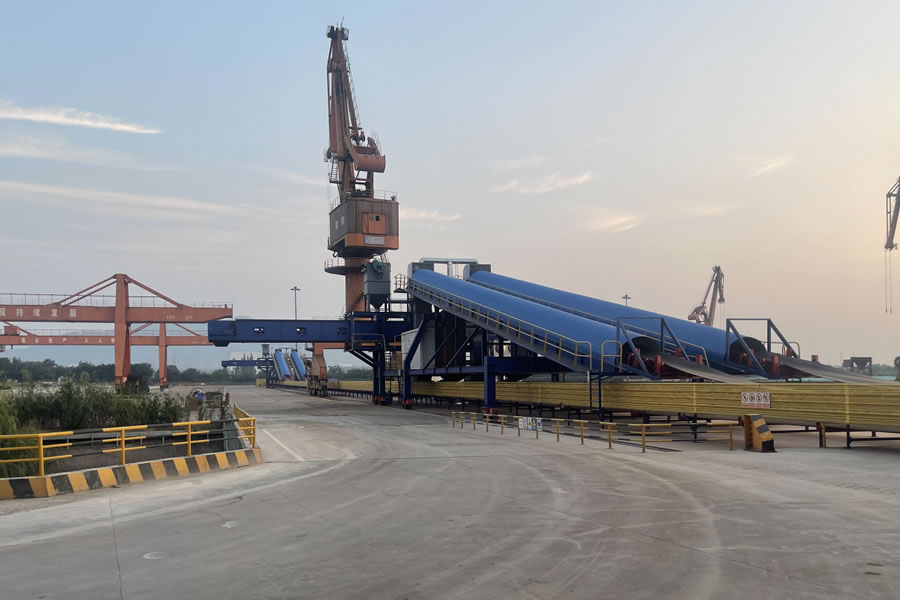
Port Terminals
Coal Handling:
At coal-dedicated terminals, ship loaders play a vital role. Large volumes of coal are transported from mines to port stockyards via rail, road, or belt conveyors, and then loaded onto bulk carriers using ship loaders. For example, in major coal hub ports like Qinhuangdao, ship loaders handle thousands of tons daily, shipping coal to power plants and steel mills both domestically and internationally.
Ore Loading:
Ship loaders are essential for loading both metallic ores (such as iron, copper, and bauxite) and non-metallic ores (like limestone and silica sand). After mining and processing, the ore is delivered to ports, where ship loaders transfer it to vessels based on required flow rates and loading patterns.
Grain Transfer:
At grain terminals, ship loaders are used to load wheat, corn, rice, and other grains. Grains are transported from silos to the ship loader via conveyors, which then evenly distributes the grain into the ship’s hold, according to the vessel’s capacity and loading requirements.
Bulk Logistics Industry
Chemical Raw Materials:
In chemical ports, ship loaders are used for loading powdered, granular, or lump chemical raw materials safely and efficiently.
Building Material Loading:
Ship loaders are also used for bulk construction materials such as cement, sand, and gravel. At ports near material production facilities, these loaders transfer construction materials to vessels, supplying coastal and inland construction projects. For example, in coastal cities, ship loaders at construction material terminals supply large quantities of raw materials for infrastructure and real estate development.
Mining & Metallurgy Industry (Private Terminals)
Mining Terminals:
At mine-owned port facilities, ship loaders directly load extracted ores onto vessels, reducing intermediate transport steps and increasing efficiency. For instance, some large mines in Australia use in-house port ship loaders to ship ore to overseas markets or domestic processing plants.
Metallurgical Raw Material Loading:
Metallurgical plants such as steel and aluminum factories often require large quantities of ores and additives. These materials are often transported via waterways, with ship loaders at plant-affiliated ports handling bulk loading. Additionally, ship loaders can be used to transport recyclable byproducts like slag for further use (e.g., in construction materials).
Previous: None.
Copyright:@2020-2021

Comments Please sign in or sign up to post.
0
0 of 500 characters used