
Hydroxypropyl Methylcellulose (HPMC) has emerged as a critical additive in modern tile adhesive formulations, revolutionizing construction practices globally. As a non-ionic cellulose ether derived from natural cellulose, HPMC provides unique rheological and hydration properties essential for high-performance tile bonding. The global demand for HPMC in construction chemicals grew by 6.2% annually between 2020-2024, driven by its ability to improve workability, adhesion, and durability in ceramic tile installations.
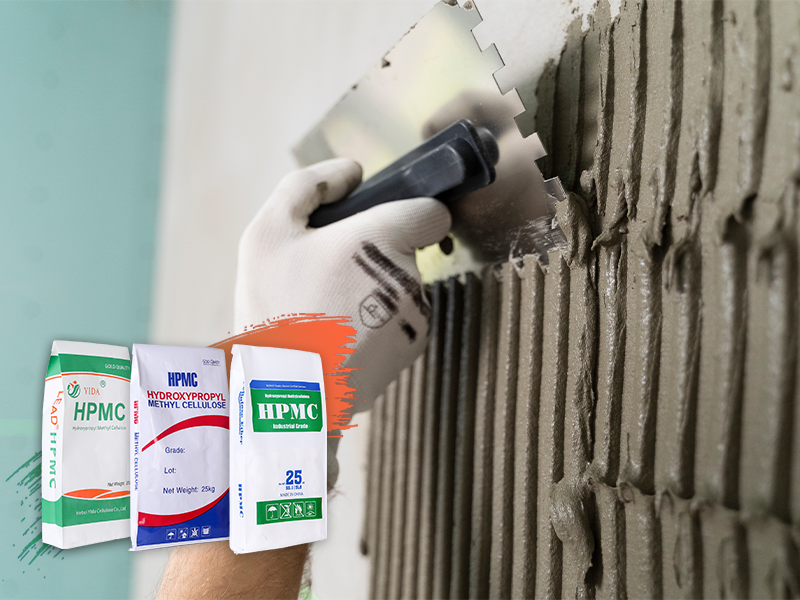
Tile adhesives formulated with HPMC exhibit superior open time, slip resistance, and water retention compared to traditional cement-based mortars. This polymer's thermoplastic nature allows it to form a continuous film upon hydration, bridging micro-gaps between substrates and tiles while maintaining flexibility under mechanical stress. Modern formulations leverage HPMC's compatibility with other additives like redispersible polymers and lignosulfonates to create multi-functional adhesives suitable for diverse environments.
The chemical structure of HPMC—featuring methyl and hydroxypropyl substituents—determines its solubility and performance characteristics. High-methoxy (HM) grades with low hydroxypropyl content excel in cold-weather applications, while high-hydroxypropyl (HP) variants offer enhanced water retention in hot climates. This structural versatility enables manufacturers to tailor HPMC properties to specific regional construction requirements.
Water Retention Enhancement
HPMC's hydrophilic groups bind free water molecules, preventing premature hydration of cementitious components. This mechanism ensures optimal curing conditions by maintaining workable consistency for extended periods. Typical water retention rates increase by 15-20% when using HPMC compared to conventional formulations.
Rheology Modification
The polymer's pseudoplastic flow behavior imparts thixotropic properties to tile adhesives. This allows easy trowel application while maintaining non-sag characteristics on vertical surfaces. At rest, HPMC-formulated adhesives maintain viscosity above 50,000 mPa·s, reducing tile slippage during installation.
Adhesion Promotion
Film-forming capabilities create mechanical interlocking at the tile-substrate interface. HPMC films exhibit tensile adhesion strengths exceeding 0.5 MPa when cured, significantly higher than unmodified cement mortars.
Shrinkage Control
HPMC reduces autogenous shrinkage in cement matrices by 30-40%, minimizing crack formation and debonding risks. This property proves critical for large-format tile installations prone to differential movement.
| Property | Unmodified Mortar | HPMC-Modified Adhesive | Improvement Rate |
|---|---|---|---|
| Open Time (minutes) | 20-25 | 45-60 | +125% |
| Slip Resistance (mm) | 1.2-1.8 | 0.3-0.7 | -60% |
| Water Retention (%) | 82-86 | 94-98 | +14% |
| Flexural Strength (MPa) | 2.1-2.6 | 3.8-4.5 | +77% |
These improvements translate to tangible construction benefits:
Reduced Labor Costs: Extended open time allows larger installation areas per batch
Enhanced Safety: Improved slip resistance minimizes tile displacement risks
Longer Service Life: Reduced shrinkage and improved adhesion extend maintenance cycles
Versatility: Formulations meet requirements for porcelain, stone, and glass mosaic applications
Viscosity Grading
Low-viscosity (5-10,000 mPa·s) grades enhance workability without compromising strength, while high-viscosity (100-150,000 mPa·s) variants provide superior water retention. The optimal viscosity range for most tile adhesives falls between 40-80,000 mPa·s when measured at 2% concentration.
Particle Size Distribution
Finely ground HPMC (<75 microns) ensures rapid dispersion and homogeneous mixing. Coarse particles may cause agglomeration, leading to inconsistent adhesive properties.
Substitution Levels
Typical dosage rates range from 0.2-0.5% by cement weight. Exceeding 0.7% may induce excessive stickiness without proportional performance gains.
Environmental Compatibility
Cold-water soluble grades simplify mixing procedures, while hot-water soluble options offer cost advantages for pre-mixed dry mortars.
The tile adhesive sector is witnessing three parallel trends shaping HPMC development:
Sustainability Focus: Third-generation HPMC grades using solvent-free manufacturing processes reduce carbon footprints by 25% compared to traditional production methods.
Performance Specialization: Nano-modified HPMC variants with enhanced adhesion to low-porosity substrates (e.g., polished porcelain) are gaining market share.
Regulatory Compliance: Formulations meeting EN 12004 standards for reaction-to-fire (Class A1) and volatile organic compound (VOC) emissions (<5 g/L) are becoming mandatory in European markets.
Future innovations will likely involve:
Bio-based HPMC derivatives using agricultural waste cellulose
Smart polymers with temperature-responsive characteristics
Hybrid systems combining HPMC with graphene oxide for ultra-high-strength applications
Contact us today to explore premium HPMC solutions engineered for superior tile bonding performance across diverse construction environments.
Previous: What is NPK fertilizer, and why is it so important?
Next: None.
Copyright:@2020-2021

Comments Please sign in or sign up to post.
0
0 of 500 characters used