
An induction furnace capacitor is a specialized device used to store and release electrical energy within an induction furnace system. It is designed to handle high electrical loads and improve the overall efficiency of the furnace. The main components of these capacitors include dielectric materials, metal plates, and insulating materials.
The passive induction coil is connected in parallel with a capacitor to form an L-C tank circuit. A source of ac current is provided to the active induction coil to produce a magnetic field that inductively heats and melts an electrically conductive material in the crucible.
The induction furnace capacitor are applicable for indoor use and intended to be used for power factor correction in induction heating, melting, stirring or casting furnaces; also for tune special furnace circuits.
The working principle of an induction furnace capacitor involves the storage and discharge of electrical energy. When the induction furnace is in operation, the capacitor charges up during the low power phase and discharges during the high power phase. This process helps to stabilize the electrical supply and reduce fluctuations, ensuring a steady and efficient operation of the furnace.
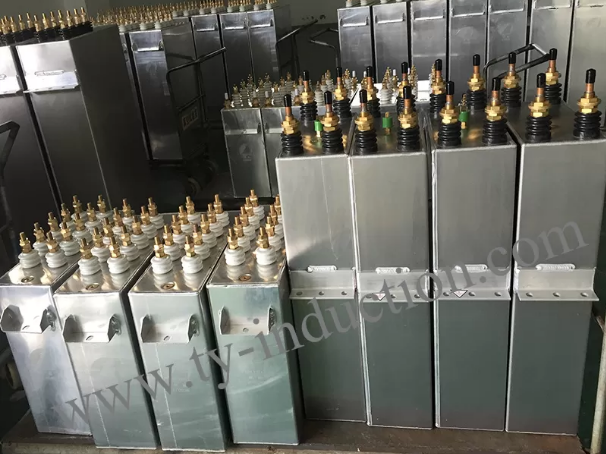
Induction furnace capacitors come in various types, each suited for different voltage levels:
These are used in applications where the voltage requirement is relatively low. They are ideal for small to medium-sized induction furnaces.
High voltage capacitors are designed for large industrial furnaces that require a significant amount of electrical power. They are built to handle high voltage levels and provide efficient energy storage.
Medium voltage capacitors are used in systems that require moderate voltage levels. They offer a balance between capacity and voltage handling.
Induction furnace capacitors are used in various industrial processes, including:
In steel manufacturing, these capacitors help in melting and refining steel by providing a stable power supply to the induction furnace.
Capacitors are essential in melting non-ferrous metals, such as aluminum and copper, ensuring efficient and uniform melting.
During heat treatment, capacitors help maintain the required temperature and energy levels, improving the quality of the treated metals.
Induction furnace capacitors offer several benefits that enhance the efficiency and performance of industrial operations.
One of the primary advantages is energy efficiency. By reducing power consumption, capacitors help industries save on energy costs. They ensure that the furnace operates at optimal levels, minimizing energy wastage.
The power factor is a measure of how effectively electrical power is being used. Induction furnace capacitors improve the power factor by storing and releasing energy as needed, thus ensuring that the furnace operates efficiently.
Capacitors enhance the overall performance of the induction furnace system by providing stability and reliability. They reduce electrical losses and ensure a consistent power supply, which is crucial for high-quality production.
Proper installation and maintenance are essential for the optimal performance of induction furnace capacitors.
Regular Maintenance Tips: Regularly inspect the capacitors for any signs of wear or damage. Clean the components to prevent dust buildup and ensure proper ventilation to avoid overheating.
Despite their robustness, induction furnace capacitors can face issues such as overheating, leakage, or electrical faults.
Identifying Common Problems: Regular checks can help identify common issues such as unusual noises, overheating, or visible damage to the capacitors.
Induction furnace capacitors are indispensable components in industrial applications, particularly in metal processing. They enhance energy efficiency, improve power factor, and ensure the stable operation of induction furnaces. For industries looking to optimize their operations, selecting the right capacitor is crucial.
Previous: How much do you know about the filter press feed pump?
Next: Is an Automatic Mask Machine the Key to Efficient and Scalable Mask Production?
Copyright:@2020-2021

Comments Please sign in or sign up to post.
0
0 of 500 characters used