
A lifting tripod lifts heavy items vertically. It works in places where cranes cannot go. People use it in wells, tanks, and pits. It is also used in fields, farms, and small work sites. A tripod is light, folds easily, and sets up fast. It helps when lifting tools, parts, or materials.
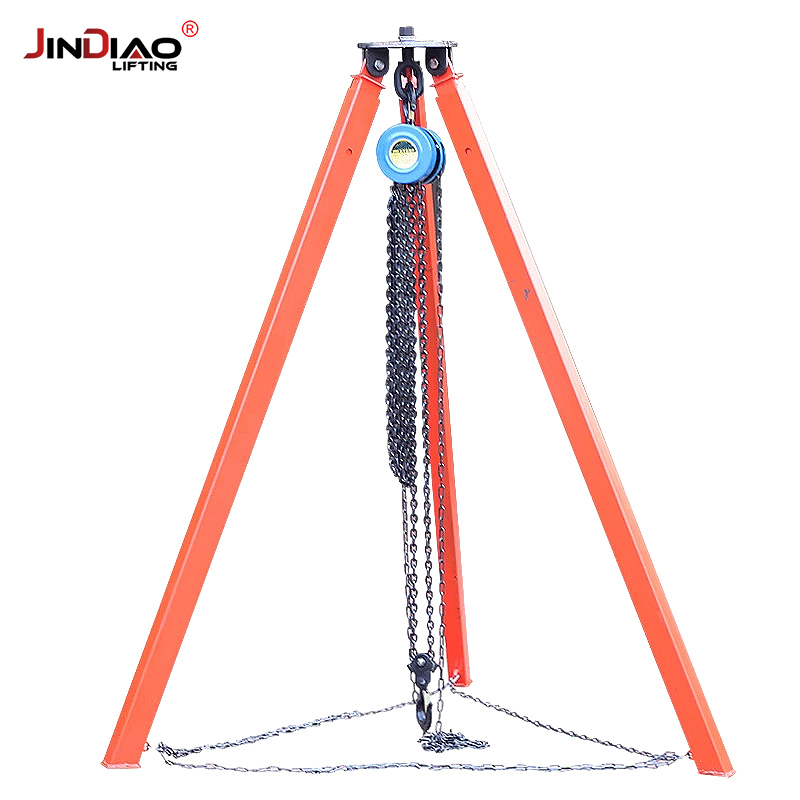
The lifting tripod has three main parts: the legs, the head, and the lifting point. The legs give support. The head holds them together. The center is where the pulley or hoist connects. Chains or belts tie the legs for safety. The feet need grip to prevent slipping.
Use strong metals like steel or aluminum. Steel is strong and stable. Aluminum is lighter but also strong. The tripod head should be forged steel. Support chains must hold tension. Choose bolts and joints that do not loosen. Avoid plastic or weak parts. Good material is key to safety.
Decide the tripod height. Most tripods are 2 to 3 meters. Cut three equal steel pipes. Mark and drill holes near the top ends. Use a saw that cuts cleanly. Smooth all sharp edges. Each leg must be the same length. Precision makes the tripod stable.
The head joins the legs. Cut a round or triangle steel plate. Drill three holes for hinges. In the center, fix a bolt or ring for lifting. Weld or tighten it firmly. Add brackets for each leg. Each bracket must swing but not wiggle. The head must handle the full load.
Attach the legs with strong pins or bolts. Test if the legs move freely. They must open wide and stay firm. Add washers to reduce friction. Pull the legs apart to check balance. They should form a strong base. Tighten all fasteners after setup.
Add chains or straps between the legs. Fix them halfway down the legs. Join the three chains to a ground ring. This stops the legs from sliding. Adjust the tension for balance. For soft ground, use stakes. Flat ground gives better support.
Choose a hoist or pulley that matches your load. Fix it to the tripod head. The hook must be aligned and centered. Use shackles for easy change. Make sure the lifting rope or cable moves freely. It should not touch the legs. The hoist must hang straight.
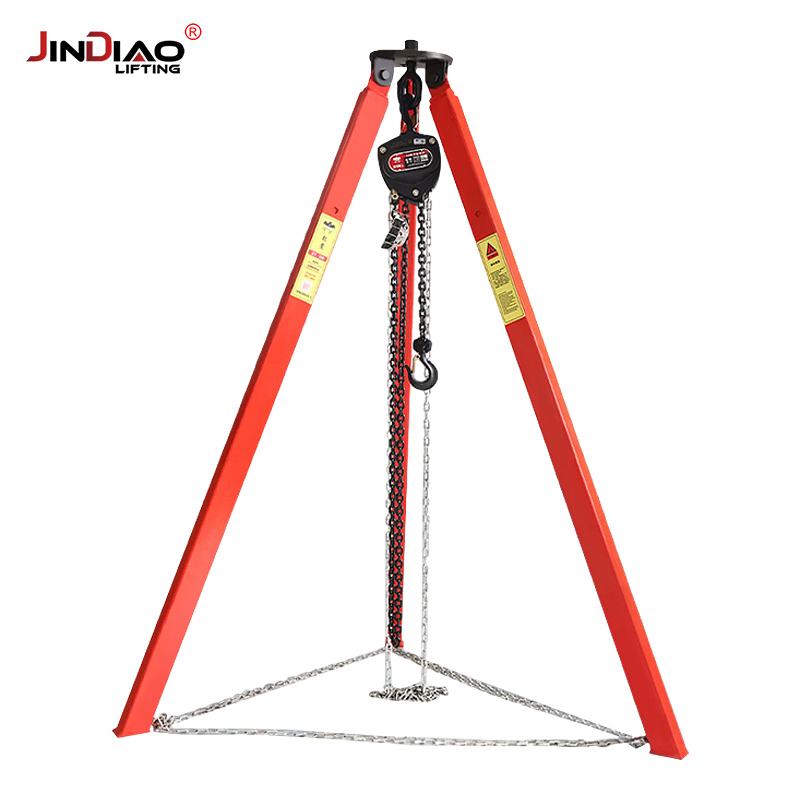
Test the tripod before real use. Start with a light object. Lift and lower slowly. Watch for any shift or bend. If stable, raise the load slowly. Never lift people. Stay clear during the test. Do not exceed the safe weight. Safety always comes first.
Never use weak or thin pipes. Do not skip chains or base support. Avoid uneven ground. Do not overload the tripod. Never tie loads with poor ropes. Do not use damaged hoists. Loose bolts can fail. Fix all parts tight before lifting.
Check the tripod before and after use. Look for rust or cracks. Tighten all bolts. Replace worn chains. Clean the pulley often. Keep it dry when stored. Oil the joints to avoid rust. A clean tripod works better and lasts longer.
Tripods are perfect for remote work. Use them in wells, mines, pits, or open sites. They help in rescue jobs. They work where big machines cannot go. For field jobs, they save space and time. You can fold and carry them easily.
Add height with telescopic legs. Use rubber feet indoors. Add wheels to move fast. Paint the tripod to stop rust. Mark the safe load limit on it. Use folding joints to save space. Customize it to fit your lifting needs.
Buying one costs more. Building your own saves money. You choose the parts. You control the size. Repairs are easy. It fits your own job. A homemade tripod gives full value. It lasts long if built right.
Always wear safety gear. Use gloves, glasses, and steel shoes. Keep tools sharp and clean. Do not rush drilling or welding. Work in a clear space. Test each part. Ask help for heavy parts. Build safe or don’t build at all.
Yes, one skilled person can build it. But lifting and testing need help. Use a stand to hold legs. Test with help for safety. Two people are better for large models. For small tripods, one person can do most tasks alone.
Fold the legs for transport. Tie them together. Use a small cart for moving. Wrap the head in cloth to avoid scratches. Keep the pulley in a box. Store in dry space. Clean before storing. Good storage avoids rust and wear.
Before first use, do a full check. Look at all bolts. Check for wobble. Move each leg. Test the pulley. Pull the chains. Adjust if needed. A full check prevents damage. Only lift after full setup check.
A lifting tripod is simple but strong. You can build one with care and planning. Choose strong parts. Follow each step. Test before use. Use it only on stable ground. Build safe, lift smart. With your own tripod, many lifting jobs become easy.
Previous: What is automatic cooking?
Next: Top 7 Large Closed Laser Marking Machines for Industrial Precision in 2025
Copyright:@2020-2021

Comments Please sign in or sign up to post.
0
0 of 500 characters used