
Plastic injection molding machines are the backbone of modern manufacturing, powering industries from automotive and aerospace to medical devices and consumer electronics. With unmatched precision, speed, and scalability, these machines have transformed the way plastic components are produced worldwide. In this comprehensive guide, we will explore every aspect of plastic injection molding machines, including their working principles, types, benefits, and industrial applications.
A plastic injection molding machine is a specialized manufacturing device designed to produce plastic parts by injecting molten polymer into a mold cavity. Once cooled, the mold opens, and the solidified product is ejected. This process allows for the mass production of complex, high-strength, and dimensionally accurate components at low cost.
The machines operate through three core elements:
Injection Unit – responsible for melting and injecting plastic material.
Clamping Unit – secures the mold and withstands the injection pressure.
Mold Tooling – defines the final shape of the product.
The process of plastic injection molding follows a systematic cycle:
Clamping – The mold halves are tightly clamped by the machine.
Injection – Plastic pellets are fed into the injection unit, melted, and forced into the mold cavity under high pressure.
Cooling – The plastic solidifies inside the mold as it cools.
Ejection – The mold opens, and ejector pins release the finished part.
This cycle repeats rapidly, allowing manufacturers to produce thousands of identical products with minimal variation.
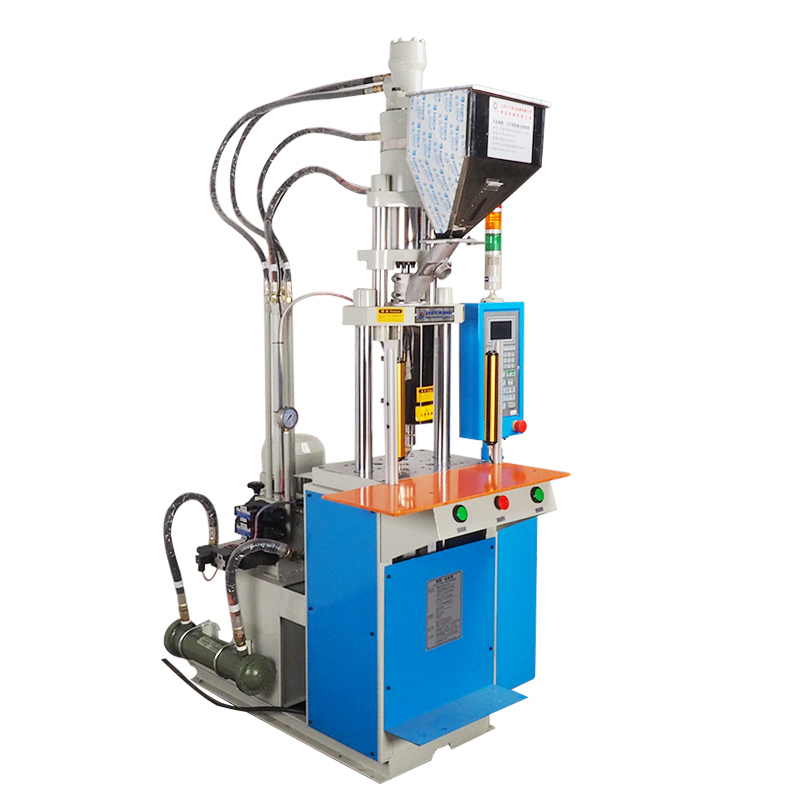
There are several types of machines, each suited for different industries and applications:
Hydraulic systems use fluid pressure to operate the clamping and injection mechanisms. Known for durability and power, they are ideal for producing large and thick plastic components.
Fully electric machines rely on servo motors for all movements. They deliver precision, energy efficiency, and clean operation, making them highly suitable for medical and electronic parts where accuracy is crucial.
Combining the strengths of hydraulic and electric technologies, hybrid machines provide powerful clamping with energy savings, offering the best balance between cost and efficiency.
A modern injection molding machine consists of several advanced systems:
Hopper – stores and feeds raw plastic granules.
Heater Bands – melt the plastic material.
Screw and Barrel – mix, compress, and inject molten plastic.
Clamping System – applies pressure to keep mold closed during injection.
Control Panel – allows operators to program cycle time, temperature, and pressure.
Each component plays a vital role in ensuring precision, productivity, and consistent quality.
The widespread use of these machines is due to their remarkable advantages:
High Production Efficiency – Capable of producing thousands of parts per hour.
Design Flexibility – Enables manufacturing of complex shapes with fine details.
Material Versatility – Works with a wide range of thermoplastics and thermosetting materials.
Cost-Effectiveness – Low labor costs and minimal material waste.
Superior Strength – Ability to reinforce parts with fillers for higher durability.
Scalability – Suitable for both small runs and high-volume mass production.
These machines are integral to many industries:
Automotive Industry – Producing dashboards, bumpers, and interior trims.
Medical Devices – Manufacturing syringes, surgical instruments, and housings for diagnostic equipment.
Consumer Goods – Creating toys, packaging materials, and household items.
Electronics – Used for connectors, housings, and precision components.
Aerospace and Defense – Lightweight, high-strength parts for aircraft and defense systems.
When selecting a machine, manufacturers must evaluate several factors:
Clamping Force – Determines the maximum size of the mold.
Injection Capacity – Measured in grams or ounces of plastic per cycle.
Energy Consumption – Important for cost efficiency and sustainability.
Automation Compatibility – Ability to integrate with robots and conveyors.
Maintenance Requirements – Ensuring long-term reliability and reduced downtime.
The future of injection molding technology is shaped by innovation and sustainability:
Smart Manufacturing – Integration with IoT and AI for predictive maintenance.
Eco-Friendly Materials – Growing use of biodegradable plastics.
Energy Efficiency – Advanced electric and hybrid machines reducing carbon footprint.
Micro Molding – Development of ultra-precise machines for medical and electronic micro-components.
These advancements highlight the growing demand for sustainable, efficient, and intelligent manufacturing solutions.
To ensure peak performance, regular maintenance is essential:
Lubricate moving parts to reduce wear.
Monitor heating systems for consistent temperature control.
Inspect clamping units for signs of stress or damage.
Calibrate controls periodically to maintain accuracy.
Use high-quality raw materials to minimize contamination and defects.
By following best practices, manufacturers can extend machine lifespan and maximize productivity.
The plastic injection molding machine has revolutionized global manufacturing, enabling industries to produce complex, durable, and cost-effective plastic components at scale. With advancements in electric and hybrid technologies, coupled with automation and sustainability initiatives, these machines continue to drive innovation across sectors.
By investing in the right equipment and maintaining it properly, businesses can achieve superior efficiency, product quality, and profitability.
Copyright:@2020-2021

Comments Please sign in or sign up to post.
0
0 of 500 characters used