
In modern architecture and interior design, accessibility is no longer optional — it’s a standard. An ADA Sign (Americans with Disabilities Act Sign) plays a crucial role in creating inclusive environments by providing clear, readable, and tactile information to all individuals, including those with visual impairments.
An ADA Sign refers to a sign designed in accordance with the Americans with Disabilities Act (ADA) standards. These signs help people with disabilities navigate public buildings safely and independently. They are commonly used in offices, hospitals, schools, hotels, government buildings, and other public facilities.
Typical ADA signs include:
Room identification signs (e.g., Restroom, Conference Room, Exit)
Directional signs
Floor and elevator signs
Emergency and safety signage
Braille and Tactile Text
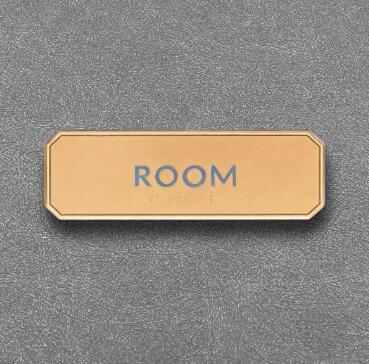
ADA signs include Grade 2 Braille and raised letters for visually impaired individuals to read by touch.
High Contrast and Non-Glare Finish
The color contrast between text and background ensures visibility, while non-glare materials prevent reflection under lighting.
Standardized Font and Size
ADA regulations require simple sans-serif fonts and consistent character height for easy readability.
Durable Materials
Most ADA signs are made from acrylic, aluminum, stainless steel, or photopolymer, designed to resist fading, scratching, and impact.
Corporate Buildings: Door and directional signage for office navigation.
Hospitals and Clinics: Room ID, restroom, and emergency exit markers.
Educational Institutions: Classroom identification and accessible route guides.
Hospitality and Retail Spaces: Customer information and service accessibility signs.
Public Infrastructure: Airports, train stations, and government facilities.
Legal Compliance: Meets U.S. federal accessibility requirements.
Inclusive Design: Makes environments welcoming to everyone.
Improved Navigation: Helps all visitors locate rooms or exits easily.
Professional Image: Reflects a company’s commitment to safety and equality.
Long-Term Value: Durable, low-maintenance signage for permanent installations.
Modern manufacturers offer custom ADA signs that combine functionality with aesthetics. Clients can choose materials, colors, and branding elements while maintaining compliance with ADA standards. Laser engraving, UV printing, and CNC routing allow for precision design and long-lasting quality.
Whether for a new construction project or facility renovation, 3d printed ADA signs provide the perfect balance between regulatory compliance and architectural design.
An ADA Sign is more than just a label — it’s a statement of accessibility, safety, and respect for all users. By investing in compliant and well-designed ADA signage, organizations can enhance their professional image, meet legal standards, and contribute to a more inclusive environment.
For builders, architects, and property managers, Rowmark Braille ADA Signs are not just a requirement — they’re a vital part of responsible and human-centered design.
Previous: None.
Next: Safety Gumboots: Essential Foot Protection for Industrial and Outdoor Work
Copyright:@2020-2021

Comments Please sign in or sign up to post.
0
0 of 500 characters used