
https://www.chinayidahpmc.com/water-reducing-agent-pce-for-concrete-foundation.html
Concrete foundations form the backbone of modern infrastructure, from residential buildings to industrial complexes. Their durability, strength, and workability directly impact project timelines, costs, and long-term performance. However, achieving optimal concrete properties while minimizing environmental impact remains a challenge. This is where Polycarboxylate Ether (PCE)-based water reducing agents emerge as a game-changer. Designed to reduce water content by up to 30% without compromising flow or strength, PCE admixtures are revolutionizing concrete foundation design. This article explores the science, benefits, and applications of PCE for concrete foundations, offering actionable insights for engineers, contractors, and construction professionals.
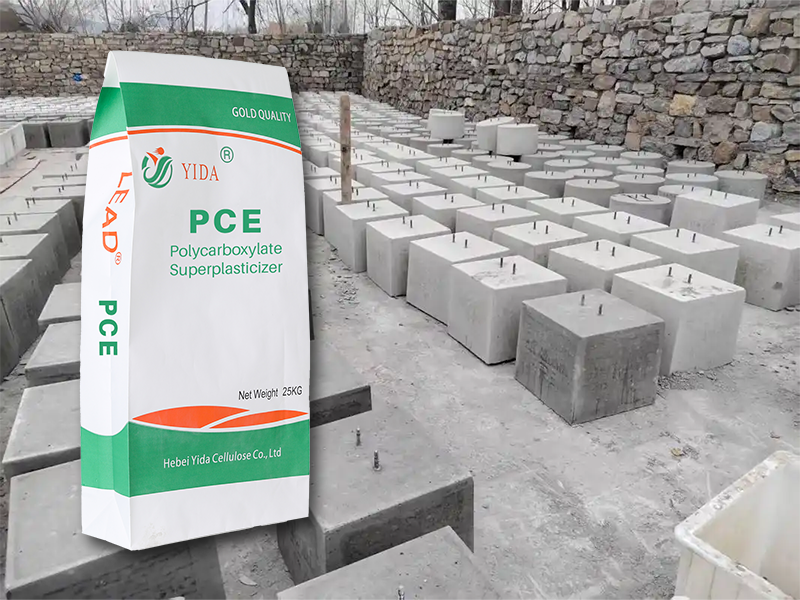
Polycarboxylate Ether (PCE) is a third-generation superplasticizer with a comb-structured polymer design. Unlike traditional naphthalene or melamine-based admixtures, PCE molecules feature long side chains that create steric hindrance. This mechanism ensures uniform dispersion of cement particles, preventing clumping and freeing trapped water. The result? A fluid, cohesive mix with significantly lower water demand.
Particle Dispersion: PCE molecules adsorb onto cement grains, creating a repulsive force that breaks aggregates and distributes particles evenly.
Water Reduction: By reducing inter-particle friction, PCE allows for lower water-cement ratios (as low as 0.25) while maintaining workability.
Slump Retention: PCE extends the mix’s slump life by up to 2 hours, critical for large-scale projects or hot climates.
Strength Enhancement: Lower water content reduces porosity, increasing compressive strength by 15–30% compared to conventional mixes.
PCE enables concrete to flow effortlessly into complex formwork, reducing vibration needs and labor costs. Its high slump retention ensures consistent quality even during prolonged transportation or placement.
Case Study: In a high-rise project in Dubai, PCE-based admixtures reduced pumping pressure by 40%, enabling a 200-meter vertical pour without blockages.
By minimizing water content, PCE reduces shrinkage cracking and permeability. This translates to:
Lower maintenance costs: Fewer repairs over the structure’s lifespan.
Resistance to harsh environments: Ideal for coastal, freeze-thaw, or chemical-exposed foundations.
Data: Tests show PCE-treated concrete retains 85% of its tensile strength after 2,000 hours of accelerated aging, compared to 70% for traditional mixes.
Reduced cement usage: Lower water-cement ratios allow for partial cement replacement with fly ash or slag, cutting CO₂ emissions by 20–30%.
Water savings: A 10,000 m³ foundation project can save up to 3,000 m³ of water with PCE.
Faster construction: Improved flow accelerates placement, shortening project timelines.
PCE is indispensable for HPC foundations requiring ultra-high strength (80–120 MPa) and low permeability. Applications include:
Bridges and dams: Withstands hydrostatic pressure and seismic loads.
Data centers: Minimizes cracking to protect sensitive equipment.
PCE enables SCC to flow under its own weight, filling intricate molds without vibration. This is critical for:
Architectural foundations: Complex shapes or narrow sections.
Underground structures: Tunnels or basements with limited access.
PCE’s slump retention makes it ideal for remote projects, such as:
Wind farms: Foundations spanning acres of rural land.
Highway overpasses: Requires consistent mix quality over miles.
PCE’s performance depends on:
Cement type: Reacts differently with Portland, blended, or low-alkali cements.
Aggregate quality: High mud content in sand can reduce effectiveness.
Temperature: Hot weather accelerates slump loss.
Solution: Conduct trial mixes with local materials and adjust PCE dosage (typically 0.15–0.3% by cement weight).
PCE admixtures cost 2–3 times more than traditional superplasticizers. However, their benefits often offset the premium:
Reduced labor: Faster placement and finishing.
Longer lifespan: Lower replacement costs.
ROI Example: A 50,000PCEinvestmentina10M foundation project can save $200,000 in maintenance over 30 years.
Dosage Optimization: Start with manufacturer recommendations and adjust based on slump tests.
Storage: Keep PCE in cool, dry conditions to prevent degradation.
Compatibility Testing: Verify interactions with air entrainers, retarders, or accelerators.
Quality Control: Monitor fresh and hardened properties (slump, strength, permeability) regularly.
The construction industry is shifting toward net-zero goals, and PCE is at the forefront:
Carbon-negative admixtures: Researchers are developing PCE variants that absorb CO₂ during hydration.
3D-printed foundations: PCE’s flowability enables layer-by-layer construction without formwork.
Circular economy: PCE facilitates higher recycling rates of concrete waste.
PCE-based water reducing agents are not just an additive—they are a catalyst for innovation in concrete technology. By enhancing workability, strength, and sustainability, PCE addresses the core challenges of modern construction: speed, cost, and environmental impact. For engineers and contractors, adopting PCE means delivering safer, longer-lasting foundations while staying competitive in a rapidly evolving market.
Call to Action: Whether you’re planning a high-rise, a bridge, or an industrial complex, evaluate PCE’s potential in your next project. Partner with reputable suppliers to conduct material trials and unlock the full benefits of this transformative technology. The future of concrete foundations is here—and it’s powered by PCE.
Previous: What Are the Raw Materials of Methyl Methacrylate?
Next: How to Dissolve HPMC: A Comprehensive Guide for Industrial Applications
Copyright:@2020-2021

Comments Please sign in or sign up to post.
0
0 of 500 characters used