
In a world where "I’m feeling lucky" might as well be the new "I’m feeling plastic," the humble backpack is getting a sustainable glow-up, thanks to a crew of eco-warrior suppliers turning recycled polyethylene terephthalate (rPET) into the new black. These trailblazers aren’t just stitching together bags—they’re stitching together a future where style meets sustainability without batting an eye. Let’s unpack how these rPET backpack suppliers are flipping the script on the fashion and function game.
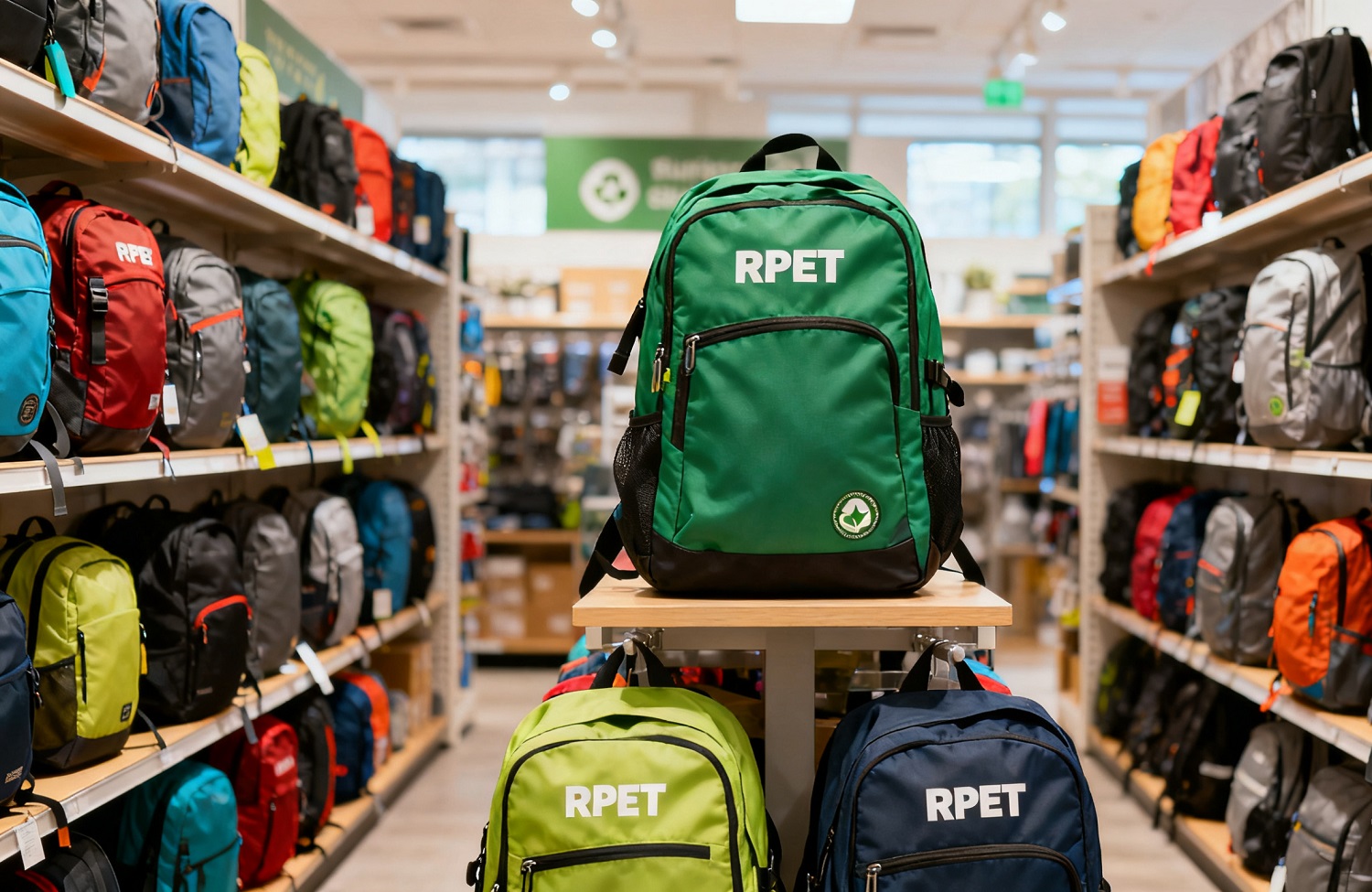
From Trash to Trend: The rPET Revolution
Imagine your last discarded soda bottle. Now imagine it reincarnated as a sleek, water-resistant backpack that could outlast your gym’s elliptical machine. That’s the magic of rPET, a material born from recycling old PET bottles. Suppliers are now mastering the art of transforming this "plastic waste" into high-performance textiles and accessories. It’s like giving the planet a standing ovation while still looking fabulous.
But here’s the kicker: producing rPET isn’t just about recycling—it’s about reinventing. Unlike traditional polyester, which guzzles fossil fuels and spews carbon like a dragon at a spa day, rPET slashes energy use by up to 70%. For every ton of rPET produced, we’re talking about saving 6 tons of petroleum and cutting carbon emissions by a cool 3.8 tons. That’s not just a win for Mother Earth; it’s a slap-up deal for brands aiming to ditch their “soulless corporate” image.
The Supplier Playbook: Innovation Meets Practicality
So, how are these suppliers shaking things up? For starters, they’re ditching the “green is beige” myth. Early eco-friendly products often looked like they were designed by a committee of moss and regret, but not anymore. rPET backpacks now come in vibrant hues, trendy patterns, and designs that would make a millennial’s Pinterest board weep with joy. From minimalist commuters to adventure-seeking hikers, there’s a rPET bag for every vibe.
Then there’s the tech angle. Suppliers are partnering with chemists and engineers to boost rPET’s durability and versatility. No more “eco-bags that disintegrate if you sneeze on them.” Modern rPET backpacks are waterproof, abrasion-resistant, and even feature clever compartments for your espresso cup or yoga mat. One supplier, for instance, added UV-blocking layers to their designs, turning your daily commute into a sunburn-free zone.
The Ripple Effect: Beyond the Product
But the real game-changer? These suppliers aren’t just selling bags—they’re selling a movement. They’re collaborating with schools, NGOs, and even local governments to create closed-loop systems where consumers return old bottles to be recycled into new backpacks. Picture this: A student buys an rPET backpack, uses it for four years, then drops it off at a campus recycling station. Voilà—their old bag becomes someone else’s new best friend. It’s circular economy 101, wrapped in a tote bag.
And let’s not forget the storytelling. Brands are leaning into transparency like never before, sharing tales of how each backpack saves 20+ bottles from landfills. One supplier even launched a “Trace Your Bag” app, letting users scan a QR code to see the exact journey of their product—from bottle to backpack. It’s the Instagrammable version of sustainability, and people are eating it up.
The Consumer Shift: From “Why?” to “Why Not?”
Of course, none of this would work without the consumers. Thanks to a generation raised on climate documentaries and TikTok eco-hacks, demand for sustainable products is through the roof. A 2025 survey revealed that 62% of shoppers would pay a 20% premium for eco-friendly bags, and rPET backpacks are the poster child of this shift. They’re no longer niche—they’re the new normal.
Suppliers are capitalizing on this by making sustainability fun. Limited-edition collabs with artists, tie-ins with environmental campaigns, and even “bottle-count challenges” where customers earn discounts for recycling—these tactics turn buying a backpack into a badge of honor. Who knew carrying your laptop could feel like carrying the torch for the planet?
The Bigger Picture: A Backpacker’s Utopia
As these suppliers scale up, the industry is starting to take notice. Traditional manufacturers are either joining the green train or getting left behind in a cloud of carbon emissions. Retailers are stocking rPET backpacks alongside their conventional counterparts, and investors are betting big on companies that prioritize the triple bottom line: profit, planet, and people.
But the true measure of success? When a child asks, “Why is this backpack special?” and the answer isn’t “because it’s branded”—but because it’s proof that small choices can make giant waves.
In the end, rPET backpack suppliers aren’t just changing how we carry our stuff—they’re carrying the weight of a greener future, one recycled bottle at a time. And if that’s not a plot twist worth lugging around, we don’t know what is.
Of course, the spotlight can’t ignore the unsung heroes behind the scenes: the backpack manufacturer teams turning innovation into reality. Among them, Sumkbags stands out as a trailblazer, blending cutting-edge rPET technology with a commitment to ethical production. By partnering with eco-conscious suppliers and prioritizing transparency, Sumkbags isn’t just making bags—it’s redefining what it means to merge sustainability with style. After all, when your backpack saves the planet and still looks good doing it, you know you’ve cracked the code.
Learn more about sustainable RPET backpacks.
View here.< How RPET Backpack Supplier Are Changing the Industry Landscape>
Previous: How to Pick the Perfect Kindergarten Backpack: Size, Comfort, and Style Tips Every Parent Needs
Next: None.
Copyright:@2020-2021

Comments Please sign in or sign up to post.
0
0 of 500 characters used