
Aerogel and Vacuum Insulation Panels (VIPs) are two of the most advanced super insulation materials available today. Both aim to achieve extremely high thermal resistance with much thinner profiles, but they differ significantly in their principles, characteristics, and application scenarios.
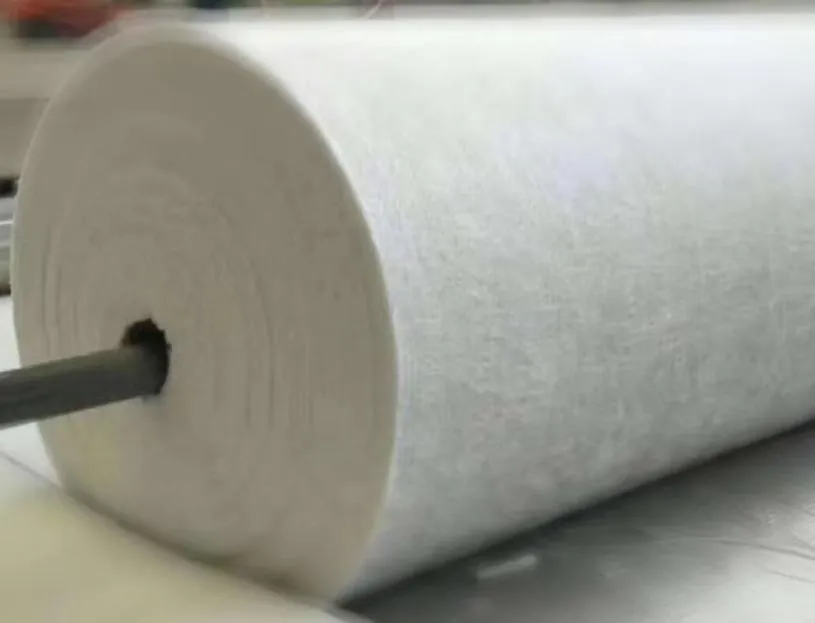
Hailed as a "miracle material that can change the world," aerogel is the least dense solid in the world. Its core lies in its nano-porous network structure (with a porosity of 80–99.8%). These nano-pores trap air molecules, greatly limiting air convection and heat conduction, thereby achieving thermal insulation.
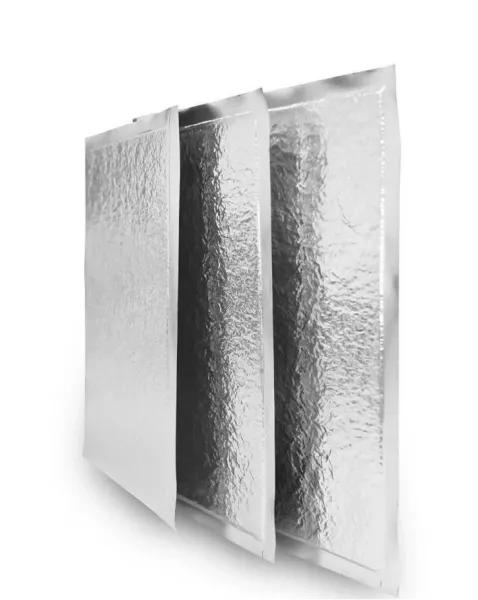
Its core principle is the same as that of a traditional thermos: "eliminating the medium of heat transfer." By evacuating the porous core material to a high vacuum (internal pressure typically below 100 Pa), it almost entirely eliminates heat convection and conduction caused by gas molecules.
For a clearer comparison, here is a summary of their properties, advantages, and disadvantages.
Insulation Principle: Nano-porous structure restricts the movement of air molecules.
Thermal Conductivity: Very low (~0.015 - 0.025 W/(m·K)).
Thickness & Efficiency: Thickness is 1/3 to 1/5 that of traditional materials for equivalent performance.
Fire Resistance: Typically Class A non-combustible (depends on the matrix, e.g., silica).
Mechanical Properties: Generally brittle, poor flexibility, decent compression resistance but poor tensile and flexural strength.
Durability & Lifespan: Excellent, stable performance, does not age, lifespan matches that of buildings.
Cost: Very high (cost per square meter is several to dozens of times higher than traditional materials).
Installation Conditions: Relatively flexible; can be cut and wrapped, but generates dust.
Insulation Principle: High vacuum environment eliminates heat convection and gaseous heat conduction.
Thermal Conductivity: Ultra-low* (~0.002 - 0.008 W/(m·K)), among the best available.
Thickness & Efficiency: Thickness is 1/5 to 1/10 that of traditional materials for equivalent performance.
Fire Resistance: Depends on the core material and envelope. The core (e.g., silica powder) is Class A, but the barrier film is typically not fire-resistant.
Mechanical Properties: Cannot be cut, bent, or punctured. If the vacuum is breached, it completely loses its insulating advantage.
Durability & Lifespan: Has a limited lifespan (typically 15-25 years); suffers from slow vacuum degradation over time.
Cost: Extremely high (cost per square meter is dozens of times higher or more than traditional materials).
Installation Conditions: Extremely stringent; must be custom-sized, cannot be cut or drilled on-site.
Aerogel is like an incredibly fluffy "super sponge" filled with countless nano-sized air bubbles. Its very structure provides insulation.
VIP is like a very flat, vacuum-sealed "sandwich." Its insulating capability entirely depends on the internal vacuum state. If the outer shell is damaged, it "leaks" and fails.
Concern the lifespan Expectation,Aerogel is a permanent material with stable performance.
VIP is a consumable product with a finite lifespan; future replacement needs must be considered.
Due to the differences above, their application fields are significantly distinct.
The largest application area currently. Used for insulation in pipelines, reactors, and storage tanks in oil, chemical, and thermal power industries. Energy savings are extremely significant, especially in space-constrained or high-performance applications.
• Historical Building Retrofits: A thin layer of aerogel blanket can significantly improve thermal performance without altering the building's appearance.
• Window and Door Thermal Breaks: Aerogel granules fill thermal break bars in aluminum alloy doors and windows, far outperforming traditional PU fills.
• Internal Insulation: Used for interior walls, floors, and ceilings, saving indoor space.
Used for thermal insulation in extreme environments in spacecraft, rockets, military vehicles, and tents.
High-end outdoor products, tents, sleeping bags, cookware, etc.
Thermal management in new energy vehicle battery packs to prevent thermal runaway.
Home Appliance Industry: The most mature and largest application area. Used in high-end refrigerators and freezers for cabinet insulation, allowing for much thinner walls while providing superior insulation and increasing usable volume.
Cold Chain Logistics: Used in medical refrigerators, fresh food delivery boxes, refrigerated trucks, etc., to ensure constant temperature for extended periods.
Construction Sector (Demanding Applications): Used for "thermal break" detailing in floors, roofs, or walls of passive houses and ultra-low energy consumption buildings, providing ultra-high thermal resistance in very thin spaces.
Electronics: Used in electronic devices with extreme requirements for thermal management and space constraints.

Previous: None.
Next: Benefits of Plastic Coated Galvanized Highway Guardrail for Road Safety
Copyright:@2020-2021

Comments Please sign in or sign up to post.
0
0 of 500 characters used