
Modern engines are marvels of engineering, delivering more power, improved fuel efficiency, and lower emissions than ever before. One technology that has played a pivotal role in these advancements is Variable Valve Timing (VVT). Understanding how variable valve timing works is essential for mechanics, automotive enthusiasts, and engineers aiming to optimize engine performance. At Ostberg, we focus on designing precision timing solutions that ensure engines operate at peak efficiency, whether in passenger vehicles, high-performance cars, or industrial machinery. This comprehensive guide explores VVT, its mechanisms, benefits, types, and real-world applications.
Variable Valve Timing is a technology that allows an engine to adjust the timing of the opening and closing of its intake and exhaust valves dynamically. Traditional engines use fixed timing, where valves open and close at predetermined points. VVT modifies these timings depending on engine speed, load, and other operating conditions.
Key Goals of VVT:
Maximize combustion efficiency
Improve fuel economy
Reduce harmful emissions
Enhance engine performance across a wide RPM range
Unlike static valve timing systems, VVT ensures that the engine adapts to driving conditions, allowing optimal performance whether idling, cruising, or accelerating at high speeds.
VVT works by adjusting the position of the camshaft relative to the crankshaft. The camshaft controls valve operation, and by altering its position, the engine can change when valves open or close.
There are several methods for achieving VVT:
Hydraulic VVT:
Uses engine oil pressure to move a camshaft actuator, changing camshaft position.
Sensors monitor engine conditions.
Oil flows into the actuator to advance or retard the camshaft.
Electric VVT:
Uses electric motors to rotate the camshaft or actuators.
Offers precise control
Faster response times
Can integrate with advanced ECU strategies
Mechanical VVT:
Uses gears or eccentric cams to vary timing.
Simpler and more robust
Often found in performance or industrial engines
The camshaft’s rotational position determines valve opening and closing. By advancing the camshaft:
Intake valves open earlier
Improves low-end torque
By retarding the camshaft:
Intake valves open later
Optimizes high-RPM performance
The ECU continuously monitors sensors such as throttle position, engine speed, load, and temperature to adjust valve timing. This ensures smooth transitions between different operating conditions.
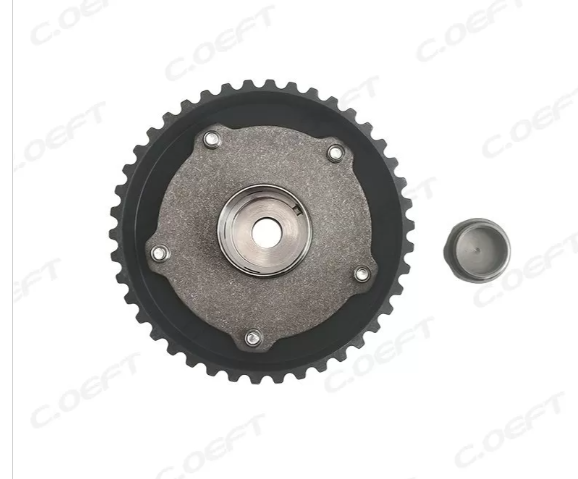
Understanding how variable valve timing works requires exploring the types of VVT systems used in modern engines:
CVVT allows for a smooth, continuous adjustment of valve timing across the engine’s operating range.
Advantages:
Improves fuel efficiency
Reduces emissions
Enhances torque at low RPM and power at high RPM
Example: Many Japanese automakers, like Toyota’s VVT-i system, use CVVT.
Discrete VVT switches between two or more fixed timing profiles depending on engine conditions.
Advantages:
Simpler and cost-effective
Provides noticeable performance improvements without complex electronics
Disadvantages:
Less smooth than continuous systems
Limited adaptability across RPM ranges
Some advanced systems, like Honda’s VTEC or BMW’s Valvetronic, adjust not only timing but also valve lift.
Benefits:
Optimizes airflow
Reduces pumping losses
Improves fuel efficiency and emissions
By adjusting valve timing, engines can optimize air-fuel mixture flow:
Early intake valve opening at low RPM improves torque
Later intake valve opening at high RPM increases power
Engines equipped with VVT can deliver a wider torque curve, enhancing drivability.
VVT reduces pumping losses by improving air-fuel intake and exhaust gas flow. Some engines achieve up to 10–15% fuel savings compared to fixed-timing engines.
Better combustion timing reduces incomplete fuel burning, lowering hydrocarbons (HC), carbon monoxide (CO), and nitrogen oxide (NOx) emissions.
VVT systems adapt to low-speed and high-speed conditions, providing:
Smoother idling
Reduced engine knocking
Better throttle response
Modern engines combine VVT with other technologies to enhance efficiency and performance:
Turbocharging: VVT optimizes airflow for forced induction engines
Direct Fuel Injection: Adjusted valve timing improves combustion precision
Start-Stop Systems: VVT improves engine restart smoothness and efficiency
Hybrid Systems: VVT ensures efficient operation with electric motor integration
At Ostberg, our timing solutions are engineered to complement these advanced systems, ensuring maximum reliability and precision.
Despite its benefits, VVT systems can encounter issues if not properly maintained:
Oil Flow Issues – Dirty or low engine oil can prevent hydraulic VVT actuators from functioning correctly.
Worn Components – Camshaft actuators and timing chains or gears may wear over time.
Faulty Sensors – Throttle, camshaft, or crankshaft sensors can send incorrect signals to the ECU.
Check Engine Light Activation – Often caused by VVT malfunction or improper timing adjustments.
Routine maintenance and high-quality engine oil are critical for VVT system longevity.
Regular Oil Changes: Clean, correct-viscosity oil ensures smooth hydraulic operation.
Inspect Timing Components: Chains, belts, or gears should be checked for wear.
Monitor Engine Codes: Modern cars provide diagnostic codes when VVT performance drops.
Use Quality Parts: OEM or high-quality replacement parts, such as those from Ostberg, ensure precision and durability.
Smooth acceleration and better fuel economy
Reduced emissions for urban driving
Optimized power across RPM ranges
Enhanced throttle response for spirited driving
Improved load handling and efficiency
Increased engine lifespan due to optimized timing
VVT technology continues to evolve with the automotive industry:
Camless Engines: Eliminate camshafts entirely, using electromagnetic actuators to control valve timing with ultimate precision.
Advanced Electronic VVT: Integration with AI-driven engine control units to optimize performance in real-time.
Hybrid Integration: VVT systems working seamlessly with electric motors to maximize hybrid efficiency.
These innovations aim to achieve better fuel economy, lower emissions, and superior engine performance across all driving conditions.
Think of VVT as an engine “brain” that adjusts how long and when each valve opens. At low speeds, it allows more torque for easier starts. At high speeds, it shifts for maximum power. This adaptability ensures the engine always performs optimally.
Understanding how variable valve timing works is essential for anyone interested in modern engine technology. By adjusting valve timing dynamically, VVT enhances performance, fuel efficiency, and reduces emissions. From hydraulic and electric VVT systems to advanced variable valve lift technologies, engines have never been more adaptable.
At Ostberg, we develop precision timing solutions that complement VVT systems, ensuring optimal synchronization, reliability, and performance in automotive and industrial engines. By maintaining your engine and understanding VVT technology, you can enjoy smoother operation, better efficiency, and enhanced power across all driving conditions.
Previous: Acoustic Vehicle Alerting System
Next: None.
Copyright:@2020-2021

Comments Please sign in or sign up to post.
0
0 of 500 characters used