
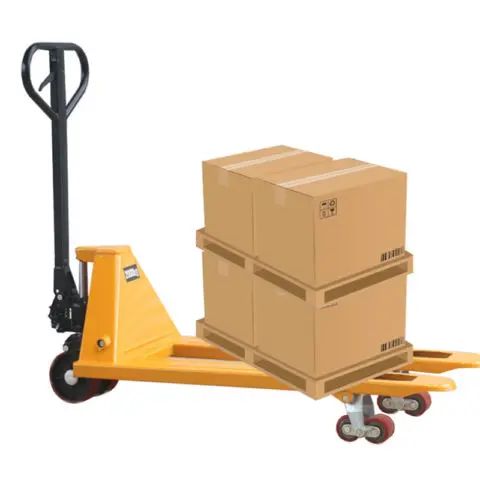
A pallet jack helps lift pallets off the ground so you can move them with minimal effort. It uses a hydraulic system and a set of forks that slide under the pallet. When you pump the handle, the forks rise, lifting the load. When you release the handle, the forks lower back down.
Handle: Controls lifting, lowering, and steering.
Hydraulic pump: Raises the forks.
Forks: Slide under the pallet.
Wheels: Support movement and load.
Control lever: Changes between lift, hold, and lower functions.
Understanding the basic components makes operation smoother and helps you diagnose issues quickly.
Before moving any load, preparation ensures safety and efficiency. Start by inspecting your pallet jack and planning your route.
Check wheels for wear or debris.
Test handle movement.
Look for hydraulic leaks.
Confirm forks are straight.
Clear debris from the path.
Mark any slopes or uneven surfaces.
Ensure adequate space for turning.
Advantages of preparation:
Prevents accidents.
Reduces wear on equipment.
Improves speed and confidence.
Preparing both the pallet jack and the path prevents delays and injuries.
Correct positioning allows easy lifting. Stand behind the pallet and align the jack with the pallet openings.
Stand square to the pallet center.
Push the jack forks fully under the pallet.
Ensure both forks enter evenly.
Ensures balanced lifting.
Prevents fork tipping.
Reduces strain on the operator.
Right positioning sets the stage for smooth operation and stable lifting.
Once the forks are under the pallet, you raise the load using the jack handle.
Pump the handle with steady motion.
Stop when pallet clears the floor by a small margin.
Avoid lifting higher than needed for travel.
Reduces hydraulic stress.
Keeps the load stable.
Limits operator fatigue.
Controlled lifting helps prevent spills and makes steering easier.
Moving a heavy load safely requires attention and good technique.
Push instead of pull when possible.
Keep your feet clear of the load path.
Turn slowly to maintain balance.
Use wide arcs for corners.
Keep the load low for better stability.
Avoid sudden stops or changes in direction.
Move at a steady, controlled pace.
Advantages of controlled movement:
Prevents tipping.
Protects products and floors.
Reduces operator strain.
Good control makes heavy loads feel lighter and safer.
Slopes present special challenges. Approach with caution and plan ahead.
Move slowly and steadily.
Keep heavier side uphill when possible.
Push gently without jerking it forward.
Control speed by braking lightly with handle resistance.
Do not let the load roll freely.
Maintain a firm grip on the handle.
Advantages of proper slope handling:
Reduces runaway loads.
Prevents wheel slippage.
Maintains control on uneven ground.
Mastering slopes keeps loads secure and operators safe.
Warehouses often have narrow aisles. Turning efficiently saves time and effort.
Plan your approach path early.
Use smooth, gradual pivots.
Slow down before turns.
Keep load balanced over axle.
Avoid sharp, sudden turns.
Clear obstacles before entry.
Position the pallet off the center when possible to increase clearance.
Advantages of precise turning:
Reduces collisions.
Saves time.
Protects goods and equipment.
Good turning skills improve workflow and reduce damage risk.
Once you reach the destination, lowering the load is simple but critical.
Position pallet where needed.
Use the control lever to slowly release hydraulic pressure.
Make sure forks are fully lowered.
Prevents sudden drops.
Reduces impact stress on pallet and floor.
Keeps operator safe.
Never rush when lowering a load; controlled release prevents damage.
Different floor types affect movement and stability.
Offers good wheel traction.
Move at regular pace.
Slow movement to prevent jolts.
Check wheel condition more often.
Dry area before moving.
Keep load low and move cautiously.
Advantages of surface awareness:
Reduces slips.
Extends wheel life.
Protects product integrity.
Adapting to floor conditions makes every move smoother.
Avoiding common mistakes keeps work safe and efficient.
Overloading beyond capacity.
Ignoring inspection routines.
Pulling instead of pushing.
Lifting too high during transport.
Fewer accidents.
Lower repair costs.
Increased productivity.
Avoiding these errors improves working conditions and outcomes.
Routine checks detect issues early.
Wheels and axles.
Hydraulic handle feel.
Fork alignment.
Lubrication levels.
Prevent surprises.
Extend equipment life.
Improve safety.
A simple inspection before each shift ensures reliable operation.
Proper care extends tool life.
Clean debris off wheels.
Lubricate moving parts.
Tighten loose bolts.
Replace worn wheels.
Smoother operation.
Lower downtime.
Longer equipment life.
Well-maintained jack works better and lasts longer.
Everyone who uses the jack should be trained.
Safe operation steps.
Inspection routines.
Load limits and warnings.
Less damage.
Faster operation.
Reduced injuries.
Training builds confidence and competence.
Every pallet jack has a capacity limit.
Check marked load capacity.
Never exceed rated weight.
Distribute weight evenly.
Prevents bending forks.
Reduces risk of tipping.
Protects operator safety.
Knowing limits prevents costly and dangerous failures.
Skill grows with repetition.
Practice in open space.
Time routine tasks.
Record improvements.
Faster operations.
Better control.
Reduced fatigue.
Regular practice turns novices into skilled operators.
Unexpected events can happen.
Stop movement immediately.
Lower load safely.
Clear obstacles before resuming.
Reduces panic.
Prevents accidents.
Protects teams and goods.
Being ready helps handle surprises calmly.
Not all pallet jacks are the same.
Weight capacity needed.
Fork length required.
Floor conditions encountered.
Better task fit.
Fewer replacements.
Increased value for money.
Choosing right tool improves workflow and reduces costs.
Comfort matters for daily use.
Padded handle grips.
Smooth pump action.
Easy reach controls.
Less wrist strain.
Reduced fatigue.
Higher operator satisfaction.
Comfortable design improves performance.
A jack should fit your work pattern.
Set clear paths.
Avoid congestion points.
Plan pick and drop zones.
Faster cycles.
Less waiting time.
Clear work areas.
Good workflow planning boosts efficiency.
Use with lift tables or conveyors.
Align jack path with conveyor.
Level surfaces reduce jarring.
Smoother transfers.
Higher throughput.
Reduced manual lifting.
Working with other tools amplifies productivity.
Safety starts with team mindset.
Encourage reporting hazards.
Reward safe practices.
Lower injury rates.
Better morale.
Fewer stoppages.
A safety culture improves every job site.
Weather affects performance.
Heat expands metal parts.
Cold stiffens hydraulics.
Extra lubrication in winter.
Shade storage in summer.
Consistent performance.
Longer jack life.
Climatic awareness keeps tools ready.
Using a pallet jack effectively combines safety, technique, and practice. You learned essential steps: inspection, proper positioning, controlled lifting and moving, adapting to surfaces, and regular maintenance. You also learned to avoid common errors, train your team, respect load limits, and integrate jack use into your workflow. With these practices, your operations will be smoother, safer, and more productive. Confidence grows with experience, and a well-used pallet jack becomes one of your most reliable tools.
Previous: None.
Next: Tin Can Seamer Machine
Copyright:@2020-2021

Comments Please sign in or sign up to post.
0
0 of 500 characters used