
High-pressure swivel elbows are critical components in various industrial systems that require precise fluid or gas transfer under high-pressure conditions. Commonly found in sectors such as oil and gas, chemical processing, and heavy machinery, these devices are designed to allow fluid flow while accommodating movement or changes in direction. Understanding the sealing principle of a high-pressure swivel elbow is essential for ensuring system integrity, preventing leaks, and optimizing performance.
A swivel elbow connects two parts of a pipeline while allowing one of the connected parts to rotate or pivot. This movement is essential in applications where flexibility is needed, such as in flexible piping systems or machinery that moves or adjusts frequently. The high-pressure version of this elbow is specifically designed to withstand the forces exerted by fluids under elevated pressure, ensuring safety and operational efficiency.
The swivel elbow is typically equipped with a sealing mechanism that plays a crucial role in maintaining the pressure and preventing leaks. The sealing principle of a high-pressure swivel elbow ensures that, even under constant movement or extreme pressure conditions, the connection remains leak-proof and secure.
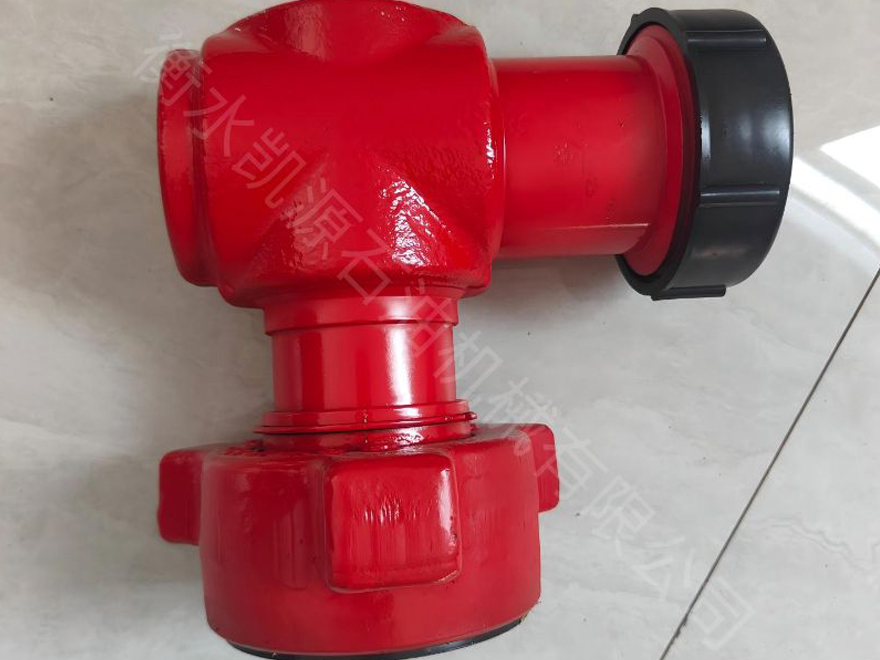
Integral Forged Hammer Union 90° Short Radius Elbow
The sealing mechanism in high-pressure swivel elbows typically involves the following key components:
O-rings or Sealing Gaskets
O-rings are commonly used in high-pressure swivel elbows for their flexibility and ability to create a tight seal. Made from materials such as rubber, PTFE (polytetrafluoroethylene), or metal composites, O-rings are placed in grooves around the swivel joint. When the elbow rotates or swivels, the O-ring compresses against the mating surfaces, forming a seal that prevents fluid leakage. The material selection for the O-ring depends on the type of fluid being transported (e.g., oil, gas, chemicals) and the temperature and pressure conditions.
Metal-to-Metal Seals
In some high-pressure systems, especially those dealing with extreme temperatures or aggressive fluids, metal-to-metal sealing mechanisms are used. These seals are typically found in more robust designs where the sealing surfaces themselves are made of high-grade materials such as stainless steel or alloy steel. These seals rely on the precision of the mating surfaces to create an effective seal under pressure. The metal-to-metal seal ensures long-lasting durability and can withstand higher pressures than traditional elastomeric O-rings.
Ball or Disc Seals
Some high-pressure swivel elbows use ball or disc seals, which are integrated into the rotating section of the elbow. These seals have the advantage of ensuring a continuous contact with the sealing surface, even during rotation, and provide an extra layer of protection against leaks. Ball seals are particularly effective when dealing with high-velocity fluid flows, as they can adapt to the flow patterns without losing sealing integrity.
Back-Up Rings
For extra sealing protection, many high-pressure swivel elbows also incorporate back-up rings. These rings, made from materials like PTFE, are placed behind O-rings to prevent extrusion of the O-ring material under high-pressure conditions. They provide additional support and ensure that the primary seal remains intact, even when the pressure is high or fluctuating.
The primary challenge in designing a sealing mechanism for high-pressure swivel elbows is ensuring that the seal can maintain its integrity under pressure fluctuations, thermal expansion, and mechanical movement. When high-pressure fluids pass through the elbow, the internal pressure can vary based on flow rates, temperature, and system conditions. This variation can cause the sealing components to expand, contract, or shift, which can lead to leaks if the sealing mechanism is not designed appropriately.
To manage these challenges, the sealing components of a swivel elbow are typically designed with materials that can withstand thermal cycling and compressive forces without degrading over time. Elastomers such as Nitrile (NBR), Viton (FKM), or PTFE offer high resistance to chemical corrosion and high temperatures, while metal seals can withstand extreme pressures and mechanical wear.
The swivel action itself plays a critical role in the sealing principle. As the elbow swivels, the sealing components must maintain constant contact with their mating surfaces. This requires that the materials used for both the sealing components and the swivel joints possess a high degree of wear resistance. Additionally, the joint’s design must be precise to avoid misalignment or movement that could compromise the seal.
The flexibility of the swivel elbow also allows it to adjust to changes in the pipeline's direction or positioning without disturbing the sealing components. This adaptability is crucial in dynamic systems where the position or configuration of components changes frequently, such as in mobile machinery or offshore platforms.
The sealing principle of a high-pressure swivel elbow is a carefully designed system that combines various sealing mechanisms to prevent leaks, manage pressure, and maintain the integrity of fluid transfer systems. By using O-rings, metal-to-metal seals, ball seals, and back-up rings, manufacturers ensure that these elbows can function effectively under high-pressure conditions without compromising safety or performance. Additionally, the swivel mechanism itself adds flexibility and adaptability, making high-pressure swivel elbows an essential part of modern industrial systems. Understanding the sealing principle is vital for engineers and technicians to select, install, and maintain these critical components, ensuring smooth and efficient operations.
Previous: None.
Copyright:@2020-2021

Comments Please sign in or sign up to post.
0
0 of 500 characters used