
Rolling mill bearings play a pivotal role in the steel manufacturing process. These components support the rolls, enabling smooth rotation and reducing friction between moving parts. Without high-performance bearings, the entire operation of a steel plant can be jeopardized. Think of them as the unsung heroes—small in size but massive in function.
In steel plants, especially those dealing with high-speed and high-load rolling operations, bearing failure can lead to catastrophic consequences. Downtime due to bearing damage doesn’t just disrupt operations—it costs millions. That’s why choosing the right bearing is a critical decision for any mill engineer or maintenance supervisor.
Moreover, bearings in rolling mills are exposed to extreme loads, vibrations, high temperatures, and contaminated environments. Standard industrial bearings simply won’t cut it. Instead, specialized rolling mill bearings are engineered to withstand these tough conditions while delivering reliability and longevity.
A well-selected bearing ensures:
Minimal maintenance and breakdowns
Consistent product quality
Enhanced operational efficiency
Reduced downtime
In short, bearings aren't just mechanical components; they’re the lifeline of a steel plant’s rolling operation.
Rolling mills are essential machinery in steel plants, designed to shape and form metal into desired profiles. Whether it’s hot rolling or cold rolling, these mills compress and stretch raw metal into sheets, bars, rods, or other forms using massive pressure between rotating rolls.
The process relies heavily on continuous movement, which is where bearings step in. Each roll is supported by bearings that must endure enormous radial and axial forces while maintaining smooth operation. In a typical steel plant, you might find several types of rolling mills—like two-high, four-high, tandem, or cluster mills—each with unique bearing requirements.
Bearings in these setups must:
Support the weight of the rolls and the metal being processed
Handle thermal expansion and vibrations
Withstand shock loads and prevent metal-to-metal contact
Work continuously under severe loads without failing
That’s why choosing the right bearings is not just a mechanical decision but a strategic one—impacting production efficiency, safety, and profitability.
Rolling mills come in various configurations, each designed for specific tasks and bearing different load conditions. Understanding the type of mill is crucial to selecting the appropriate bearings.
Here are the most common types:
Two-High Mills – Simple mills with two opposing rolls, mainly for initial breakdown of ingots.
Four-High Mills – Feature two working rolls and two backup rolls, ideal for thin steel sheets.
Cluster Mills (Sendzimir Mills) – Use multiple small-diameter rolls for high precision.
Tandem Mills – A series of rolling stands that allow continuous processing for large production runs.
Planetary Mills – Utilize smaller rolls orbiting around a central roll, ideal for hot rolling.
Each of these setups demands specific bearing capabilities. For instance:
Two-high and four-high mills need high radial load-carrying capacity.
Cluster mills need compact, high-precision bearings due to limited space.
Tandem mills require bearings that can endure high-speed, continuous operation without overheating.
Different mills translate to different expectations from bearings. Let’s break down what’s needed based on the mill type:
Two-High and Four-High Mills:
Bearings must carry heavy radial loads
Excellent misalignment tolerance
Resistance to wear under heavy pressure
Tandem Mills:
Require high-speed bearings with minimal heat generation
Superior lubrication systems to ensure longevity
Designed for continuous operation with low maintenance
Cluster and Planetary Mills:
Space-saving bearing designs
High precision and load-sharing features
Must handle rapid direction changes and varying loads
In all cases, the choice of bearings must also consider alignment needs, shock resistance, and service life. A bearing that fails prematurely not only halts production but could damage costly machinery. That’s why steel plants work closely with bearing suppliers to match every bearing with the exact mechanical requirements of each rolling stand.
Cylindrical Roller Bearings
Cylindrical roller bearings are commonly used in steel rolling mills due to their ability to support high radial loads and high-speed performance. These bearings consist of an inner ring, an outer ring, and cylindrical rolling elements that allow for minimal friction under load.
Why are they popular in rolling mills? They excel at:
Handling heavy radial loads
Providing low friction operation at high speeds
Allowing axial displacement in one direction (depending on design)
These bearings are ideal for applications where axial loads are minimal or can be managed separately. For instance, in four-high rolling mills, cylindrical roller bearings are often used for backup rolls, as they provide the robustness needed for the heavy loads imposed by the metal strip.
However, one drawback is their limited axial load capacity. Hence, they are often paired with thrust bearings in applications where both load types are present. Also, they are highly sensitive to misalignment, so proper mounting and alignment are crucial to prevent early failures.
To summarize:
Pros: High radial load capacity, low friction
Cons: Low axial load support, alignment sensitive
Tapered Roller Bearings
Tapered roller bearings are engineered to handle both radial and axial loads simultaneously. Their design features conical rollers and raceways, enabling them to support heavy loads at an angle.
These bearings are typically found in:
Work roll applications where combined loads are prevalent
Backup rolls in some rolling stands where axial forces need support
Why choose tapered roller bearings?
They distribute loads more evenly
Support both thrust and radial forces
Excellent shock load resistance
The downside? They generate more friction compared to cylindrical bearings, especially at high speeds. Also, they often require precise preload settings during installation to avoid excessive wear or heat generation.
Nevertheless, in steel mills where both axial and radial forces are significant, tapered roller bearings are often the go-to solution. Their robust design and load versatility make them a key player in maintaining rolling mill efficiency.
Spherical Roller Bearings
Spherical roller bearings are another go-to choice for rolling mills, particularly in high-load and misalignment-prone environments. What sets them apart is their two rows of barrel-shaped rollers and a spherical raceway that allows for angular misalignment.
These bearings are exceptionally suited for:
Heavy-duty applications like hot strip mills
Conditions where shaft deflection and misalignment are common
Operating under extreme radial and axial loads
Steel mills love these bearings because they offer:
Outstanding load-carrying capacity
Self-aligning capabilities
Durability under high-temperature conditions
Despite being a bit bulkier than other types, their resilience makes them invaluable in harsh operating conditions. One thing to consider, though, is they do produce more internal friction and heat, so proper lubrication and cooling systems are a must.
They’re often used in tandem with thrust bearings to share the axial load or to add precision to positioning in applications like roughing mills. If longevity and reliability are your top concerns, especially in challenging environments, spherical roller bearings are a solid bet.
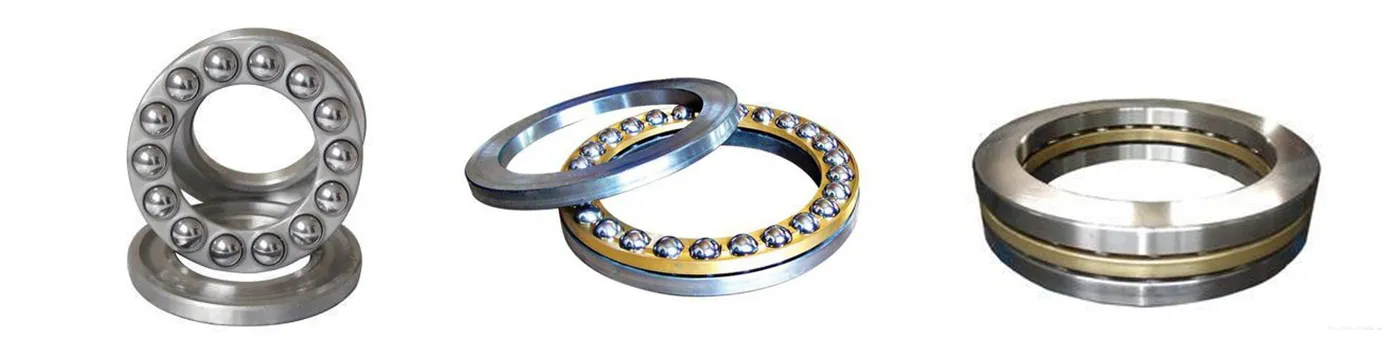
Thrust Bearings and Others
While cylindrical, tapered, and spherical bearings handle the brunt of the load, thrust bearings are essential for managing axial forces in rolling mill applications. These bearings are designed to support loads parallel to the shaft, making them perfect for locations in the mill where axial loads dominate.
Types of thrust bearings used include:
Tapered thrust roller bearings
Spherical thrust roller bearings
Cylindrical thrust bearings
Each offers unique benefits. For instance, tapered thrust bearings provide excellent shock absorption, while spherical thrust bearings allow some misalignment and can support high loads.
In addition to these, specialized bearings like CARB (Compact Aligning Roller Bearings) and hybrid ceramic bearings are used in high-speed or low-friction settings. These bearings come at a premium but offer extended service life and reduced maintenance needs.
Choosing these specialized solutions depends on your mill’s requirements—especially speed, load, and temperature. While they may require a higher initial investment, the payoff comes in the form of reduced downtime and fewer bearing replacements over time.
Previous: Zinc strip
Next: Upgrade Your Projects with High-Quality Stainless Steel Woven Mesh: A Market Overview
Copyright:@2020-2021

Comments Please sign in or sign up to post.
0
0 of 500 characters used