
Cutting thick ceramic tiles often looks simple until the first cut begins. Edges chip unexpectedly, blades slow down, and expensive tiles become waste within seconds. The real challenge comes from material density rather than operator skill. Modern ceramic tiles are fired at extremely high temperatures, creating compact structures that resist traditional cutting tools.
The blade must remove material smoothly while maintaining stability under heavy resistance. In professional applications, dense ceramic tiles sometimes demand cutting performance close to standards used for a granite cutting blade, especially when dealing with large-format or reinforced tiles. Selecting the correct diamond blade therefore becomes the most important factor influencing cutting quality, efficiency, and tool lifespan.
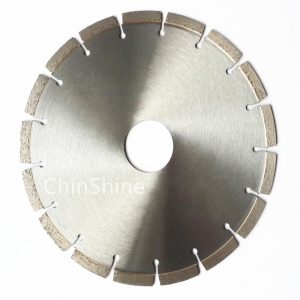
The blade that performs best for thick ceramic tiles is a continuous rim diamond blade because it focuses on controlled grinding instead of impact cutting. Thick ceramic surfaces contain a fragile glazed layer supported by a hard internal body. Any vibration introduced during cutting transfers stress directly into this surface layer, causing cracks or edge fractures.
A continuous rim maintains uninterrupted contact with the tile throughout rotation. This stable interaction allows diamonds to grind gradually through the material rather than striking it repeatedly. The result is smoother cutting behavior and significantly improved edge integrity.
Unlike aggressive blade structures, continuous rims distribute pressure evenly along the cutting path. This balance becomes critical when cutting thick flooring tiles or decorative panels where visible edges must remain clean after installation.
Heat management also improves with this design. Because friction spreads across the entire rim, localized overheating decreases. Stable temperature control protects both the blade core and bonding matrix, allowing longer cutting cycles without performance loss.
Different blade rim structures are designed for different construction materials. Understanding their behavior helps explain why some blades succeed while others fail when cutting thick ceramic tiles.
Continuous rim blades prioritize precision and finish quality. They move steadily through dense material and produce minimal edge damage. Turbo rim blades introduce patterned edges that increase airflow and cutting speed, making them suitable for moderate-density tiles where productivity matters more than perfect finishing. Segmented blades, although effective for concrete or masonry, generate repeated impact forces that typically damage ceramic surfaces.
The practical differences between blade structures can be clearly seen below.
| Blade Type | Cutting Stability | Edge Quality | Cutting Speed | Suitability for Thick Ceramic |
|---|---|---|---|---|
| Continuous Rim | Very High | Excellent | Medium | Highly Recommended |
| Turbo Rim | Moderate | Good | Fast | Acceptable for general work |
| Segmented Rim | Low | Rough | Very Fast | Not Recommended |
This comparison shows that thick ceramic tiles respond best to smooth grinding motion rather than aggressive penetration.
Modern ceramic manufacturing technology has dramatically increased tile hardness. Many floor tiles now feature extremely low porosity and strong compression resistance. These improvements enhance durability after installation but make cutting considerably more demanding.
Dense ceramic materials create three main challenges during cutting. Resistance remains constant throughout the cut, heat accumulates quickly, and the glazed surface remains brittle despite internal strength. A blade must therefore maintain sharpness continuously while preventing excess friction.
High-quality diamond blades solve this problem through balanced bonding technology. The metal bond surrounding diamond particles gradually wears away during operation. This controlled wear exposes fresh diamonds and maintains cutting efficiency over time. When bonding is properly engineered, the blade effectively renews itself while cutting thick material.
Without this balance, blades either dull rapidly or wear too quickly. Both situations increase heat buildup and reduce cutting precision.
Diamond concentration plays a major role in cutting thick ceramic tiles. Higher concentrations create more active cutting points along the rim, allowing the blade to remove material using lower pressure. Reduced pressure minimizes vibration and protects delicate tile edges.
Equally important is steel core stability. Thick ceramic tiles apply constant lateral resistance against the blade. Poorly balanced cores begin to wobble during rotation, producing uneven cuts and surface chipping. Precision tensioning during manufacturing ensures that the blade remains flat even under thermal stress.
Modern production processes focus on uniform diamond distribution and accurate rim alignment. These improvements allow consistent wear patterns and prevent imbalance during long cutting sessions. The result is predictable performance across extended professional use.
Wet cutting remains the preferred method for thick ceramic tile processing because it directly addresses friction and temperature challenges. Water cools the blade continuously while removing abrasive debris from the cutting zone.
When ceramic dust accumulates along the cutting line, resistance increases rapidly. The blade must work harder, generating additional heat that weakens bonding material and damages tile surfaces. Water flow prevents this buildup and allows diamonds to cut efficiently.
Wet cutting also improves finishing quality. Reduced friction minimizes burn marks and helps maintain smooth edges, especially when cutting polished or glazed ceramic tiles. Operators typically experience better control because vibration decreases as lubrication improves blade movement.
Blade diameter and thickness strongly influence cutting control when working with thick ceramic materials. Larger blades create smoother rotation paths and distribute load more evenly across the cutting surface.
The following table summarizes recommended blade specifications for thick ceramic tile applications.
| Cutting Requirement | Recommended Specification | Performance Benefit |
|---|---|---|
| Thick floor tiles | 7–10 inch blade diameter | Improved stability |
| Large-format slabs | Larger diameter blade | Deeper cutting capacity |
| Precision finishing | Thin kerf design | Reduced resistance |
| Continuous operation | Reinforced steel core | Longer lifespan |
Selecting the proper blade size reduces strain on both the cutting machine and the operator while maintaining accurate cutting lines.
Even the best blade requires correct operating conditions to achieve optimal performance. Thick ceramic tiles respond better to steady feed speed rather than forceful pushing. Allowing diamonds to grind naturally prevents overheating and extends blade life.
Professional cutting practice focuses on maintaining alignment, ensuring adequate cooling, and avoiding sudden directional changes during cutting. Smooth motion allows the blade structure and diamond matrix to function as intended.
When blade design, cooling method, and operator technique work together, cutting becomes efficient and predictable rather than difficult and inconsistent.
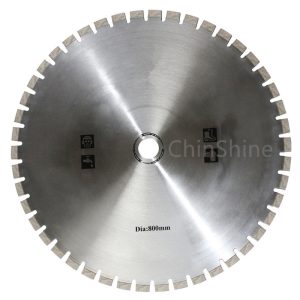
Continuous rim diamond blades provide the best overall performance for cutting thick ceramic tiles because they combine stability, precision, and durability. Their smooth grinding action protects fragile glaze layers while maintaining efficient material removal across dense tile structures.
For reliable results, priority should be given to:
Continuous rim construction
High diamond concentration
Balanced bonding technology
Wet cutting compatibility
As ceramic tiles continue evolving toward thicker and harder formats, blade engineering becomes increasingly important. Selecting a blade designed specifically for dense materials ensures cleaner edges, lower material waste, and consistent professional results.
With the correct diamond blade choice and proper cutting conditions, thick ceramic tiles can be processed smoothly, safely, and efficiently across modern construction and finishing applications.
Previous: None.
Next: From Tools to Solutions: How Cordless Platforms Add Value for Distributors
Copyright:@2020-2021

Comments Please sign in or sign up to post.
0
0 of 500 characters used