
A compressed air dryer is a device that removes moisture from compressed air. Moisture in compressed air can lead to corrosion, contamination, and damage to pneumatic tools and machinery. By removing this moisture, compressed air dryers ensure that the air is clean and dry, which is crucial for the efficient and reliable operation of compressed air systems.
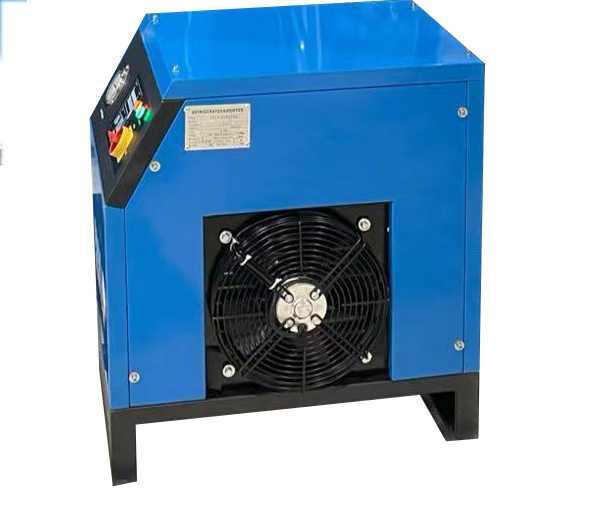
Compressed air systems are used in a wide range of industries, from manufacturing and automotive to food and pharmaceuticals. In these applications, the presence of moisture in compressed air can cause several problems, including:
Corrosion of equipment: Moisture can cause rust and corrosion in pipes, valves, and other components of the compressed air system.
Contamination of products: In industries like food and pharmaceuticals, moisture can contaminate the end products, leading to quality issues and potential health hazards.
Damage to pneumatic tools: Moisture can cause pneumatic tools to malfunction or wear out prematurely.
Reduced efficiency: Moisture can reduce the efficiency of compressed air systems, leading to higher energy consumption and increased operational costs.
Compressed air dryers work by reducing the dew point of the air, which prevents condensation from forming. The dew point is the temperature at which air becomes saturated with moisture and condensation begins. By lowering the dew point, compressed air dryers ensure that the air remains dry even when it cools down.
There are several methods used to remove moisture from compressed air, including refrigeration, and adsorption filtration. Each method has its own advantages and is suitable for different applications.
Choosing the right compressed air dryer depends on several factors, including the size and type of the compressed air system, the level of air purity required, and the specific application. Here are some key considerations to keep in mind:
Dew point requirements: Determine the level of dryness required for your application. For most industrial applications, a dew point of around 3°C (37°F) is sufficient, which can be achieved with a refrigerated air dryer. For applications requiring extremely dry air, such as in the pharmaceutical or electronics industries, a desiccant air dryer may be necessary.
Flow rate: Ensure that the air dryer can handle the flow rate of your compressed air system. The flow rate is typically measured in cubic feet per minute (CFM) or liters per second (l/s).
Operating conditions: Consider the operating conditions of your compressed air system, such as temperature and pressure. Some air dryers, such as refrigerated dryers, may not perform well in extremely hot or cold environments.
Maintenance requirements: Consider the maintenance requirements of the air dryer. Some compressed air dryer types, such as desiccant dryers, require periodic replacement or regeneration of the desiccant material, while others, such as adsorptive dryers, have low maintenance requirements.
Previous: None.
Copyright:@2020-2021

Comments Please sign in or sign up to post.
0
0 of 500 characters used