
Types of Paint Rollers. There are five main types of paint rollers, each designed for a specific purpose, including manual, pad, textured, specialty, and mini paint rollers. Understanding the differences between these types is essential to effectively learn how to choose a paint roller for your next project. There are several types of paint rollers used in painting, each with its own unique characteristics and recommended uses:
Lightweight and easy to use, foam rollers are ideal for applying water-based or low-viscosity paints. They are known for their ability to create an even and smooth finish.
Microfiber rollers are known for their ability to hold and release paint effectively, making them ideal for applying thicker or heavier paints on rough textured surfaces. They are also less likely to leave lint or fibers on the painted surface.
Mohair rollers have a very fine nap, making them ideal for applying fine-textured or low-viscosity paints. They are known for producing a smooth and even finish.
These are durable, long-lasting, and suitable for use with most types of paint roller, including oil-based, water-based, epoxy, polyurethane, and bitumen paints.
These are made of synthetic fibers and are often used for oil-based paints as they can hold more paint and apply it more smoothly.
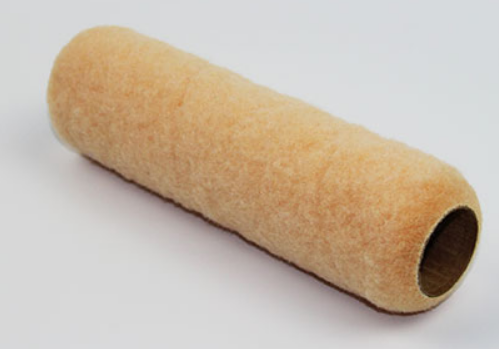
Nylon rollers can be more effective than polyester rollers in various applications, particularly when applying Bitumen, Epoxy, and PU resin products. There are several reasons why nylon rollers are often preferred in these situations.
One of the primary advantages of nylon rollers is their smooth surface, which helps distribute materials evenly. This smoothness ensures a uniform application, which is crucial for achieving a professional finish, especially with specialized coatings like Bitumen, Epoxy, and PU resins.
Nylon rollers are highly resistant to abrasion. This characteristic makes them durable and suitable for use on rough surfaces or in situations where the roller is subjected to significant wear and tear. Polyester rollers, in comparison, may wear out more quickly under similar conditions.
Another benefit of nylon rollers is their superior consumption characteristics. They can hold more material and release it more consistently than polyester rollers. This ability not only improves efficiency but also reduces the likelihood of shedding fibers. Fiber shedding can be a significant issue as it can embed in the paint, leaving unwanted streaks or marks on the surface.
Nylon rollers are more resistant to solvents compared to their polyester counterparts. This resistance allows them to handle a wider range of paint roller types without becoming damaged. The versatility of nylon rollers makes them an excellent choice for various painting and coating tasks.
While nylon rollers offer many advantages, it is essential to consider other factors when choosing the right roller material for your needs. These factors include:
Nylon rollers tend to be more expensive than polyester rollers. Therefore, the cost may be a deciding factor, especially for large projects or for those on a tight budget.
The durability of the roller is crucial, especially for professional use. Nylon rollers are generally more durable than polyester rollers, making them a better long-term investment.
Different coatings and paints contain various chemicals. Nylon rollers are more resistant to these chemicals, making them a more reliable choice for diverse applications.
Temperature fluctuations can affect the performance of rollers. Nylon rollers are better suited to handle extreme temperatures without compromising their integrity, making them ideal for use in various environmental conditions.
Nylon rollers provide numerous benefits, particularly for applying Bitumen, Epoxy, and PU resin products. Their smooth surface, abrasion resistance, superior consumption characteristics, and solvent resistance make them a versatile and durable option. However, it is essential to weigh these advantages against factors such as cost, durability, and chemical resistance to choose the right roller material for your specific application.
Previous: None.
Next: Essential Guide to Choosing the Right Trailer Leaf Spring
Copyright:@2020-2021

Comments Please sign in or sign up to post.
0
0 of 500 characters used