
Pipeline systems are essential to modern infrastructure. They transport water, oil, gas, chemicals, and wastewater across cities, industrial plants, and commercial buildings. However, because pipelines are often buried underground or hidden within structures, diagnosing problems inside them can be difficult without specialized equipment.
This is where pipeline inspection cameras play a critical role. A pipeline inspection camera allows technicians to visually inspect the interior of pipes and drainage systems without excavation or dismantling the pipeline. By delivering real-time video footage, these devices help identify blockages, corrosion, cracks, root intrusion, and other structural issues.
In industries such as plumbing, municipal maintenance, oil and gas, and manufacturing, pipeline inspection cameras have become an indispensable diagnostic tool. Modern systems combine high-resolution cameras, flexible cables, LED lighting, and digital recording capabilities to provide clear visual data from deep within pipelines.
This article explains what pipeline inspection cameras are, the main types available, and their most common applications, helping businesses and technicians choose the right inspection solution for their needs.
A pipeline inspection camera, sometimes called a sewer inspection camera or pipe inspection camera, is a specialized video device designed to inspect the interior of pipes, drains, and sewer systems.
The system usually consists of several key components:
Waterproof camera head
Flexible push rod or cable
LED lighting for dark environments
Monitor or display screen
Recording and storage system
Cable reel or control unit
The camera head is inserted into a pipeline through an access point, such as a cleanout or inspection port. As the camera travels through the pipe, it transmits live video to the monitor, allowing operators to detect defects or blockages.
Because most pipeline environments are dark, wet, and narrow, inspection cameras are designed to be durable, waterproof, and resistant to pressure and corrosion.
Advanced systems may also include self-leveling cameras, distance counters, and pipe locators, making inspection faster and more precise.
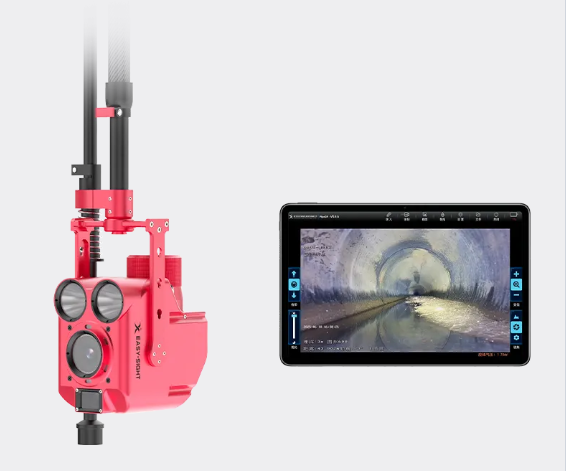
Pipeline inspection cameras significantly improve the efficiency and accuracy of pipeline maintenance.
Before inspection cameras were widely used, diagnosing pipe problems often required digging trenches or dismantling pipe sections. A pipe inspection camera eliminates unnecessary excavation by providing a clear internal view of the pipeline.
With real-time video feedback, technicians can quickly locate issues such as:
Pipe cracks
Blockages
Corrosion
Collapsed pipe sections
Tree root intrusion
This helps reduce downtime and repair costs.
Regular inspections help detect early signs of damage before they become serious failures. Municipalities and industrial facilities often schedule routine pipeline inspections to prevent costly system breakdowns.
Most modern pipeline inspection systems allow users to record video footage and capture images, creating a detailed inspection record that can be used for maintenance planning or reporting.
Different inspection environments require different camera systems. Below are the most common types of pipeline inspection cameras used in professional applications.
Push rod cameras are among the most widely used pipe inspection camera systems, especially in plumbing and small pipeline inspections.
Flexible push cable
Compact waterproof camera head
Built-in LED lighting
Portable design
Push rod pipeline inspection cameras are ideal for:
Residential plumbing inspections
Drain inspection
Sewer line inspection
Small diameter pipelines
These cameras typically work best in pipes ranging from 25 mm to 200 mm in diameter.
Many professional technicians prefer push rod systems because they are easy to operate, portable, and cost-effective.
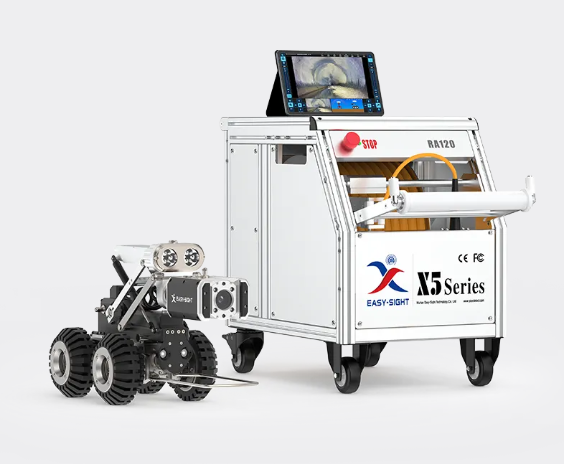
Crawler systems are designed for large-diameter pipelines where push rod cameras cannot travel efficiently.
Motorized crawler vehicle
High-definition camera
Remote control operation
Pan-and-tilt camera movement
Long-distance inspection capability
Crawler pipeline inspection cameras are commonly used in:
Municipal sewer inspection
Stormwater pipelines
Large industrial pipelines
Underground utility tunnels
Because they are motorized, crawler systems can travel hundreds of meters through large pipelines and provide detailed inspection data.
Pan-and-tilt cameras offer advanced viewing capabilities by allowing operators to rotate the camera horizontally and vertically.
360° rotation
Adjustable tilt angles
High-resolution imaging
Remote control functionality
Pan-and-tilt pipeline inspection cameras are especially useful for:
Complex pipe networks
Large sewer systems
Industrial pipeline inspection
Structural pipe analysis
By adjusting the viewing angle, operators can inspect pipe walls more thoroughly and detect small defects that might otherwise be missed.
A self-leveling camera automatically keeps the video image upright, regardless of how the camera head rotates inside the pipe.
Stable video orientation
Easier defect identification
Improved inspection efficiency
Self-leveling cameras are widely used in professional plumbing and drainage inspection systems.
Many modern pipeline inspection camera systems integrate this feature to enhance usability.
For highly complex or hazardous environments, robotic inspection systems provide advanced capabilities.
Robotic mobility
Long-distance inspection
High-definition cameras
Sensors and measurement tools
Robotic pipeline inspection systems are frequently used in:
Oil and gas pipelines
Petrochemical facilities
Power plants
Large infrastructure projects
These systems are designed for environments where manual inspection is difficult or dangerous.
Selecting the right pipeline inspection camera system depends on several important factors.
High-resolution cameras provide clearer images and make it easier to identify cracks, corrosion, and debris.
Different cameras are designed for specific pipe sizes. Always ensure the camera head fits the target pipeline diameter.
Inspection depth depends on cable length. For residential plumbing, 20–40 meters may be sufficient, while municipal pipelines may require over 100 meters.
Since pipelines are dark environments, strong LED lighting is essential for clear visibility.
Pipeline cameras must withstand water, debris, and harsh environments. Look for systems with strong waterproof ratings and corrosion-resistant materials.
Professional manufacturers, such as Easy-Sight, design pipeline inspection cameras specifically for demanding industrial environments where durability and reliable imaging are critical.
Pipeline inspection cameras are used across a wide range of industries.
Plumbers frequently use inspection cameras to locate clogs, damaged pipes, and root intrusion in residential and commercial drainage systems.
City maintenance teams rely on pipeline inspection cameras to monitor the condition of sewer infrastructure and identify maintenance needs.
Factories and processing plants use pipeline inspection systems to inspect pipelines carrying water, chemicals, or other industrial fluids.
In the energy sector, inspection cameras help detect corrosion, leaks, and structural weaknesses inside pipelines.
During construction projects, pipeline inspection cameras verify that newly installed pipelines are correctly aligned and free of defects.
Advanced inspection solutions developed by companies such as Easy-Sight help technicians perform accurate inspections while reducing maintenance time and operational costs.
As technology advances, pipeline inspection cameras are becoming more sophisticated.
Artificial intelligence can analyze inspection footage and automatically identify pipe defects.
Higher-resolution cameras allow inspectors to detect smaller cracks and early signs of corrosion.
Some inspection systems can generate digital maps of pipeline networks, improving maintenance planning.
Future systems may enable real-time remote monitoring through wireless connectivity and cloud-based data storage.
These innovations will make pipeline inspection faster, safer, and more accurate.
Pipeline inspection cameras have transformed how industries inspect and maintain underground and enclosed pipeline systems. By providing real-time visual access to areas that were once difficult or impossible to inspect, these tools help detect problems early and reduce costly repairs.
From push rod inspection cameras for small drains to robotic crawler systems for large industrial pipelines, there is a solution for nearly every inspection scenario. Selecting the right system depends on factors such as pipe diameter, inspection distance, and required image quality.
As technology continues to evolve, pipeline inspection cameras will play an even more important role in infrastructure maintenance, industrial safety, and environmental protection.
Previous: Key Considerations When Buying USB-C Cables
Next: What Is Low Voltage Switchgear? Basics and Applications
Copyright:@2020-2021

Comments Please sign in or sign up to post.
0
0 of 500 characters used