
In today’s competitive food manufacturing industry, efficiency, product quality, and hygiene are crucial for success. Implementing a Fresh Noodle Production Line can bring significant advantages to factories producing fresh noodles, ramen, or other specialty noodle products. Understanding these benefits helps factory managers, production engineers, and procurement specialists make informed investment decisions.
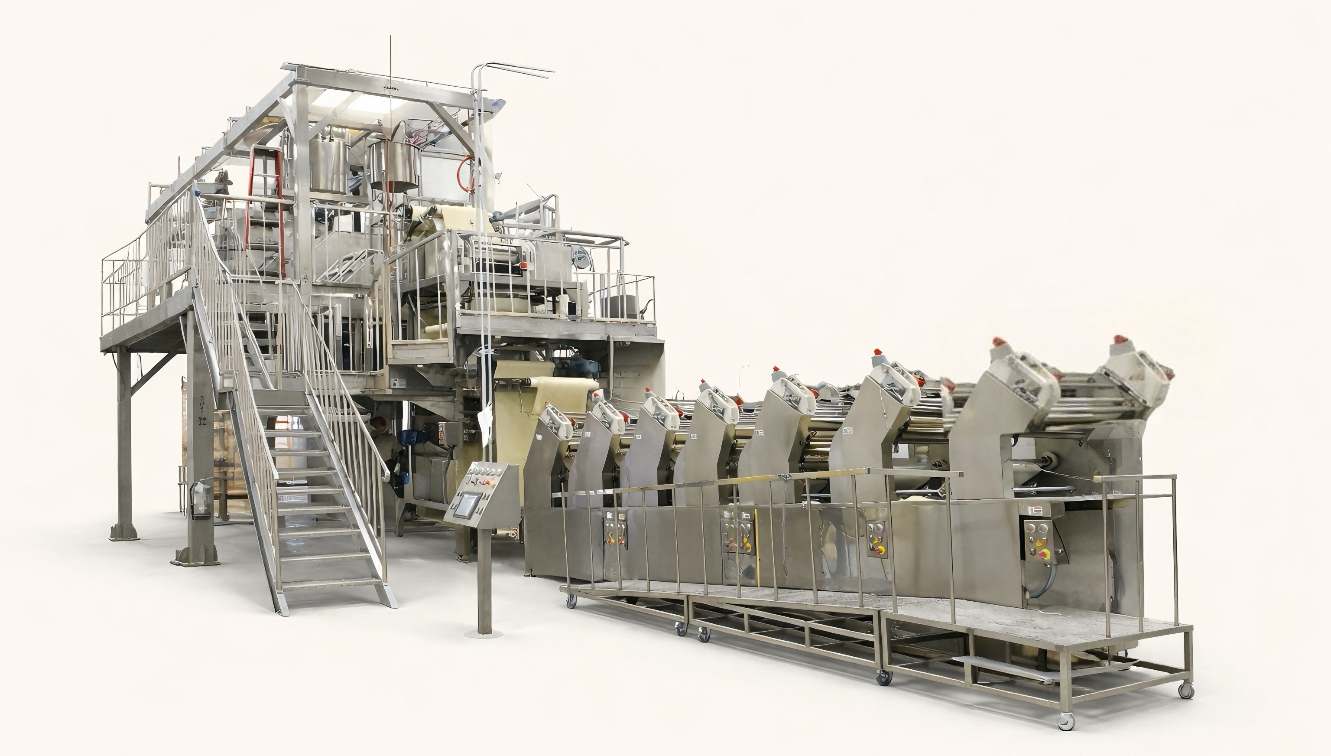
One of the primary benefits of using a fresh noodle production line is the ability to produce noodles with uniform texture, thickness, and shape. Automated systems ensure:
Even dough mixing and hydration
Consistent sheet thickness through precision rollers
Uniform cutting width using adjustable slitting systems
Reliable steaming or drying for consistent mouthfeel
This consistency is critical for maintaining brand reputation, especially when supplying restaurants, supermarkets, or packaged fresh noodle products.
Modern fresh noodle lines are designed to maximize output while minimizing labor input. Key efficiency advantages include:
High-speed automated dough feeding, sheeting, and slitting
Integrated conveyor systems that reduce manual handling
Automation of downstream processes like steaming, cooling, or stacking
Reduced cycle times and faster production turnover
Factories can produce more noodles per hour while lowering labor costs, which directly improves profitability.
A good fresh noodle production line offers versatility to produce a wide variety of products:
Wheat noodles, ramen, rice noodles, or specialty grains
Different noodle thicknesses, widths, and textures
Fresh, non-fried, or oil-free variants
This flexibility allows factories to adapt to market trends and customer demands without investing in multiple specialized machines.
Food safety is non-negotiable in modern production:
SS304 stainless steel contact surfaces prevent contamination and corrosion
Automatic feeding, cutting, and stacking reduce human contact
Easy-to-clean conveyors and detachable panels simplify sanitation
Compliance with international food safety standards (HACCP, ISO 22000)
These features ensure noodles are produced in a hygienic environment, reducing the risk of product recalls and strengthening customer trust.
Many modern lines are engineered for low energy consumption and optimized resource use:
VFD-driven motors for rollers, conveyors, and mixers
Efficient heating and drying systems for steam or hot air processing
Automated oil or water feeding systems (for specialty noodles)
Lower operational costs combined with reduced labor requirements provide a faster return on investment.
For more details please visit www.wintec-bj.com
Previous: What is the complete OEM process for medical consumables?
Next: None.
Copyright:@2020-2021

Comments Please sign in or sign up to post.
0
0 of 500 characters used