
In modern underground infrastructure, segmentally lined tunnels have become a preferred construction method due to their efficiency, durability, and adaptability. A critical component in ensuring the long-term performance of these tunnels is the Tunnel Segment Gaskets. These specialized sealing elements are installed between precast concrete segments to prevent water ingress, maintain structural integrity, and enhance overall tunnel safety.
For manufacturers like Hongcan, designing high-performance gaskets requires a deep understanding of engineering principles, material science, and environmental conditions. This article explores the key considerations and best practices in the design of tunnel segment gaskets.
Tunnel segment gaskets serve as the primary waterproofing barrier in segmentally lined tunnels. Their main functions include:
Preventing groundwater leakage
Accommodating segment misalignment and deformation
Maintaining sealing performance under high pressure
Ensuring durability over long service life
Without properly designed Tunnel Segment Gaskets, tunnels are vulnerable to water penetration, which can lead to corrosion, structural damage, and increased maintenance costs.
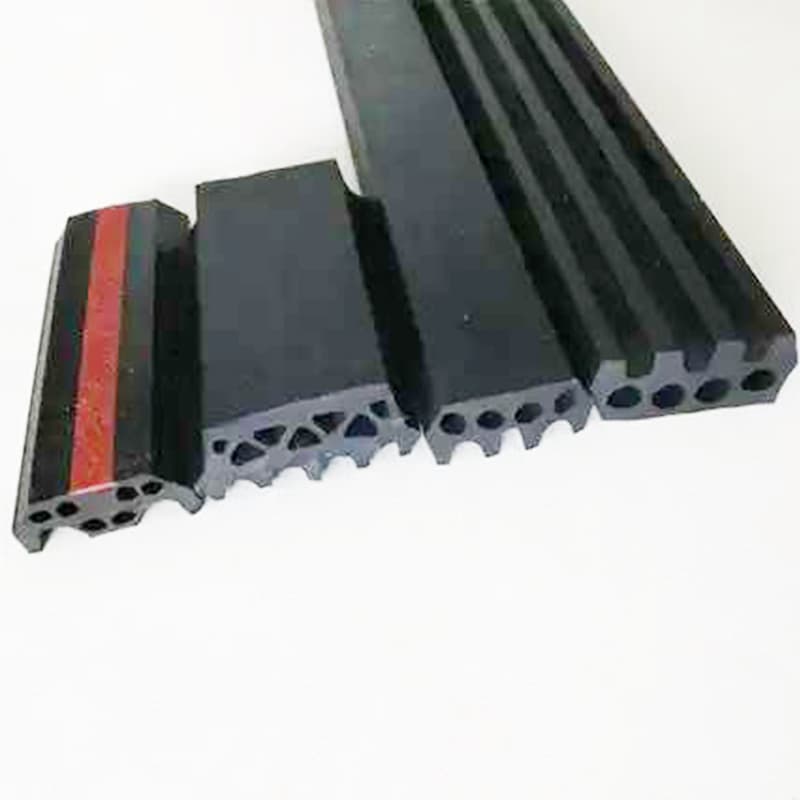
The choice of material is fundamental in gasket design. Common materials include EPDM (Ethylene Propylene Diene Monomer) rubber due to its excellent resistance to water, ozone, and aging. High-quality materials ensure that the gasket maintains elasticity and sealing performance over decades.
Manufacturers like Hongcan emphasize the use of premium-grade rubber compounds to enhance durability and environmental resistance.
A well-designed gasket must provide sufficient compression to create a watertight seal while allowing for construction tolerances. The compression rate typically ranges between 20% and 40%, depending on the design requirements.
Proper compression ensures:
Effective sealing under varying pressures
Resistance to creep and relaxation
Long-term performance stability
The shape and profile of Tunnel Segment Gaskets significantly influence their sealing capability. Common profiles include:
Solid gaskets
Hollow gaskets
Composite designs
The geometry must allow for easy installation while maximizing contact pressure between segments. Advanced designs often incorporate multiple sealing lips to enhance redundancy.
Segmentally lined tunnels often operate under high hydrostatic pressure, especially in deep underground or underwater environments. Gaskets must be designed to withstand these pressures without leakage.
Designers use finite element analysis (FEA) and laboratory testing to simulate real-world conditions and optimize gasket performance.
Precision manufacturing is essential for ensuring that gaskets fit perfectly within segment grooves. Even minor deviations can compromise sealing performance.
Hongcan employs advanced production technologies to maintain tight tolerances and consistent quality across all Tunnel Segment Gaskets.
In many cases, gaskets are produced in continuous loops or joined using vulcanization techniques. The strength of these joints is critical, as weak bonding points can lead to failure under stress.
Strict quality control measures, including tensile and pressure testing, are implemented to ensure joint reliability.
Even the best-designed gasket can fail if not installed correctly. Key installation practices include:
Ensuring clean and debris-free grooves
Avoiding twisting or stretching of the gasket
Maintaining proper alignment during segment assembly
Training and supervision during installation are essential to achieve optimal performance.
Tunnel segments may experience movement due to ground settlement, temperature changes, or operational loads. Gaskets must be flexible enough to accommodate these movements without losing sealing capability.
This requires a balance between stiffness and elasticity in the gasket design.
Modern Tunnel Segment Gaskets often incorporate double or even triple sealing mechanisms. These systems provide additional protection against leakage, especially in critical infrastructure projects.
Advancements in material science have led to the development of gaskets with enhanced properties, such as:
Improved chemical resistance
Self-lubricating surfaces for easier installation
Anti-microbial coatings for hygienic environments
Hongcan continues to invest in research and development to integrate these innovations into their gasket solutions.
Sustainability is becoming increasingly important in infrastructure projects. Eco-friendly gasket materials and manufacturing processes can reduce environmental impact while maintaining high performance.
Recyclable materials and energy-efficient production methods are now part of the design strategy for leading manufacturers.
The design of Tunnel Segment Gaskets is a complex process that requires careful consideration of materials, geometry, compression behavior, and environmental conditions. These components play a vital role in ensuring the safety, durability, and efficiency of segmentally lined tunnels.
With expertise and innovation, companies like Hongcan are setting new standards in gasket design, delivering reliable sealing solutions for modern tunneling projects. By focusing on quality, performance, and sustainability, Tunnel Segment Gaskets will continue to support the advancement of underground infrastructure worldwide.
Previous: None.
Next: Why Nitrile Gloves Are the Top Choice for Healthcare Workers
Copyright:@2020-2021

Comments Please sign in or sign up to post.
0
0 of 500 characters used