
In industrial filtration and separation systems, a coalescer cartridge plays a critical role in removing fine liquid droplets, aerosols, and contaminants from gas or liquid streams. When coalescing performance drops, system efficiency declines, product purity suffers, and downstream equipment becomes vulnerable to damage. Understanding why a coalescer cartridge loses efficiency is essential for maintaining reliable separation performance.
In many demanding industrial environments, a sintered filter cartridge is used alongside or inside coalescing systems because of its strength, durability, and stable filtration performance. High-quality solutions from ZHUAN LV help industrial users maintain efficient filtration and separation even under challenging operating conditions.
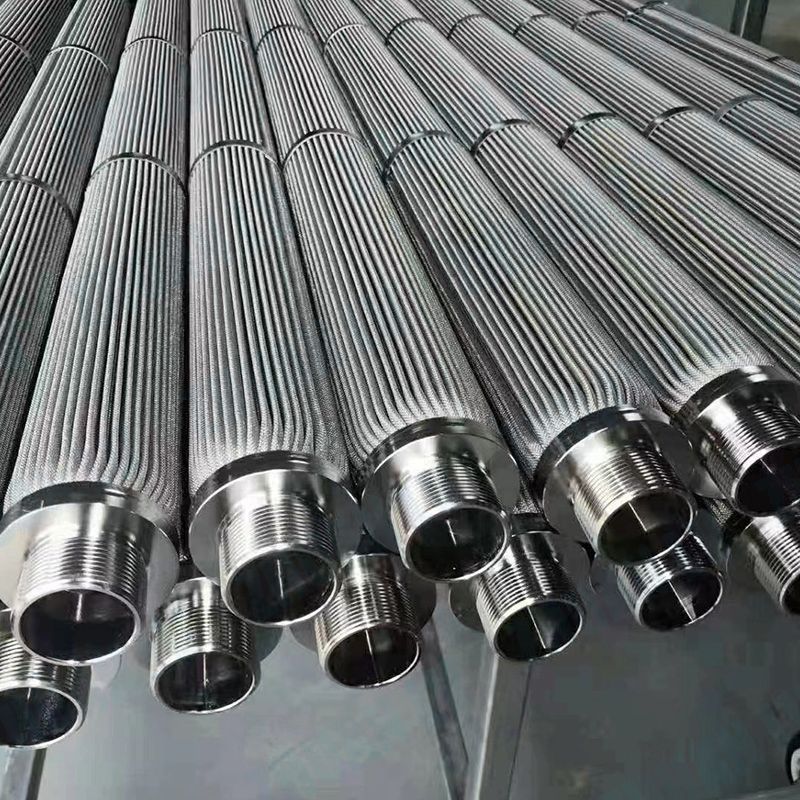
A coalescer cartridge is a specialized filter element designed to capture and merge fine liquid droplets suspended in gas or liquid streams. Instead of simply trapping particles, it promotes the coalescence of tiny droplets into larger ones, which can then be separated more easily by gravity or downstream separators.
A coalescer cartridge is commonly used in:
· Gas-liquid separation
· Compressed air systems
· Fuel filtration
· Oil-water separation
· Chemical processing
· Petrochemical systems
In many systems, a sintered filter cartridge is used as a pre-filter or support element to improve contaminant control and protect coalescing media.
A coalescer cartridge can lose efficiency for several operational and mechanical reasons. In most cases, declining performance is linked to contamination, flow instability, media damage, or poor maintenance.
One of the most common causes of coalescer efficiency loss is solid contamination.
A coalescer cartridge is designed primarily for liquid droplet separation, not heavy particle loading. When excessive solids enter the system, they clog the coalescing media and reduce droplet capture efficiency.
This can cause:
· Reduced coalescing surface area
· Higher pressure drop
· Poor droplet agglomeration
· Premature media blockage
Using a sintered filter cartridge as a pre-filtration stage can significantly reduce this problem.
A coalescer cartridge has a designed liquid handling capacity. When liquid loading exceeds this limit, the media becomes saturated and separation efficiency drops.
Excess liquid can flood the cartridge, preventing fine droplets from properly merging and draining.
Common results include:
· Carryover downstream
· Reduced separation efficiency
· Re-entrainment of droplets
· Unstable system performance
Liquid overload is a major reason why coalescer performance declines.
Flow velocity has a major impact on coalescing efficiency.
A coalescer cartridge requires controlled flow to allow droplets to collide, merge, and separate. If gas or liquid velocity is too high, droplets may pass through before coalescing can occur.
High flow velocity can cause:
· Reduced droplet residence time
· Poor droplet capture
· Re-entrainment of liquids
· Lower separation efficiency
This is one of the most common causes of sudden efficiency loss.
Mechanical damage can also reduce coalescer performance.
Over time, coalescing media may degrade due to chemical exposure, thermal stress, or repeated contamination.
When media fibers lose structure, the coalescer cartridge becomes less effective at capturing and combining droplets.
This often leads to:
· Reduced coalescing efficiency
· Higher carryover
· Lower contaminant removal
· Shortened service life
If the media becomes damaged or improperly seated, fluid may form channels through the cartridge instead of flowing evenly across the coalescing surface.
This reduces contact time and allows droplets to bypass the intended coalescing path.
A damaged seal or poor installation can create the same issue.
In systems supported by a sintered filter cartridge, structural stability is often improved, helping reduce flow bypass risks.
A coalescer cartridge must not only capture droplets but also allow them to drain properly.
If drainage is blocked, collected liquid can re-enter the process stream and reduce efficiency.
Poor drainage often causes:
· Media flooding
· Re-entrainment
· Increased carryover
· Unstable separation performance
Blocked drains are a common but often overlooked cause of poor coalescer performance.
Operating conditions strongly affect coalescer performance.
Changes in viscosity, surface tension, or density can reduce how easily droplets merge.
If process conditions change, the coalescer cartridge may no longer operate at its intended efficiency.
Rapid pressure changes can disrupt droplet formation and separation stability.
This can reduce coalescing efficiency and increase downstream carryover.
Temperature affects fluid viscosity and droplet behavior.
Excessive temperature changes may reduce separation efficiency or damage media over time.
Maintaining coalescer performance requires proper system design and routine maintenance.
A sintered filter cartridge helps remove solids before they reach the coalescer cartridge, protecting coalescing media from fouling.
Maintain flow within the cartridge’s design range to support proper droplet coalescence.
Avoid exceeding the liquid handling capacity of the coalescer system.
Proper sealing prevents bypass and channeling.
A worn coalescer cartridge should be replaced before separation efficiency drops too far.
A coalescer cartridge can lose efficiency due to solid fouling, liquid overload, high flow velocity, media degradation, channeling, drainage failure, and unstable process conditions. While a coalescer cartridge is highly effective in separation systems, its performance depends on clean flow, proper operating conditions, and regular maintenance.
By combining strong pre-filtration with high-quality separation solutions from ZHUAN LV, industrial users can reduce efficiency loss, improve contaminant removal, and maintain reliable long-term filtration performance.
Previous: How to Choose Carbon Fiber Propellers?
Next: Drain Valves Selection Guide: Types, Features, Applications
Copyright:@2020-2021

Comments Please sign in or sign up to post.
0
0 of 500 characters used