
Static seals play a crucial role in industrial systems by preventing leakage between two non-moving surfaces. Unlike dynamic sealing systems used in rotating equipment, static seals operate where there is no relative motion between components. In many machines that also use a Mechanical Seal, static sealing elements are equally important for ensuring overall system integrity and leak-free operation.
As a professional sealing solution provider, Hongcan supplies high-quality sealing products designed for demanding industrial environments. Understanding the four main types of static seals helps engineers select the right solution for safety, durability, and performance.
A static seal is a sealing element used between two stationary parts to prevent the leakage of liquids or gases. These seals are commonly used in flanges, pipe joints, valve covers, and housing connections.
Unlike a Mechanical Seal, which handles rotating shafts, static seals function in fixed connections where pressure containment is the primary requirement.
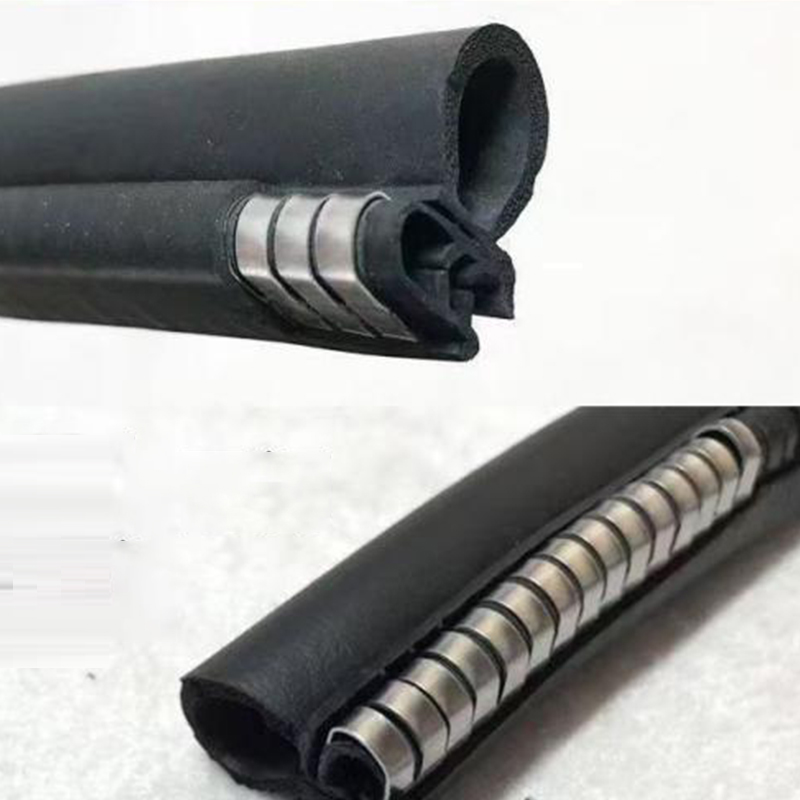
Static seals are essential in industrial systems because they:
· Prevent fluid and gas leakage
· Maintain system pressure
· Improve safety in chemical and high-pressure environments
· Reduce maintenance and downtime
· Enhance equipment reliability
Even small seal failures in static applications can lead to serious operational issues.
There are four widely recognized types of static seals used across industries. Each type is designed for specific applications and operating conditions.
Gasket seals are one of the most common types of static seals used in industrial applications.
A gasket is placed between two flanges or flat surfaces. When the components are tightened, the gasket compresses and fills surface irregularities, creating a leak-proof barrier.
· Rubber (NBR, EPDM)
· PTFE (Teflon)
· Graphite
· Fiber-reinforced composites
· Metal (for high-pressure systems)
· Simple installation
· Cost-effective
· Suitable for a wide range of pressures and temperatures
· Pipeline systems
· Heat exchangers
· Industrial tanks
· Chemical processing equipment
Gaskets are widely used alongside systems that may also incorporate a Mechanical Seal in rotating equipment.
O-ring seals are circular elastomer rings used to prevent leakage between stationary parts.
O-rings are placed in a groove between two surfaces. When compressed, they deform slightly to block fluid or gas passage.
· Nitrile rubber (NBR)
· EPDM
· Viton (FKM)
· Silicone
· PTFE
· Compact design
· Excellent sealing efficiency
· Low cost
· Easy replacement
· Hydraulic systems
· Pneumatic systems
· Valve assemblies
· Static flange joints
O-rings are widely used in both simple and high-precision sealing systems.
Although lip seals are commonly associated with rotating shafts, they can also function as static seals in certain assemblies.
A flexible sealing lip presses against a stationary surface to create a barrier against fluid leakage.
· Rubber elastomers
· PTFE compounds
· Polyurethane
· Good sealing flexibility
· Effective in contaminated environments
· Resistant to vibration and minor movement
· Automotive housings
· Gearbox covers
· Light industrial equipment
Lip seals are often used where minor movement or vibration may occur even in otherwise static systems.
Metal seals are designed for extreme pressure, temperature, and chemical conditions where elastomeric seals are not suitable.
Metal seals rely on precise machining and metal-to-metal contact or deformation to achieve sealing.
· Stainless steel
· Inconel
· Copper alloys
· Nickel-based alloys
· Excellent high-temperature resistance
· High-pressure capability
· Long service life
· Suitable for harsh environments
· Oil and gas systems
· Aerospace equipment
· High-pressure reactors
· Nuclear applications
Metal seals are used when reliability under extreme conditions is critical.
While static seals operate between stationary surfaces, a Mechanical Seal is used in rotating equipment such as pumps and mixers.
· Static seals: no movement between surfaces
· Mechanical seals: dynamic sealing between rotating and stationary parts
Both sealing types are often used together in industrial systems to ensure complete leakage protection.
Selecting the right static seal depends on several important factors.
High-pressure systems may require metal seals or reinforced gaskets.
Extreme temperatures require materials like PTFE or metal alloys.
Corrosive fluids require chemically resistant materials such as Viton or PTFE.
O-rings and gaskets are preferred for easy maintenance and replacement.
Working with experienced manufacturers like Hongcan ensures proper seal selection for long-term reliability.
The four main types of static seals—gaskets, O-rings, lip seals, and metal seals—each serve specific roles in preventing leakage between stationary components. Their selection depends on pressure, temperature, chemical exposure, and application requirements.
While static seals handle fixed joints, a Mechanical Seal is used for rotating equipment, and both are essential in industrial sealing systems. With advanced engineering and manufacturing expertise, Hongcan provides reliable sealing solutions designed for a wide range of industrial applications worldwide.
Copyright:@2020-2021

Comments Please sign in or sign up to post.
0
0 of 500 characters used