
Selecting the right Industrial Ice Machine is a critical decision for restaurants, food processing plants, hotels, supermarkets, and healthcare facilities. Ice production is often an essential part of daily operations, and insufficient capacity can lead to supply shortages, operational delays, and customer dissatisfaction.
As a professional equipment provider, Daxtro designs high-performance ice machines that support stable output, energy efficiency, and long-term reliability. Understanding key capacity and output factors helps businesses choose the right machine for their actual demand rather than relying on estimates.
This guide explains the most important performance indicators to evaluate before investing in a commercial ice machine.
Ice machine capacity refers to the amount of ice a unit can produce within a 24-hour period. This is one of the most important specifications when selecting Industrial Ice Machines because it directly determines whether supply can meet operational demand.
Choosing the wrong capacity can lead to:
· Ice shortages during peak hours
· Increased equipment strain and breakdown risk
· Higher operational costs due to inefficient usage
· Reduced service quality in commercial environments
Proper capacity planning ensures smooth and uninterrupted operations.
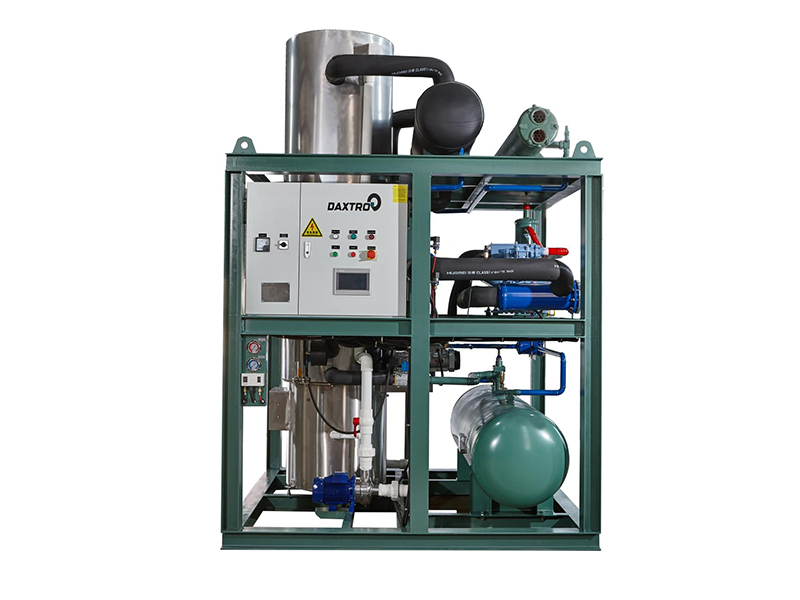
Manufacturers typically rate ice machines based on ideal laboratory conditions. However, real-world performance can vary depending on environment and usage patterns.
This is the maximum ice production under standard conditions (usually controlled temperature and water supply).
This is the actual ice production in real operating environments, which may be affected by:
· Ambient temperature
· Water temperature
· Ventilation conditions
· Machine workload cycles
When evaluating Industrial Ice Machines, always consider real output rather than relying only on nominal ratings.
Before selecting a machine, businesses must estimate daily ice consumption.
Different industries require different ice volumes:
· Restaurants: beverage ice consumption.
Different industries require different ice volumes:
· Restaurants: beverage cooling and food presentation
· Hotels: guest services and banquet operations
· Supermarkets: seafood and fresh product display
· Hospitals: medical and laboratory use
· Food processing plants: production and storage support
Ice usage is rarely constant. Peak hours must be considered to avoid shortages.
It is important to ensure storage capacity matches production capacity to avoid overflow or shortage cycles.
Daxtro recommends calculating both average daily demand and peak load demand when selecting equipment.
External conditions significantly impact ice machine performance.
High surrounding temperatures reduce cooling efficiency and lower ice production output.
Warmer water takes longer to freeze, reducing overall production speed.
Poor airflow around the machine can cause overheating and reduced efficiency.
For optimal performance of Industrial Ice Machines, proper installation environment is essential.
The compressor is the heart of any ice machine and directly affects output capacity.
Higher power compressors generally support higher ice production capacity.
· Air-cooled systems: easier installation but sensitive to ambient temperature
· Water-cooled systems: more stable in hot environments but require water supply
Efficient compressors reduce electricity consumption while maintaining stable output.
Daxtro integrates optimized compressor systems to balance performance and energy use.
Different types of ice require different production cycles.
Slowest production but widely used in beverages.
Faster production, commonly used in seafood and food display.
Moderate production speed, popular in retail and healthcare.
Faster-producing ice types generally increase total daily output, while denser ice types require longer freezing cycles.
Selecting the right ice type is essential when evaluating Industrial Ice Machines.
Ice production is only one part of the system—storage capacity is equally important.
If production exceeds storage capacity, ice may melt or overflow.
If storage is too large compared to production, supply shortages may occur during peak demand.
Well-insulated storage bins reduce melting losses and improve efficiency.
Industrial environments often require continuous ice production.
Machines should support long operating cycles without overheating.
Shorter recovery time allows faster return to full production after peak usage.
High-quality evaporators, condensers, and pumps ensure stable long-term operation.
Daxtro Industrial Ice Machines are designed for continuous and stable output performance.
Efficiency is not only about production capacity but also energy usage.
Higher efficiency means more ice produced per unit of electricity.
Lower energy consumption reduces long-term operating expenses.
Modern machines may include energy-saving modes for low-demand periods.
Water quality directly affects both output efficiency and machine lifespan.
· Scale buildup
· Reduced freezing efficiency
· Blocked water lines
· Lower ice quality
· Water filtration systems
· Regular maintenance cycles
· Descaling procedures
Clean water ensures consistent performance of Industrial Ice Machines.
Businesses should consider future growth when selecting capacity.
· Increasing customer demand
· Seasonal usage spikes
· Business expansion plans
Choosing a slightly higher capacity machine may reduce the need for future upgrades.
Selecting the right commercial ice machine requires careful evaluation of capacity, output efficiency, environmental conditions, compressor performance, ice type, and storage design. A well-matched system ensures consistent ice supply, lower operating costs, and long-term reliability.
For businesses investing in Industrial Ice Machines, understanding real-world performance factors is more important than relying on theoretical specifications. With advanced engineering and reliable production systems, Daxtro delivers high-performance ice machines designed to meet the demands of modern commercial and industrial environments.
Previous: How to Choose a Frozen Meal Vending Machine for High-Traffic Locations
Next: Why More Food Factories Are Upgrading Their Margarine Production Lines
Copyright:@2020-2021

Comments Please sign in or sign up to post.
0
0 of 500 characters used