
Exterior wall insulation plays a critical role in modern construction by improving energy efficiency, fire safety, acoustic performance, and building durability. Among the most widely used insulation materials are traditional rock wool boards and the newer Rock Wool Composite Board systems. Both provide excellent thermal insulation, but their structure, installation methods, and performance characteristics differ significantly.
For architects, contractors, and building developers, choosing the right insulation system for exterior walls requires careful evaluation of climate conditions, fire regulations, structural requirements, and project budget. As a professional insulation supplier, Huana provides advanced insulation solutions designed for commercial, industrial, and residential construction projects.
This article compares rock wool board and rock wool composite board to help determine which option is better suited for exterior wall applications.
Rock wool board is a rigid insulation material made from volcanic rock and mineral fibers processed at high temperatures.
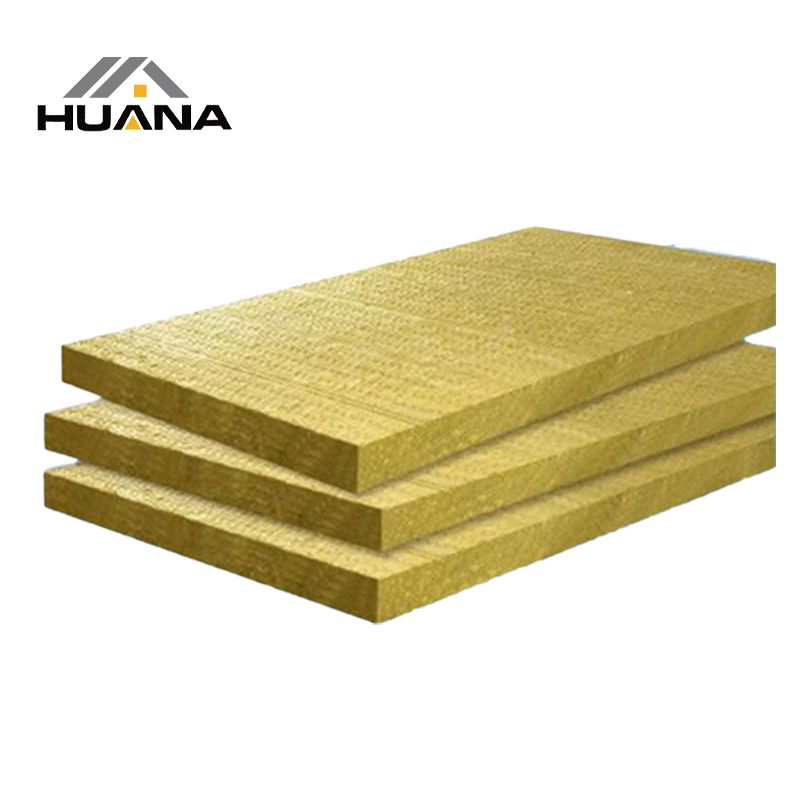
Rock wool boards effectively reduce heat transfer and improve building energy efficiency.
Rock wool is naturally non-combustible and can withstand extremely high temperatures.
The fibrous structure helps reduce noise transmission through walls.
Properly manufactured rock wool boards provide strong resistance to moisture and mold growth.
Traditional rock wool boards are commonly used in curtain walls, industrial facilities, roofing systems, and commercial buildings.
A Rock Wool Composite Board combines rock wool insulation with additional surface layers or composite materials to improve performance and installation efficiency.
Improve structural stability and exterior wall integration.
Enhance durability and weather resistance.
Provide aesthetic appearance while maintaining insulation performance.
These composite systems are increasingly popular in prefabricated construction and modern energy-efficient buildings.
Thermal efficiency is one of the most important considerations for exterior wall systems.
Traditional rock wool boards offer excellent insulation performance due to their dense fiber structure.
· Stable thermal resistance
· Good energy-saving capability
· Effective temperature control
However, installation quality strongly affects overall insulation efficiency.
A Rock Wool Composite Board often improves thermal performance through integrated structural layers and tighter installation systems.
· Reduced thermal bridging
· Improved sealing performance
· Better long-term insulation stability
Composite systems may provide more consistent insulation performance in large exterior wall applications.
Fire safety regulations are becoming stricter in modern construction.
Rock wool boards are widely recognized for their excellent fire resistance.
· Non-combustible material
· High-temperature resistance
· Minimal smoke generation
They are commonly used in fire-rated wall assemblies.
Most Rock Wool Composite Board systems also maintain excellent fire resistance, especially when combined with non-combustible outer layers.
· Enhanced structural protection during fire exposure
· Better integration with fire-safe facade systems
For high-rise buildings and commercial projects, composite boards may offer improved overall facade safety.
Installation complexity directly affects labor costs and project timelines.
Traditional rock wool boards often require:
· Mechanical fastening systems
· Adhesive application
· Additional protective layers
· Separate finishing systems
· More installation steps
· Higher labor intensity
· Greater risk of installation gaps
A Rock Wool Composite Board usually integrates multiple functions into one system.
· Faster installation
· Reduced construction complexity
· Better panel alignment
· Improved installation consistency
Composite systems are especially beneficial for large-scale commercial projects requiring faster completion.
Exterior walls must withstand long-term environmental exposure.
Traditional rock wool boards provide good moisture resistance but may require additional protective layers against weather exposure.
· Water infiltration if improperly sealed
· Surface damage during installation
Composite systems are specifically designed for exterior use.
· Improved weather resistance
· Better surface protection
· Enhanced wind resistance
· Longer facade lifespan
For harsh climates, Rock Wool Composite Board systems often provide stronger long-term durability.
Exterior insulation systems must maintain dimensional stability over time.
Rock wool boards provide good compressive strength but may be more vulnerable to deformation under improper installation conditions.
Composite structures improve rigidity and load distribution.
· Better impact resistance
· Increased panel stability
· Reduced deformation risk
These benefits are important for high-rise and large commercial buildings.
Budget considerations are important for every construction project.
Traditional rock wool boards generally have:
· Lower material cost
· Flexible installation options
· Lower initial investment
However, additional installation layers and labor may increase total system costs.
A Rock Wool Composite Board often has higher upfront material costs.
· Multi-layer manufacturing process
· Integrated finishing systems
· Enhanced structural performance
Despite higher initial cost, composite systems may reduce:
· Installation labor expenses
· Maintenance costs
· Future repair requirements
The best choice depends on project requirements.
· Lower upfront material cost
· Flexible customized installation
· Standard insulation applications
· Faster installation speed
· Enhanced facade durability
· Improved structural integration
· Better weather resistance
· Modern prefabricated construction compatibility
For large commercial and high-performance buildings, Rock Wool Composite Board systems often provide better long-term efficiency and reliability.
Huana provides advanced insulation materials for modern construction projects worldwide.
Key advantages include:
· High-quality insulation products
· Excellent fire-resistant performance
· Customized building insulation solutions
· Stable manufacturing quality
· Professional technical support
Huana helps clients select insulation systems optimized for safety, durability, and energy efficiency.
Both traditional rock wool boards and Rock Wool Composite Board systems offer excellent thermal insulation and fire resistance for exterior wall applications. Traditional rock wool boards provide cost-effective insulation performance, while composite boards offer enhanced durability, faster installation, and improved structural integration.
Choosing the right system depends on project budget, construction method, climate conditions, and long-term performance goals. With professional insulation expertise and advanced manufacturing capabilities, Huana delivers reliable exterior wall insulation solutions designed for modern energy-efficient buildings.
Previous: Is a Bathroom with Custom Mosaic Art Waterproof and Easy to Maintain?
Next: How Climate and Location Impact Material Selection for Custom Sports Venues
Copyright:@2020-2021

Comments Please sign in or sign up to post.
0
0 of 500 characters used