
Compressed air systems are critical in modern industrial operations, powering tools, machinery, and automation equipment. However, the quality of compressed air depends heavily on proper filtration. Two common types of filtration are coalescing filters and particulate filters. Understanding the differences, functions, and applications of these filters is essential for maintaining equipment efficiency, extending service life, and ensuring product quality.
ZHUAN LV specializes in providing high-quality air compressor intake filters and air-oil separator filter elements designed to meet diverse industrial requirements.
A particulate filter, also known as a mechanical or dust filter, is designed to remove solid particles from the air before it enters the compressor or downstream equipment. These particles may include:
· Dust and dirt
· Rust particles
· Sand or debris
· Other airborne contaminants
Particulate filters use dense fibrous media to trap solid contaminants as air passes through. The air flows through multiple layers of media, allowing:
· Fine particles to be captured
· Clean air to pass downstream
· Prevention of wear and tear on the compressor
· Protects internal compressor components
· Reduces energy consumption by maintaining smooth airflow
· Extends the lifespan of downstream equipment
· Prevents contamination in sensitive applications
Particulate filters are commonly installed as air compressor intake filters, forming the first line of defense against airborne solid contaminants.
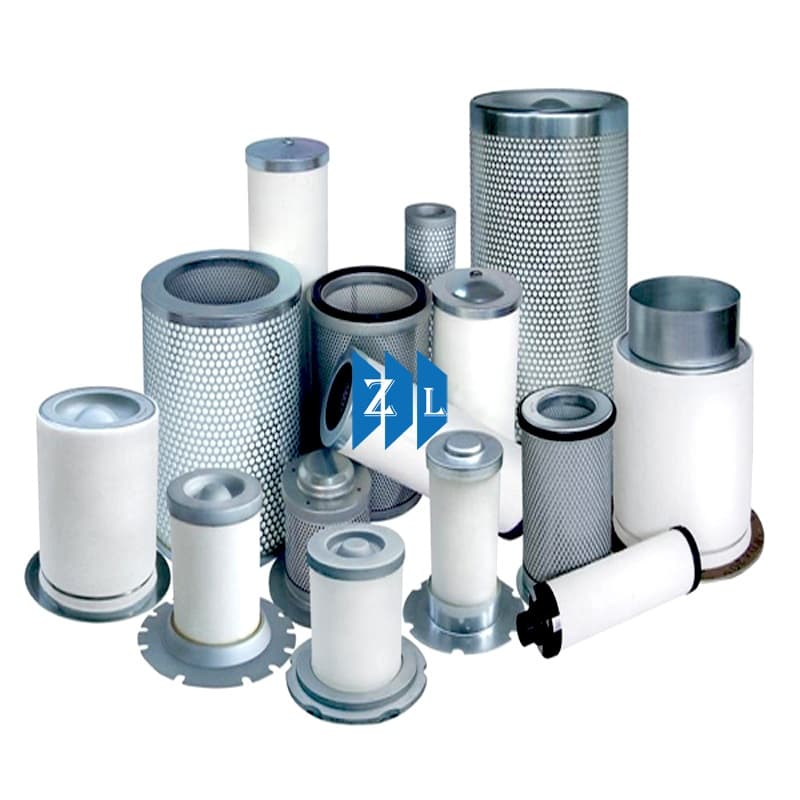
A coalescing filter, also known as an air-oil separator filter element, is designed to remove liquid aerosols such as oil mist and water droplets from compressed air. Unlike particulate filters, coalescing filters target liquid contaminants that can cause significant damage to equipment and reduce air quality.
Coalescing filters operate through a combination of mechanisms:
1. Impaction and interception: Airborne liquid droplets collide with the filter fibers and stick to the media.
2. Coalescence: Smaller droplets merge into larger droplets as they pass through the filter layers.
3. Drainage: The larger droplets become heavy enough to fall into a collection chamber, preventing them from reaching the downstream system.
This process ensures high-efficiency removal of oil and water aerosols, producing clean, dry air suitable for sensitive applications.
· Removes fine oil mist from compressed air
· Prevents corrosion and wear in downstream equipment
· Improves air quality for pneumatic tools and instrumentation
· Reduces maintenance and downtime
Coalescing filters are particularly important in oil-lubricated compressors, where small oil droplets can easily contaminate the compressed air.
Feature | Particulate Filter | Coalescing Filter (Air-Oil Separator) |
Primary Function | Removes solid particles | Removes liquid aerosols (oil, water) |
Filter Media | Fibrous or pleated media | Fine fiber media with coalescing properties |
Typical Installation | Compressor intake | After compressor, in compressed air line |
Contaminants Removed | Dust, rust, sand | Oil mist, water droplets |
Maintenance Focus | Replace when clogged | Replace when saturated or pressure drop increases |
Understanding these differences helps engineers select the right filter for each stage of the compressed air system.
· Installed at the compressor intake to protect internal components
· Suitable for dusty or contaminated environments
· Essential for pre-filtration before oil-lubricated compressors
· Installed downstream of the compressor to remove oil and water aerosols
· Used in applications requiring clean, dry air, such as instrumentation, food processing, or pharmaceuticals
· Often combined with particulate filters for comprehensive air purification
Many modern compressed air systems use a combination of particulate and coalescing filters for optimal performance. The sequence typically follows:
1. Air compressor intake filter (particulate) – removes solid contaminants before entering the compressor
2. Air-oil separator filter element (coalescing) – removes oil mist and water after compression
3. Optional downstream filters – additional particulate or coalescing stages for ultra-clean air
This layered approach ensures the highest air quality, protects equipment, and extends maintenance intervals.
To maximize filtration efficiency:
· Inspect filters regularly for pressure drop or contamination
· Replace filters according to manufacturer schedules
· Use genuine replacement filter elements, such as ZHUAN LV air compressor intake filters and air-oil separator elements
· Monitor air quality for oil or particulate contamination
Proper maintenance ensures consistent compressed air performance and reduces operational costs.
Both particulate filters and coalescing (air-oil separator) filters play essential roles in compressed air systems. Particulate filters protect compressors from solid contaminants, while coalescing filters remove oil and water aerosols from compressed air streams. Using these filters in combination, along with regular maintenance, helps maintain clean, dry air, improves equipment reliability, and ensures high-quality industrial operations.
ZHUAN LV provides high-performance air compressor intake filters and air-oil separator filter elements designed to deliver reliable, long-lasting filtration solutions for a wide range of industrial applications.
Copyright:@2020-2021

Comments Please sign in or sign up to post.
0
0 of 500 characters used