
In piping design for HVAC, fire protection, and industrial systems, choosing the correct connection method is critical for safety, cost efficiency, and long-term reliability. Two of the most commonly compared options are threaded pipe fittings and grooved systems.
While both serve important roles, their suitability depends heavily on pipe diameter, system pressure, and application type. For procurement teams working with a Threaded Pipe Fittings manufacturer, understanding where threaded fittings still make sense—and where grooved systems are superior—is essential for optimal system design.
Threaded pipe fittings connect pipes by cutting internal and external threads and sealing them with PTFE tape or pipe compound. This method creates a rigid mechanical connection that is simple and cost-effective for small piping systems.
A reliable Threaded Pipe Fittings manufacturer typically supplies fittings used in plumbing, small HVAC branches, and low-pressure utility lines.
However, threaded systems become increasingly impractical as pipe diameter and system pressure increase.
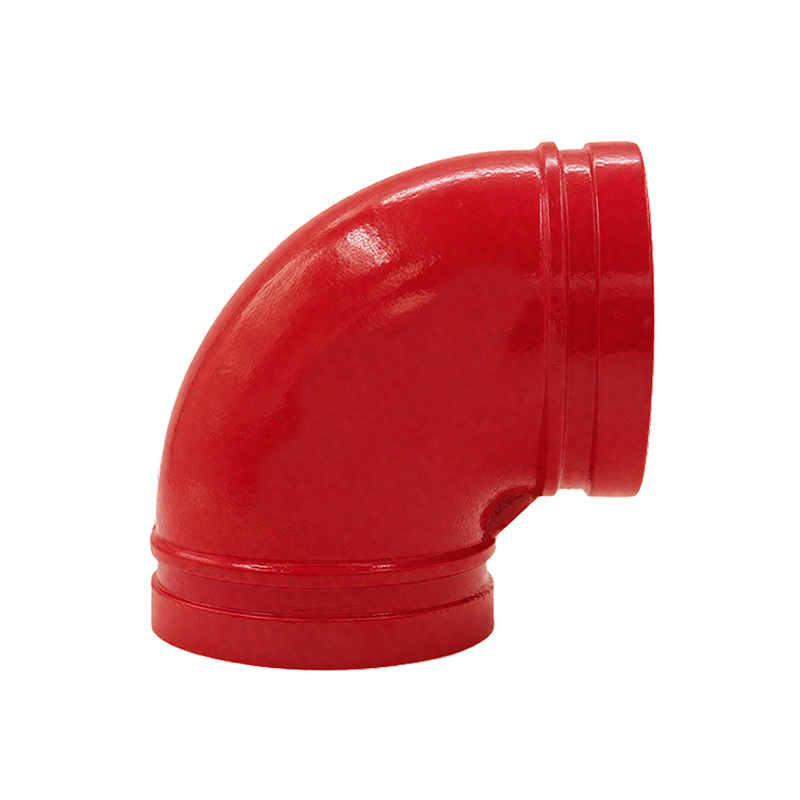
Grooved systems use a coupling housing and gasket to join pipes with pre-cut grooves. This design allows faster installation, easier maintenance, and better flexibility under vibration and pressure fluctuations.
A grooved pipe fittings supplier typically supports large-scale HVAC, fire protection, and industrial piping systems where speed and scalability are critical.
Threaded pipe fittings are most commonly used in small-diameter pipelines, typically:
· DN15 to DN50 (½ inch to 2 inches)
At this scale, threading is practical because:
· Pipe wall thickness is sufficient for threading
· Torque requirements are manageable
· Manual installation is still efficient
· System pressure is usually moderate
For residential plumbing, small HVAC branches, and light utility systems, sourcing from a Threaded Pipe Fittings manufacturer remains a cost-effective solution.
Grooved systems become significantly more efficient as pipe diameter increases, typically:
· DN65 and above (2½ inches and larger)
At larger diameters:
· Threading becomes labor-intensive and impractical
· Pipe weight makes alignment difficult
· Torque requirements increase significantly
· Installation errors become more likely
Grooved systems eliminate these issues by using mechanical couplings that are easier to install regardless of pipe size.
In HVAC applications, both methods are used depending on system size:
· Threaded fittings: small branch lines, terminal connections
· Grooved systems: chilled water mains, risers, large distribution lines
Large commercial HVAC projects strongly favor grooved systems due to faster installation and reduced labor cost.
Fire sprinkler systems often combine both methods:
· Threaded fittings: small sprinkler drops and branch connections
· Grooved systems: main risers and distribution piping
In modern installations, grooved systems dominate larger fire mains because they offer better reliability under vibration and pressure surges.
Industrial piping systems typically require:
· High flow capacity
· Frequent maintenance access
· Resistance to vibration
Grooved systems are preferred for main pipelines, while threaded fittings may still be used for instrumentation or auxiliary lines.
Threaded connections are:
· Easy to install in small sizes
· Cost-effective for low-pressure systems
· Limited by pipe thickness and diameter
· Labor-intensive at larger scales
As pipe size increases, installation time and difficulty rise exponentially, reducing practicality.
Grooved systems provide:
· Fast installation regardless of pipe size
· Reduced dependency on skilled labor
· Better performance under vibration and thermal expansion
· Easier maintenance and disassembly
This scalability makes them the preferred choice for large infrastructure projects.
Below is a simplified comparison of suitability across different pipe sizes:
This shows a clear transition point: threaded fittings are optimal for small diameters, while grooved systems dominate medium to large piping.
Grooved systems eliminate threading and welding, significantly reducing labor time in large projects.
Installation can be performed by general technicians, not only highly specialized workers.
Grooved couplings allow for easier system modifications, maintenance, and expansion.
These advantages are especially important when sourcing from a grooved pipe fittings supplier for large-scale projects.
HuLu provides engineered piping solutions that support both threaded and grooved applications depending on project requirements. As a professional manufacturer, HuLu ensures:
· Precise dimensional accuracy for threaded fittings
· Durable ductile iron grooved components
· Compatibility with international piping standards
· Stable performance across HVAC and industrial systems
This makes HuLu a dependable partner for contractors needing flexible piping solutions across different pipe diameters.
The choice between threaded pipe fittings and grooved systems depends primarily on pipe diameter and application requirements. Threaded fittings remain effective for small-diameter, low-pressure systems where simplicity and cost efficiency are key. However, grooved systems are clearly superior for medium to large diameters due to their scalability, installation speed, and mechanical reliability.
For engineers and contractors selecting a Threaded Pipe Fittings manufacturer, it is important to also consider grooved alternatives for larger systems. With manufacturers like HuLu offering both solutions, projects can achieve optimized performance, reduced installation time, and improved long-term system efficiency.
Copyright:@2020-2021

Comments Please sign in or sign up to post.
0
0 of 500 characters used