
Plate heat exchangers are widely used in industries such as HVAC, food processing, chemical production, power generation, and marine engineering. A key component that ensures their efficient and leak-free operation is the Plate Heat Exchanger Gaskets. These gaskets seal the channels between plates, preventing mixing of fluids while allowing effective heat transfer.
As a professional sealing solutions provider, Hongcan supplies high-performance gasket solutions designed for demanding plate heat exchanger applications. Understanding the types of gaskets used in these systems helps improve equipment reliability, efficiency, and service life.
Plate heat exchanger gaskets are flexible sealing components installed around heat exchanger plates. Their main function is to:
· Prevent leakage between plates
· Separate hot and cold media
· Direct fluid flow through specific channels
· Maintain system pressure
Unlike a Mechanical Seal, which is used in rotating equipment, plate heat exchanger gaskets work in static sealing conditions under compression.
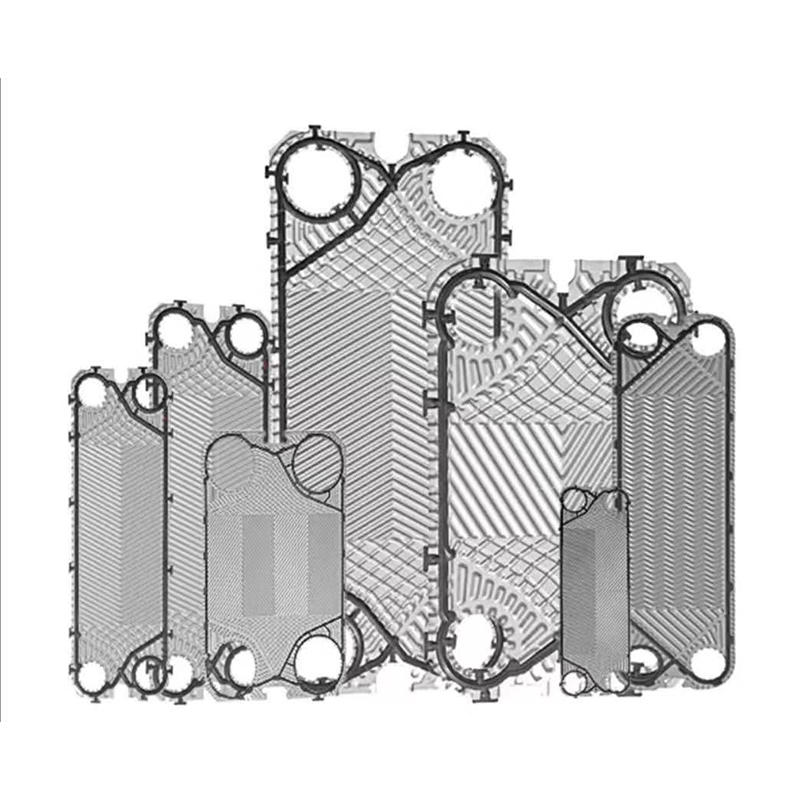
The performance of a plate heat exchanger depends heavily on gasket material selection. The right material ensures:
· Resistance to temperature fluctuations
· Chemical compatibility with fluids
· Long service life under compression
· Reliable sealing performance
· Reduced maintenance downtime
Incorrect gasket selection can lead to leakage, reduced efficiency, and equipment failure.
Different operating conditions require different gasket materials. The most commonly used materials include EPDM, NBR, Viton (FKM), and sometimes PTFE-based composites.
EPDM is one of the most widely used materials in Plate Heat Exchanger Gaskets.
EPDM performs very well in hot water and steam applications. It also offers good resistance to many acids, alkalis, and polar substances. In addition, it maintains flexibility and sealing performance over a long service life.
EPDM is commonly used in HVAC systems, district heating, water treatment systems, and food and beverage processing. It is often the preferred choice for water-based applications.
NBR is commonly used in oil and hydrocarbon-related applications.
NBR provides strong resistance to petroleum-based fluids and good mechanical strength under moderate pressure conditions. It is also a cost-effective solution for many industrial systems.
NBR is widely used in oil coolers, hydraulic systems, refrigeration systems, and light chemical processing. However, it is not suitable for high-temperature steam applications compared to EPDM.
Viton is a high-performance elastomer used in demanding chemical environments.
Viton offers excellent resistance to aggressive chemicals, acids, and solvents. It also performs well under high-temperature conditions and maintains long-term durability under continuous stress.
It is commonly used in chemical processing plants, petrochemical industries, high-temperature heat exchangers, and aggressive fluid handling systems. Viton is selected when EPDM and NBR are not sufficient.
PTFE is used in extreme chemical and temperature conditions.
PTFE provides near-universal chemical resistance and performs across a very wide temperature range. It also has a low-friction surface that helps reduce scaling and buildup inside heat exchanger plates.
PTFE is used in highly corrosive chemical processing, pharmaceutical production, ultra-pure water systems, and specialized industrial environments. It is more rigid than elastomers and requires careful installation.
Plate heat exchanger gaskets are installed in grooves around each plate. When the plates are compressed together, the gasket material deforms slightly and forms a tight seal.
Their sealing function includes:
· Preventing external leakage
· Ensuring correct fluid channeling
· Maintaining internal pressure balance
· Supporting efficient heat transfer
Proper compression is essential to achieve reliable sealing performance.
Selecting the right Plate Heat Exchanger Gaskets depends on several key factors.
Temperature conditions determine whether EPDM, NBR, or Viton is suitable. Fluid type is also critical, as oil-based fluids require NBR while corrosive chemicals require Viton or PTFE. Pressure requirements and cleaning methods such as CIP (clean-in-place) also influence material selection.
Working with experienced manufacturers like Hongcan helps ensure the correct gasket choice for long-term performance and safety.
Even high-quality gaskets can fail under improper operating conditions.
Overcompression can permanently deform the gasket material. Chemical incompatibility may cause swelling, cracking, or degradation. Excessive temperature exposure can shorten service life, while natural aging gradually reduces elasticity.
Regular inspection and maintenance are important to maintain system reliability.
Plate heat exchangers depend heavily on gasket performance to ensure safe and efficient operation. The most commonly used Plate Heat Exchanger Gaskets include EPDM, NBR, Viton (FKM), and PTFE, each designed for specific temperature, chemical, and pressure conditions.
Choosing the correct gasket material is essential for preventing leakage and maximizing heat exchanger efficiency. With advanced sealing technology and manufacturing expertise, Hongcan provides reliable gasket solutions for industrial applications worldwide.
Copyright:@2020-2021

Comments Please sign in or sign up to post.
0
0 of 500 characters used