
In industrial sealing systems, especially in heat exchangers, piping, and pressure equipment, gasket selection plays a crucial role in preventing leakage and ensuring operational safety. Among the most commonly discussed sealing types are ring gaskets and FF gaskets. Understanding their differences is essential when working with Plate Heat Exchanger Gaskets, where sealing accuracy directly impacts performance and efficiency.
As a professional sealing solutions provider, Hongcan supplies high-quality gasket solutions designed for industrial heat exchangers and other demanding applications. This article explains the key differences between ring gaskets and FF (full face) gaskets, including design, application, and performance characteristics.
Plate Heat Exchanger Gaskets are sealing components installed between heat exchanger plates or flange connections. Their primary function is to prevent fluid leakage while maintaining pressure and ensuring efficient heat transfer.
These gaskets are designed to:
· Seal fluid channels between plates
· Prevent cross-contamination of media
· Maintain system pressure
· Improve thermal efficiency
Although ring gaskets and FF gaskets can both be used in industrial sealing systems, their design and application differ significantly.
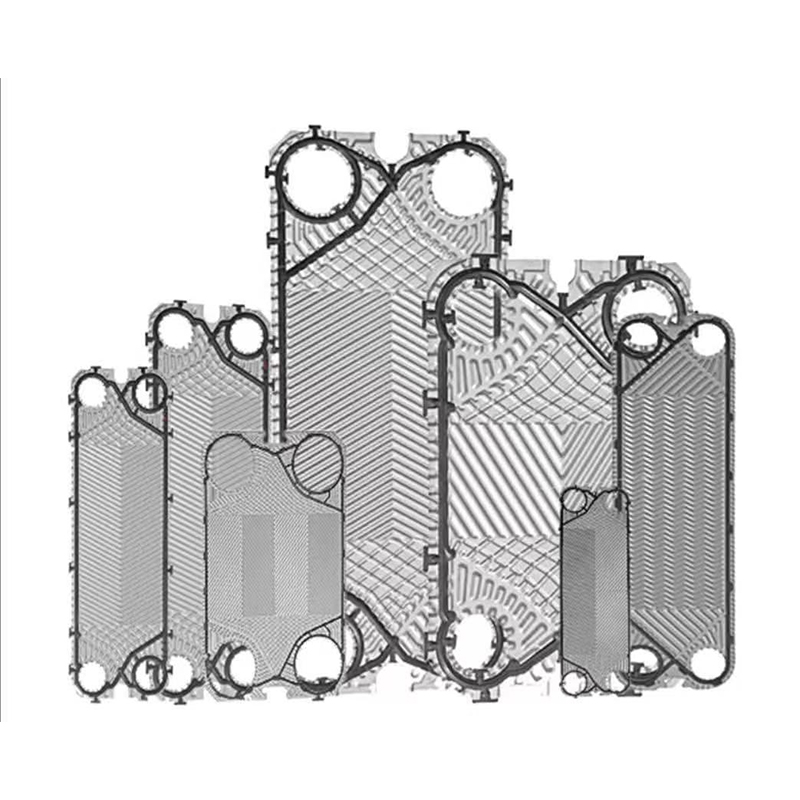
A ring gasket is a circular sealing element designed to fit inside the bolt circle of a flange connection. It seals only the inner surface of the flange, where the fluid passes.
Ring gaskets seal only the inner portion of the flange face, not the entire surface.
Because of their smaller size, they require less material and are more cost-effective.
The sealing force is concentrated on a smaller area, improving sealing efficiency in certain applications.
· High-pressure piping systems
· Chemical pipelines
· Compact flange connections
· Industrial equipment joints
Ring gaskets are widely used where space and cost efficiency are important.
An FF gasket, or full face gasket, covers the entire flange surface, including both the inner bore and bolt holes. It provides sealing across the full contact area between two flange faces.
FF gaskets extend over the entire flange face, providing broader sealing contact.
They help reduce leakage caused by flange misalignment or surface imperfections.
Full-face coverage simplifies positioning during assembly.
· Low to medium pressure systems
· Water pipelines
· HVAC systems
· Large diameter flange connections
FF gaskets are commonly used in general industrial and utility applications.
Understanding the differences between these two gasket types is essential for selecting the right Plate Heat Exchanger Gaskets for specific applications.
Ring gaskets seal only the inner diameter of the flange, while FF gaskets cover the entire flange surface including bolt holes.
Ring gaskets use less material, making them more economical. FF gaskets require more material due to their full coverage design.
Ring gaskets concentrate sealing pressure on a smaller area, while FF gaskets distribute pressure across a wider surface.
Ring gaskets require precise alignment within the bolt circle. FF gaskets are easier to position due to full-face coverage.
Ring gaskets are preferred in high-pressure and compact systems. FF gaskets are more suitable for low to medium pressure and general utility systems.
Neither ring gaskets nor FF gaskets are universally better. The choice depends on operating conditions and system design.
Ring gaskets are ideal when:
· High pressure is involved
· Space is limited
· Precise sealing is required
· Cost efficiency in material use is important
FF gaskets are suitable when:
· Flange alignment may vary
· Lower pressure systems are used
· Easier installation is required
· Large flange surfaces need full sealing coverage
In plate heat exchanger systems, gasket design is carefully selected based on pressure, temperature, and fluid type to ensure optimal performance.
Both ring and FF gaskets used in Plate Heat Exchanger Gaskets systems can be made from various materials depending on application requirements.
Best for water, steam, and HVAC applications.
Suitable for oil-based and hydrocarbon fluids.
Ideal for high-temperature and chemically aggressive environments.
Used in extreme chemical and high-purity applications.
Material selection is often more important than gasket shape when determining performance.
Hongcan provides advanced sealing solutions for industrial heat exchangers and piping systems. With strong engineering capability and material expertise, Hongcan ensures that Plate Heat Exchanger Gaskets meet strict requirements for durability, chemical resistance, and long service life.
Proper gasket selection helps industries reduce leakage risks, improve efficiency, and extend equipment lifespan.
The main difference between ring gaskets and FF (full face) gaskets lies in their sealing area, material usage, pressure distribution, and application range. Ring gaskets are best suited for high-pressure, compact systems, while FF gaskets are ideal for low to medium pressure applications requiring full surface sealing.
For Plate Heat Exchanger Gaskets, selecting the right gasket type is essential to ensure safety, efficiency, and long-term reliability. With professional engineering support and high-quality materials, Hongcan delivers dependable sealing solutions for a wide range of industrial applications.
Previous: What Is the Difference Between a Gasket and a Mechanical Seal?
Next: None.
Copyright:@2020-2021

Comments Please sign in or sign up to post.
0
0 of 500 characters used