
Sealing technology is essential in industrial equipment, helping prevent fluid leakage, maintain system pressure, and improve operational efficiency. When selecting a sealing solution, many engineers and equipment operators ask: What is the difference between a Mechanical Seal and a normal seal?
While both types of seals are designed to prevent leakage, they differ significantly in design, performance, applications, and reliability. Understanding these differences can help businesses choose the most effective solution for pumps, compressors, mixers, and other industrial equipment.
In this article, we'll explore the key distinctions between a Mechanical Seal and a normal seal, along with their advantages, applications, and why quality products from Hongcan are trusted by industries worldwide.
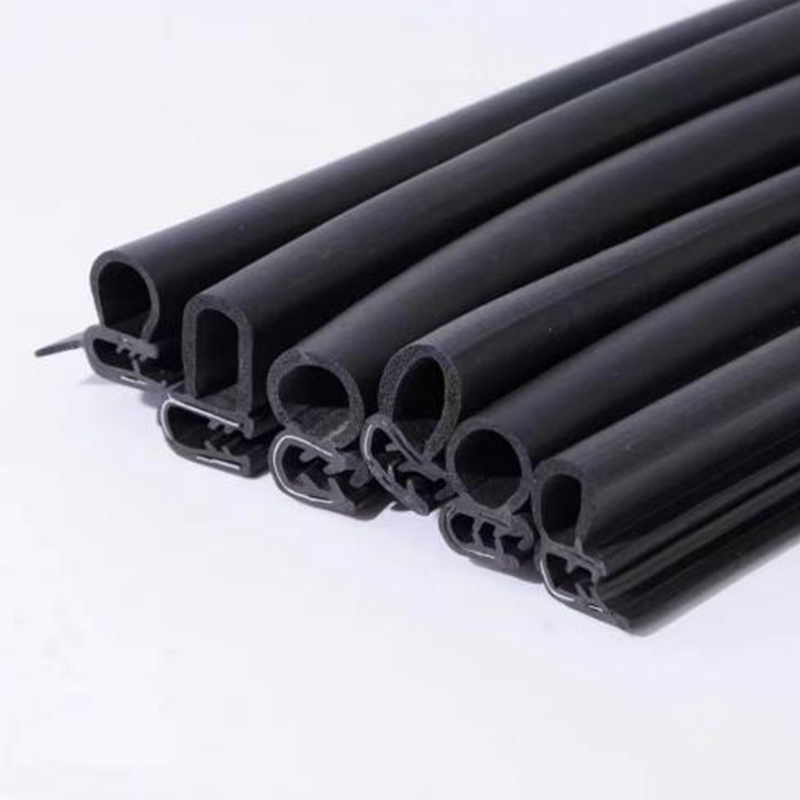
The term "normal seal" is often used to describe traditional sealing methods such as packing seals, lip seals, O-rings, or simple rubber seals. These sealing solutions are commonly used in low-pressure or less demanding applications.
Packing material is compressed around a rotating shaft to reduce leakage.
Rubber or elastomer lips create a barrier against fluid leakage and contaminants.
Circular elastomer rings provide sealing between stationary or moving components.
Flat sealing materials placed between stationary surfaces to prevent leakage.
These sealing methods are generally simple, cost-effective, and easy to install.
A Mechanical Seal is a precision-engineered sealing device designed specifically for rotating equipment. It prevents fluid leakage between a rotating shaft and a stationary housing.
Unlike traditional seals, a mechanical seal uses highly polished sealing faces that operate in close contact to create a controlled leakage barrier.
Attached directly to the shaft and rotates with the equipment.
Mounted inside the housing and remains fixed.
Usually O-rings or elastomer components that provide additional sealing.
Maintain contact pressure between the sealing faces.
This advanced design allows the Mechanical Seal to provide superior sealing performance compared to many conventional options.
Understanding the differences between these sealing technologies is essential when selecting equipment components.
Traditional seals typically rely on compression or physical contact between flexible materials and surfaces.
A Mechanical Seal uses precision-machined seal faces that create a highly controlled sealing interface.
This allows for significantly lower leakage rates.
Small amounts of leakage are often expected and accepted.
Designed to minimize leakage to extremely low levels.
Industries handling chemicals, hazardous fluids, or valuable products often prefer mechanical seals for this reason.
May wear out more quickly due to friction, pressure, and environmental conditions.
Built for long service life with wear-resistant materials such as:
· Silicon carbide
· Tungsten carbide
· Carbon graphite
· Ceramic
These materials provide excellent durability under demanding operating conditions.
Packing seals frequently require adjustment and replacement.
Requires less routine maintenance and offers more stable performance over time.
This can significantly reduce equipment downtime.
Higher friction often results in greater energy consumption.
Lower friction leads to improved energy efficiency and reduced operating costs.
Best suited for simple, low-pressure, or low-speed applications.
Designed for high-pressure, high-speed, and demanding industrial environments.
Modern industries increasingly choose Mechanical Seal technology because of its numerous benefits.
Mechanical seals provide superior containment of process fluids.
They help protect shafts, bearings, and surrounding components from damage.
Reduced leakage helps meet environmental and workplace safety regulations.
Mechanical seals maintain consistent performance under challenging conditions.
Although the initial cost may be higher, reduced maintenance and longer service life often result in lower long-term costs.
The versatility of the Mechanical Seal makes it suitable for a wide range of industries.
Used in pumps and circulation systems.
Provides reliable sealing for corrosive and hazardous fluids.
Handles demanding pressure and temperature conditions.
Supports hygienic and efficient production processes.
Ensures contamination-free operation and product integrity.
A Mechanical Seal is typically the preferred option when:
Critical equipment benefits from consistent sealing performance.
Ideal for valuable, hazardous, or environmentally sensitive fluids.
Mechanical seals are well-suited for long-term industrial operation.
Traditional seals often struggle in demanding operating conditions.
For these reasons, many modern industrial systems rely on mechanical seals rather than conventional sealing solutions.
Selecting a trusted supplier is just as important as selecting the right seal design. Hongcan manufactures premium Mechanical Seal products engineered for durability, efficiency, and reliability.
Hongcan uses advanced seal face and elastomer materials for extended service life.
Strict quality control ensures consistent performance and accurate fit.
Solutions are available for pumps, compressors, mixers, and other rotating equipment.
Hongcan helps customers choose the ideal seal for their specific operating conditions.
The primary difference between a Mechanical Seal and a normal seal lies in their design and performance. Traditional seals rely on simple compression or contact methods, while a Mechanical Seal uses precision sealing faces to achieve superior leakage control, durability, and efficiency.
Although mechanical seals may have a higher initial cost, their long service life, reduced maintenance requirements, and enhanced reliability make them the preferred choice for modern industrial applications. By choosing high-quality sealing solutions from Hongcan, businesses can improve equipment performance, reduce downtime, and achieve greater operational efficiency.
Copyright:@2020-2021

Comments Please sign in or sign up to post.
0
0 of 500 characters used