
For commercial ice producers, profitability depends on more than production capacity. Operating costs, energy efficiency, maintenance, labor, and product demand all influence the cost per ton of ice produced. Choosing the right Industrial Ice Machines can significantly improve return on investment while meeting the cooling requirements of different industries.
Tube ice, flake ice, and block ice each offer unique advantages, but they also differ in production costs and long-term operating expenses. This article compares the cost per ton of these three ice types and explains how Daxtro helps businesses maximize efficiency with advanced industrial ice-making solutions.
The cost per ton of ice is calculated by considering all expenses required to produce one metric ton of ice.
These expenses typically include:
· Electricity consumption
· Water usage
· Labor costs
· Equipment depreciation
· Maintenance and spare parts
· Refrigeration efficiency
· Packaging and transportation
Although the exact figures vary by region and utility prices, understanding these cost drivers helps businesses choose the most suitable Industrial Ice Machines.
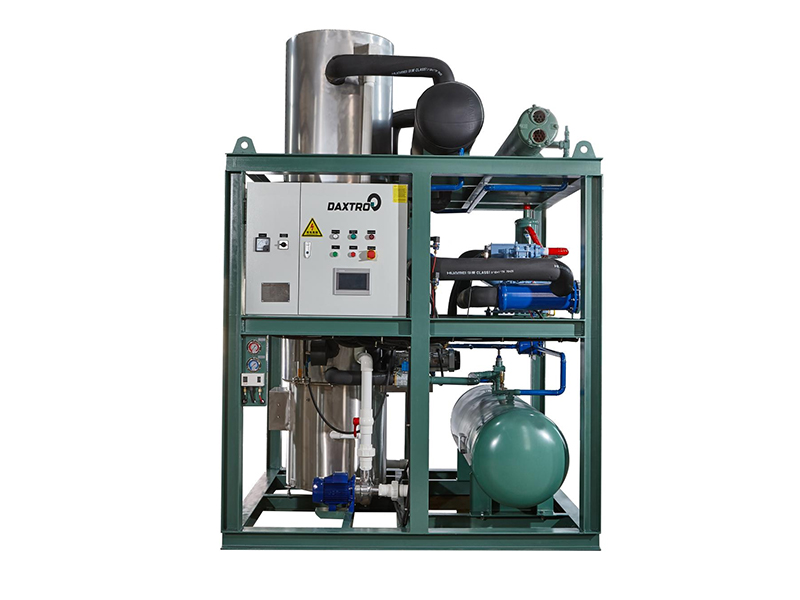
Tube ice is widely used in beverage manufacturing, food service, supermarkets, and commercial ice sales.
Modern tube ice systems offer:
· Continuous automatic operation
· High production efficiency
· Food-grade ice quality
· Low labor requirements
· Minimal ice breakage
Because tube ice is dense and melts slowly, it commands a relatively high market value.
A Tube Ice Machine generally provides balanced operating costs due to:
· Efficient refrigeration systems
· Moderate freezing cycles
· Low maintenance frequency
· Reduced product waste
Although the initial investment may be higher than smaller systems, lower long-term operating costs often produce excellent returns.
Flake ice is commonly used in seafood processing, meat production, supermarkets, and industrial cooling.
Flake ice offers:
· Rapid cooling
· Large surface contact
· Continuous production
· Soft texture for delicate products
These qualities make it ideal for industries requiring immediate heat removal.
Among Industrial Ice Machines, flake ice machines are known for efficient production because thin ice freezes quickly.
However, businesses should also consider:
· Higher daily ice consumption due to faster melting
· Increased transportation losses
· More frequent replenishment
While production costs can be competitive, overall operating expenses may increase depending on the application.
Block ice remains popular for fisheries, concrete cooling, remote regions, and commercial ice distribution.
Block ice provides:
· Extremely slow melting
· Long-distance transportation capability
· Excellent storage performance
· Flexible crushing into different sizes
Its durability reduces losses during storage and shipping.
Traditional Block Ice Machines often require longer freezing cycles than other Industrial Ice Machines.
Potential cost factors include:
· Higher freezing time
· Larger freezing tanks
· Additional labor for handling
· Ice crushing equipment (when required)
However, modern direct cooling block ice machines have significantly improved production efficiency while reducing labor and water consumption.
Energy usage varies depending on machine design and production technology.
Generally:
· Flake ice machines freeze water rapidly with efficient heat transfer.
· Tube ice machines balance energy efficiency with premium ice quality.
· Block ice machines may require longer freezing cycles, although advanced direct cooling technology has narrowed the gap.
Selecting energy-efficient Industrial Ice Machines can substantially reduce electricity costs over the equipment's lifetime.
Automation directly impacts production costs.
Modern systems featuring automatic harvesting, intelligent controls, and remote monitoring require fewer operators.
Tube and flake ice machines typically demand less manual intervention than traditional block ice production systems.
Equipment reliability affects long-term profitability.
High-quality Industrial Ice Machines offer:
· Durable refrigeration components
· Corrosion-resistant materials
· Easy maintenance access
· Intelligent fault detection
Preventive maintenance minimizes downtime and reduces unexpected repair expenses.
Cost per ton should always be evaluated alongside selling price.
Tube ice often achieves premium pricing because of its:
· Attractive appearance
· Food-grade quality
· Beverage applications
· Slow melting characteristics
Flake ice serves specialized industries where rapid cooling is essential.
Demand remains strong in:
· Seafood processing
· Meat production
· Fresh produce logistics
· Food manufacturing
Block ice continues to perform well in:
· Fisheries
· Construction projects
· Remote-area cooling
· Commercial ice distribution
Its long-lasting cooling ability creates stable demand despite longer production cycles.
Businesses can lower production costs by selecting advanced Industrial Ice Machines with modern technology.
Effective strategies include:
High-efficiency compressors and optimized refrigeration systems reduce electricity consumption.
Automatic controls decrease labor requirements while improving production consistency.
Regular servicing extends equipment life and minimizes unexpected downtime.
Producing the right ice for your target market improves profitability while reducing unnecessary production costs.
Choosing a reliable equipment manufacturer is essential for long-term success.
Daxtro designs advanced Industrial Ice Machines that combine energy efficiency, intelligent automation, and durable construction. Whether producing tube ice, flake ice, or block ice, Daxtro equipment delivers consistent performance, stable ice quality, and reduced operating costs.
With customizable production capacities, premium refrigeration components, and comprehensive technical support, Daxtro helps businesses optimize cost per ton while maximizing productivity and return on investment.
There is no single "lowest-cost" solution for every business. Tube ice, flake ice, and block ice each have distinct production costs, operating characteristics, and market advantages. The most cost-effective option depends on product demand, transportation requirements, energy prices, and intended application.
By investing in high-quality Industrial Ice Machines, businesses can reduce operating expenses, improve production efficiency, and increase long-term profitability. With advanced technology and dependable performance, Daxtro provides commercial ice-making solutions that help producers achieve the ideal balance between production cost, ice quality, and market value.
Previous: How Can OEM Engine Assembly Quality Impact Your Production Efficiency?
Next: Block Ice Applications in Large-Scale Cooling, Ice Sculpting, and Remote Area Use
Copyright:@2020-2021

Comments Please sign in or sign up to post.
0
0 of 500 characters used