
Achieving proper soil compaction is one of the most important steps in road, railway, airport, and foundation construction. Poor compaction can lead to settlement, pavement cracking, and structural failure. To ensure the soil meets engineering specifications, contractors perform in-situ density tests during construction. Among the most trusted methods is the sand density cone test, also known as the sand replacement test.
As an essential part of professional Soil Test Equipment, the sand density cone provides a simple, reliable, and standardized way to determine field density and verify whether compaction complies with design requirements. In this guide, we'll explain how the test works, the step-by-step procedure, its advantages, and why HBJF supplies dependable Soil Test Equipment for accurate field testing.
The sand density cone test is a field method used to determine the in-place dry density of compacted soil. It measures the volume of a small excavated hole by filling it with calibrated dry sand of known density.
By comparing the field dry density with the Maximum Dry Density (MDD) obtained from the Proctor Compaction Test, engineers can calculate the percentage of compaction achieved.
This method is widely accepted for quality control in earthworks and pavement construction.
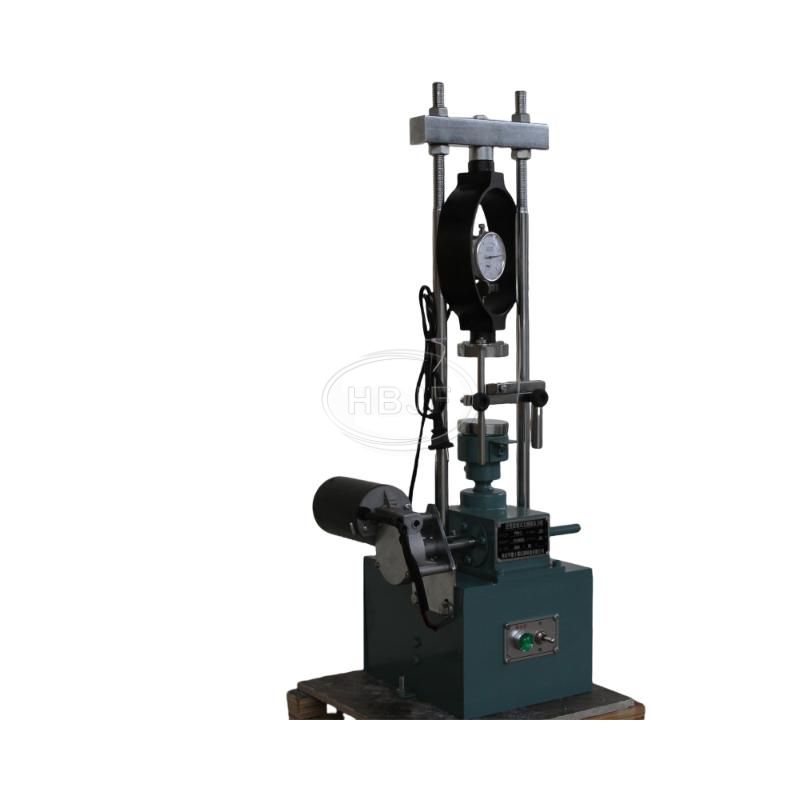
Field density testing ensures that compacted soil meets project specifications before the next construction stage begins.
Proper compaction helps to:
Well-compacted soil provides a stable foundation for roads, buildings, and other infrastructure.
Proper density minimizes long-term soil compression and uneven settlement.
Adequately compacted subgrades reduce cracking, rutting, and maintenance costs.
Field testing confirms that compaction equipment and procedures are performing effectively.
The sand density cone method is based on determining the volume of an excavated hole using calibrated sand.
The process involves:
· Excavating a small hole in the compacted soil
· Collecting and weighing the removed soil
· Filling the hole with standard dry sand
· Measuring the amount of sand required to fill the hole
· Calculating the hole volume
· Determining the field density
The dry density is then compared with laboratory compaction results.
Professional Soil Test Equipment for the sand density cone test typically includes:
The apparatus consists of a sand container, valve, and metal cone for controlled sand flow.
Uniform, dry sand with a known bulk density.
Provides a stable opening over the test hole.
Small digging tools and brushes for removing soil carefully.
Used to measure soil and sand weights accurately.
Required to determine the moisture content of the excavated soil sample.
Reliable equipment ensures accurate and repeatable testing results.
Select a representative location on the compacted surface.
Remove loose debris and level the testing area.
Place the base plate firmly on the prepared surface.
The center opening marks the location of the test hole.
Dig a carefully shaped hole through the opening.
Collect all excavated soil without any loss.
Place the soil into a sealed container for weighing and moisture testing.
Determine the wet weight of the removed soil.
A moisture content test is then performed to calculate the dry weight.
Fill the calibrated sand density cone apparatus with dry calibration sand.
Position it over the base plate.
Open the valve, allowing the sand to flow until both the hole and cone are completely filled.
Close the valve after the sand stops flowing.
Weigh the remaining sand in the apparatus.
The difference between the initial and remaining sand weights gives the amount of sand used to fill the hole.
Using the known density of the calibration sand, calculate the hole volume.
The field dry density is determined by dividing the dry mass of the excavated soil by the measured hole volume.
This value is compared with the laboratory Maximum Dry Density obtained from the Proctor test.
Percent compaction is one of the most important quality control indicators in earthwork projects.
It is calculated by comparing:
· Field Dry Density
· Maximum Dry Density (MDD)
Many highway specifications require field compaction to reach at least 95% of the laboratory Maximum Dry Density, while critical infrastructure may require even higher values.
The sand replacement method remains popular because of its reliability and simplicity.
When performed correctly, the test provides highly accurate field density measurements.
The method complies with widely recognized ASTM, AASHTO, BS, and ISO standards.
The equipment is affordable and requires minimal maintenance.
Testing can be completed directly at the construction site without transporting large samples to a laboratory.
Results help engineers verify whether additional compaction is necessary before proceeding.
The sand density cone test is widely used in:
Verify subgrade, subbase, and base course compaction.
Assess embankment and foundation density.
Ensure pavement foundations meet strict engineering requirements.
Confirm proper soil compaction before structural work begins.
Monitor compaction quality throughout construction.
To improve testing accuracy:
Only dry, uniform calibration sand with a known density should be used.
Collect every particle removed from the test hole.
The hole should remain intact until filled with calibration sand.
Moisture loss can affect dry density calculations if testing is delayed.
Routine calibration ensures long-term measurement accuracy.
Accurate field density measurements depend on dependable testing instruments. HBJF manufactures a complete range of Soil Test Equipment designed for geotechnical laboratories, contractors, universities, and infrastructure projects worldwide.
Key advantages include:
HBJF equipment delivers reliable and repeatable measurements for professional quality control.
Products are manufactured to meet ASTM, AASHTO, ISO, and other recognized testing specifications.
High-quality materials ensure long service life under demanding field conditions.
Easy-to-operate equipment improves testing efficiency while reducing operator error.
In addition to sand density cone apparatus, HBJF supplies equipment for soil mechanics, asphalt, concrete, cement, aggregate, and geotechnical testing, providing complete laboratory and field testing solutions.
The sand density cone method remains one of the most trusted techniques for measuring in-situ compaction density. By accurately determining field dry density and comparing it with laboratory compaction values, engineers can verify that construction meets required quality standards.
As a fundamental component of professional Soil Test Equipment, the sand density cone test supports safer, longer-lasting infrastructure while reducing the risk of costly failures. With precision-engineered solutions from HBJF, construction professionals can perform reliable field density testing and ensure every project is built on a solid foundation.
Copyright:@2020-2021

Comments Please sign in or sign up to post.
0
0 of 500 characters used