
The semiconductor industry requires materials that can withstand extreme temperatures, chemical exposure, and highly precise manufacturing conditions. Among the various materials used in semiconductor equipment, Quartz Glass Substrates have become essential because of their excellent thermal stability, chemical resistance, and optical performance.
From wafer processing chambers and photolithography systems to inspection equipment and advanced fabrication tools, quartz glass supports critical semiconductor manufacturing processes. As chip manufacturers continue developing smaller and more advanced devices, the demand for high-quality quartz materials continues to increase. CQT provides reliable Quartz Glass Substrates designed to meet the strict requirements of semiconductor processing applications.
Semiconductor production involves multiple processes that require extremely clean, stable, and durable materials. Equipment components are exposed to:
· High temperatures
· Reactive chemicals
· Plasma environments
· Vacuum conditions
· Precision optical systems
Common materials may experience deformation, contamination, or performance degradation under these conditions. Quartz glass offers a unique combination of properties that make it suitable for semiconductor applications.
Key advantages include:
· High purity
· Low thermal expansion
· Excellent chemical resistance
· Superior temperature stability
· Low contamination risk
· Strong optical transparency
These characteristics allow Quartz Glass Substrates to maintain reliable performance throughout demanding semiconductor processes.
Many semiconductor manufacturing steps require elevated temperatures, including:
· Oxidation
· Diffusion
· Annealing
· Chemical vapor deposition (CVD)
· Rapid thermal processing
Quartz glass can withstand high operating temperatures while maintaining structural integrity.
Unlike many conventional materials, quartz glass experiences minimal dimensional changes during heating, helping semiconductor equipment maintain precise process conditions.
Semiconductor equipment often experiences rapid temperature changes during production cycles.
For example:
· Heating during processing
· Cooling between production stages
· Repeated thermal cycling
The low thermal expansion coefficient of quartz glass reduces internal stress and minimizes the risk of cracking or deformation.
This thermal stability improves equipment reliability and reduces maintenance requirements.
Semiconductor fabrication uses various chemicals and gases that can be highly reactive.
Quartz glass provides strong resistance against:
· Acids
· Cleaning chemicals
· Process gases
· Plasma environments
This chemical durability helps maintain component performance during long production periods.
Contamination control is one of the most important requirements in semiconductor manufacturing.
Even tiny amounts of impurities can affect wafer yield and device performance.
High-purity Quartz Glass Substrates help reduce contamination risks because they offer:
· Low metallic impurity levels
· Stable chemical properties
· Minimal particle generation
· Reliable surface quality
This makes quartz glass suitable for cleanroom semiconductor environments.
Photolithography is a critical semiconductor process that requires highly accurate optical systems.
Quartz glass is widely used in optical components because it provides:
· Excellent UV transmission
· Low optical absorption
· High transparency
· Stable optical properties
These characteristics support precise light exposure during semiconductor patterning processes.
Advanced semiconductor manufacturing relies on optical inspection equipment to detect defects and measure wafer characteristics.
Quartz glass components help improve:
· Measurement accuracy
· Optical stability
· System reliability
Their excellent transparency and surface quality make them valuable for precision inspection applications.
Quartz components are widely used in wafer processing equipment because they remain stable under extreme manufacturing conditions.
Applications include:
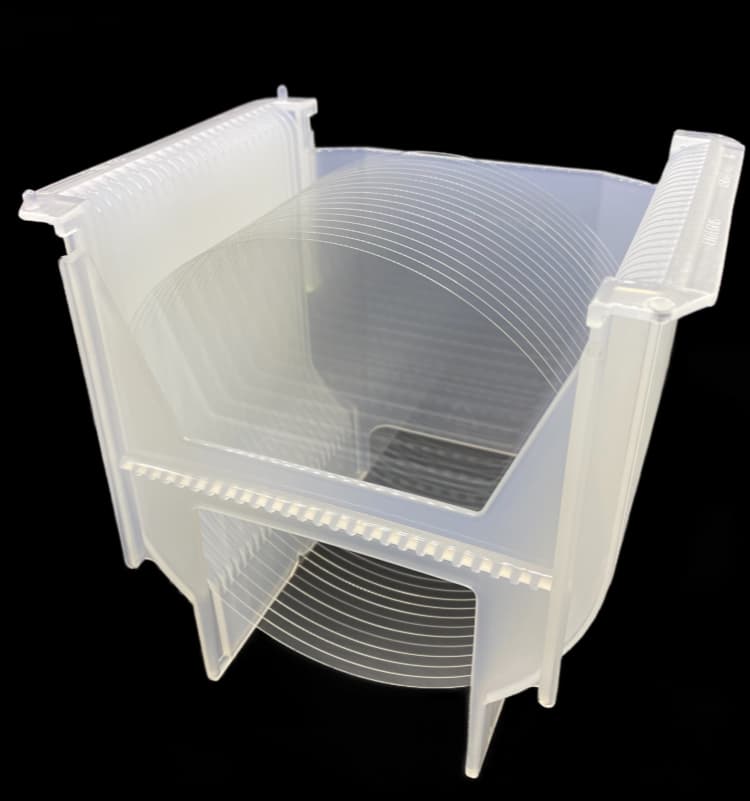
· Wafer carriers
· Process tubes
· Chamber components
· Support structures
Their high temperature resistance allows consistent semiconductor processing performance.
CVD processes require controlled environments where materials are deposited onto wafer surfaces.
Quartz glass helps maintain these conditions by providing:
· Chemical durability
· Thermal stability
· Low contamination characteristics
This supports consistent film deposition and improves manufacturing efficiency.
Plasma-based semiconductor processes involve high-energy environments that can damage many materials.
Quartz glass provides:
· Good plasma resistance
· Stable surface performance
· Long operating life
This makes it suitable for various plasma processing applications.
Inspection systems require materials with excellent optical properties and dimensional accuracy.
Quartz glass substrates support:
· Optical windows
· Measurement components
· Calibration parts
· Sensor systems
Their stability helps maintain inspection accuracy during continuous operation.
Semiconductor equipment manufacturers evaluate several technical specifications when sourcing quartz materials.
High-purity quartz reduces contamination and improves process reliability.
Important considerations include:
· Impurity concentration
· Material consistency
· Manufacturing quality control
A high-quality surface is essential for semiconductor applications.
Buyers typically evaluate:
· Surface roughness
· Flatness
· Polishing quality
· Defect levels
Superior surface finishing improves equipment performance and reduces particle generation.
Precision semiconductor equipment requires components with strict dimensional control.
Important parameters include:
· Thickness tolerance
· Size accuracy
· Geometric consistency
Manufacturers consider:
· Maximum operating temperature
· Thermal cycling capability
· Heat resistance
These factors determine whether the substrate can meet specific processing requirements.
CQT specializes in producing high-quality Quartz Glass Substrates for semiconductor and advanced optical applications. Through precise manufacturing processes and strict quality management, CQT delivers quartz solutions that meet the demanding requirements of modern semiconductor equipment.
Key benefits include:
· High-purity quartz materials
· Excellent thermal stability
· Superior chemical resistance
· Precision surface processing
· Reliable optical performance
· Consistent product quality
· Customized substrate solutions
These advantages make CQT quartz glass substrates suitable for advanced semiconductor manufacturing environments.
As semiconductor technology continues advancing toward smaller nodes and higher-performance devices, manufacturing processes are becoming more demanding.
Future semiconductor equipment will require materials with:
· Greater purity
· Better thermal performance
· Improved chemical resistance
· Higher dimensional precision
Quartz glass will continue to play a critical role because it meets many of these challenges while providing long-term reliability.
Quartz Glass Substrates are essential materials in semiconductor processing equipment due to their excellent thermal stability, chemical resistance, optical transparency, and contamination control capabilities. They support critical applications including wafer processing, photolithography, plasma systems, CVD equipment, and semiconductor inspection tools.
As semiconductor manufacturing becomes more advanced, the need for high-performance quartz materials will continue to grow. With advanced processing technology and strict quality standards, CQT delivers reliable Quartz Glass Substrates that help semiconductor manufacturers achieve greater precision, efficiency, and production stability.
Previous: Mechanical and Thermal Properties Driving Quartz Glass Substrate Adoption
Next: Why Single Crystal Quartz Wafers Are Chosen for Frequency Control Devices
Copyright:@2020-2021

Comments Please sign in or sign up to post.
0
0 of 500 characters used