
In today's fast-evolving infrastructure landscape, road and highway construction projects face mounting challenges: increasing traffic loads, unstable soil conditions, tight budgets, and ambitious timelines. Engineering professionals and procurement teams are constantly seeking materials and systems that offer high performance, longevity, and economic efficiency.
Among the most promising and rapidly adopted innovations is the geocell system—a cellular confinement technology that’s reshaping how engineers reinforce soil, distribute loads, and build lasting roads. One leading solution in this domain is PennCell™ Geocell, developed by PennPlan, a company known for its commitment to geosynthetic innovation and project-specific problem solving.
So how exactly are geocell systems used in road and highway construction—and why are more procurement teams specifying PennCell™ for their infrastructure projects? Let’s take a closer look.
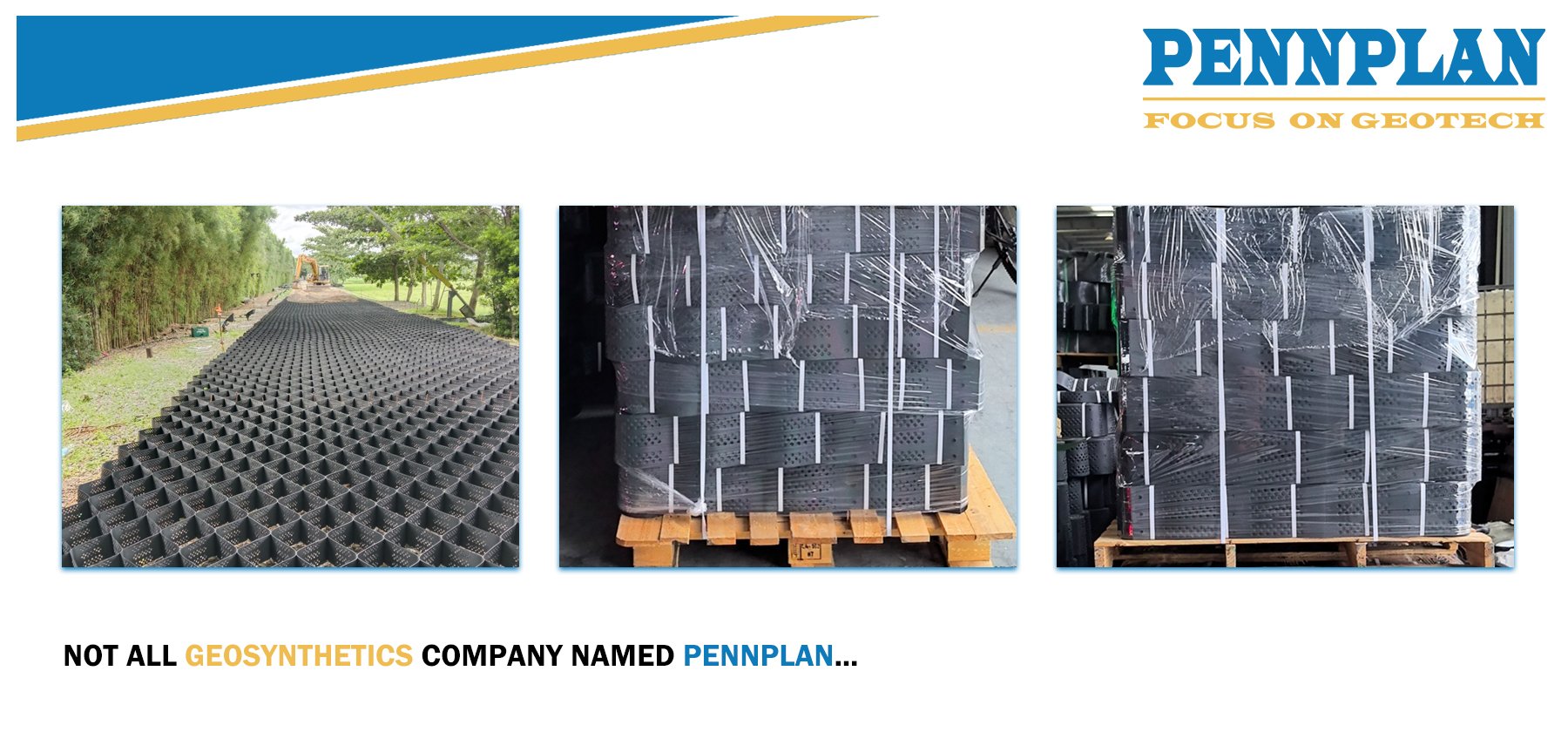
Geocells are three-dimensional, honeycomb-like structures made from high-density polyethylene (HDPE) or similar polymers. When expanded and filled with materials such as sand, gravel, or recycled concrete, they form a cellular mat that confines and stabilizes the infill. This cellular confinement drastically improves the load-bearing capacity of soils and aggregate bases.
Originally developed for military access roads over soft terrain, geocell systems are now widely used in civilian infrastructure, including:
Road base stabilization
Slope and embankment protection
Channel erosion control
Retaining walls
Railway substructures
Heavy-duty container yards and intermodal terminals
Highway and roadway infrastructure demands systems that perform under extreme pressure. Whether it's the weight of multi-axle trucks or constant freeze-thaw cycles, roads must be designed with stability and longevity in mind. Geocells offer a range of benefits that directly address these needs.
Many highway projects encounter soft or saturated soils that are unsuitable for traditional construction methods. Geocells stabilize these subgrades by confining the base material and distributing loads laterally. This reduces deformation and prevents differential settlement.
By increasing the strength of the base layer, geocell systems allow for thinner pavement designs. Contractors can also use locally available or lower-grade fill materials, reducing the need for high-cost imported aggregates.
The cellular structure distributes vertical loads over a larger area, minimizing stress on the subgrade and preventing rutting. This extends the lifespan of the pavement and reduces maintenance frequency.
Geocells are shipped collapsed and expanded on-site, simplifying logistics and speeding up deployment. With minimal equipment and labor, entire road sections can be stabilized in hours, not days.
Geocell systems support the use of recycled materials and reduce the carbon footprint associated with material transportation and quarrying. Their modularity also supports low-impact construction practices.
Not all geocell systems are created equal. PennCell™, engineered by PennPlan, is a premium-grade solution designed specifically for challenging infrastructure applications.
High-Density Polyethylene (HDPE) Material: Resists UV degradation, chemical attack, and extreme weather conditions.
Perforated Cell Walls: Ensure lateral drainage and enhance interlock with infill materials.
Flexible Panel Sizing: Available in various heights and cell sizes to suit project-specific load and soil conditions.
Welded Joint Strength: Meets rigorous ASTM standards for seam strength and dimensional stability.
On-Site Expandability: Panels ship compact and expand to full size instantly for fast, easy deployment.
Whether for light-duty access roads or heavy-haul highways, PennCell™ provides consistent structural performance, flexibility in design, and supply chain efficiency.
In a Midwest road project plagued by poor clay soils, PennCell™ was used to stabilize a two-lane access road. By confining locally sourced gravel within the geocells, engineers reduced excavation and avoided importing expensive aggregate. The project was completed ahead of schedule with excellent long-term performance results.
Heavy truck traffic had caused recurring failures along the road shoulders. A PennCell™ geocell solution was installed along the highway edges, filled with compacted recycled concrete. The improved lateral support and reduced surface erosion led to a dramatic drop in maintenance costs.
In oil and gas infrastructure development zones, PennCell™ geocells were deployed to create temporary access roads. These roads supported heavy machinery with minimal environmental disruption and were later decommissioned with minimal restoration work.
Previous: How to Keep Your WPC Decorative Panels Looking Like New for Years
Next: How to Install Glass Wool Roll Blanket in Steel Structure Roof and Wall Systems
Copyright:@2020-2021

Comments Please sign in or sign up to post.
0
0 of 500 characters used