
In Arc Physical Vapor Deposition (Arc PVD), coating quality depends on much more than the deposition equipment and process parameters. The properties of the target material itself play a critical role in determining film consistency, adhesion, and overall performance. Among these properties, the microstructure—particularly grain size—has a significant influence on coating uniformity.
High-quality titanium aluminum alloy sputtering targets are engineered with carefully controlled grain structures to ensure stable evaporation, consistent plasma generation, and uniform film deposition. Whether producing wear-resistant coatings for cutting tools or protective films for aerospace and automotive components, selecting a target with an optimized microstructure can improve production efficiency and coating reliability.
As a trusted manufacturer, Advanced Targets produces premium TiAl alloy targets with refined microstructures and strict quality control, helping customers achieve consistent Arc PVD performance across demanding industrial applications.
Titanium aluminum alloy sputtering targets are composite materials made from titanium and aluminum in precisely controlled ratios. They are widely used in PVD technologies, including magnetron sputtering and Arc PVD, to deposit thin films with excellent hardness, oxidation resistance, and thermal stability.
Common applications include:
· Cutting tools
· Forming dies
· Aerospace components
· Automotive engine parts
· Medical instruments
· Decorative coatings
· Semiconductor equipment
The target's chemical composition and microstructure directly influence the quality of the deposited coating.
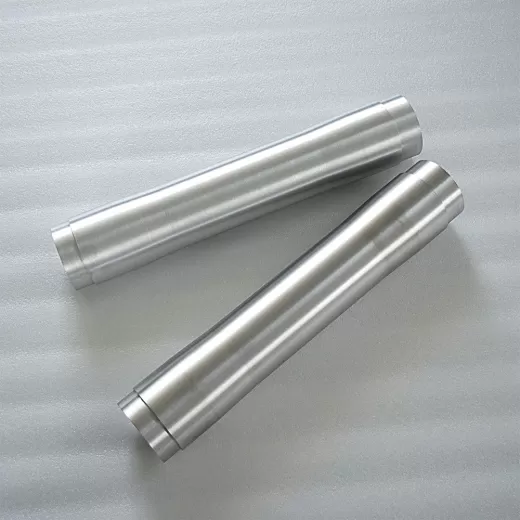
Microstructure refers to the arrangement of grains, grain boundaries, and phases within the alloy.
An optimized microstructure contributes to:
· Stable arc discharge
· Uniform material erosion
· Reduced particle generation
· Consistent coating composition
· Improved target utilization
These characteristics are essential for high-volume industrial coating production.
Grain size describes the average dimensions of individual crystals within the alloy. During manufacturing, powder preparation, pressing, sintering, and hot working all influence the final grain structure.
Depending on the production process, titanium aluminum alloy sputtering targets may exhibit:
· Fine-grained structures
· Medium-grained structures
· Coarse-grained structures
Each grain structure affects sputtering behavior differently.
Grain boundaries separate adjacent crystals within the material.
A higher number of grain boundaries generally promotes:
· More uniform material removal
· Better thermal distribution
· Improved structural stability
· Reduced localized erosion
These factors contribute to more consistent coating deposition.
Fine-grained titanium aluminum alloy sputtering targets provide a more homogeneous surface for arc ignition.
Benefits include:
· Stable cathode spots
· Uniform plasma generation
· Reduced fluctuations during deposition
· Better process repeatability
Stable arc movement helps maintain consistent coating thickness across complex components.
Arc PVD gradually removes material from the target surface.
Fine-grained microstructures encourage:
· Even erosion patterns
· Reduced hotspot formation
· Balanced consumption across the target
· Longer usable target life
Uniform erosion also increases material utilization, reducing production costs.
One challenge in Arc PVD is the formation of molten droplets, which may become embedded in the deposited coating.
A refined grain structure helps reduce excessive droplet generation by supporting smoother and more controlled material evaporation.
The result is:
· Smoother coating surfaces
· Lower defect density
· Better appearance
· Improved functional performance
These advantages are especially valuable for precision tools and decorative coatings.
Fewer droplets contribute to coatings with:
· More uniform thickness
· Improved surface roughness
· Higher dimensional accuracy
· Better post-processing efficiency
Manufacturers often achieve higher production yields when target quality minimizes coating defects.
Uniform target erosion ensures that the deposited film maintains a consistent chemical composition throughout the coating process.
This consistency supports:
· Stable hardness
· Reliable wear resistance
· Predictable mechanical performance
· Uniform coating density
Such characteristics are essential for high-performance industrial tooling.
Coatings deposited from high-quality titanium aluminum alloy sputtering targets generally exhibit stronger adhesion due to stable deposition conditions and controlled film growth.
Improved adhesion reduces the likelihood of coating delamination during demanding applications.
The production of fine-grained TiAl targets begins with premium raw materials.
High-quality powders provide:
· Uniform particle distribution
· High purity
· Reduced contamination
· Better alloy homogeneity
These characteristics establish the foundation for a refined microstructure.
Modern manufacturing technologies help optimize grain size through carefully controlled processing conditions.
Common techniques include:
· Hot isostatic pressing (HIP)
· Vacuum sintering
· Precision hot pressing
· Controlled heat treatment
These methods improve density while producing a uniform and stable grain structure.
The quality of titanium aluminum alloy sputtering targets depends heavily on manufacturing expertise and rigorous quality control.
Advanced Targets supplies premium TiAl alloy targets engineered for reliable Arc PVD and magnetron sputtering applications.
Advanced manufacturing processes create fine, homogeneous grain structures that promote stable arc behavior and consistent coating deposition.
Strict raw material selection minimizes impurities that could introduce defects, improve plasma stability, and enhance thin-film quality.
Dense targets with low porosity provide:
· Stable sputtering performance
· Reduced particle generation
· Uniform erosion
· High target utilization
These characteristics help improve coating consistency while reducing production downtime.
Advanced Targets offers customized compositions, dimensions, backing plate options, and bonding solutions to meet the requirements of aerospace, semiconductor, automotive, tooling, and optical coating industries.
When selecting titanium aluminum alloy sputtering targets, consider factors such as:
· Grain size consistency
· Material purity
· Density
· Microstructural uniformity
· Manufacturing process
· Dimensional accuracy
These characteristics collectively determine coating quality and production efficiency.
Choosing a manufacturer with advanced production capabilities ensures consistent target performance across multiple production batches, helping maintain coating quality while reducing process variability.
Grain size is a critical aspect of the microstructure of titanium aluminum alloy sputtering targets, directly influencing coating uniformity, arc stability, erosion behavior, and overall film quality in Arc PVD processes. Fine-grained, high-density targets provide more consistent plasma generation, reduced droplet formation, improved coating adhesion, and enhanced production efficiency.
By partnering with Advanced Targets, manufacturers gain access to precision-engineered TiAl alloy targets that combine optimized microstructures, high purity, and excellent manufacturing quality. These advantages help deliver reliable, high-performance coatings for cutting tools, aerospace components, automotive parts, and many other advanced industrial applications.
Copyright:@2020-2021

Comments Please sign in or sign up to post.
0
0 of 500 characters used