
PVC suspension resin is one of the most widely used raw materials in the plastics industry. It serves as the foundation for manufacturing pipes, fittings, cables, flooring, window profiles, medical products, films, and many other PVC applications. For buyers, understanding how PVC suspension resin is produced helps evaluate product quality, consistency, and supplier capabilities.
Among leading Pvc Suspension Resin Manufacturers, companies that maintain strict process control deliver resin with stable particle size, excellent purity, and reliable processing performance. Dingnuo is committed to producing high-quality PVC suspension resin through advanced manufacturing technology and comprehensive quality management systems.
PVC suspension resin is produced through the suspension polymerization of vinyl chloride monomer (VCM) in water. During the process, tiny droplets of VCM are suspended in water with the help of dispersing agents. As polymerization progresses, these droplets become solid PVC resin particles.
Compared with other production methods such as emulsion or bulk polymerization, suspension polymerization offers several advantages:
· Uniform particle size
· Excellent flowability
· Low impurity levels
· Good plasticizer absorption
· Wide processing versatility
These characteristics make suspension resin the preferred choice for rigid and flexible PVC products.
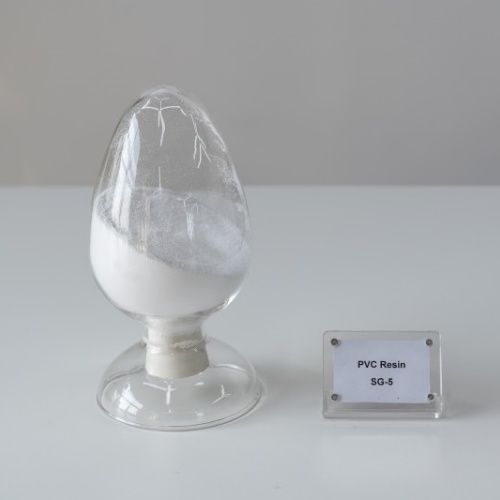
The quality of PVC resin begins with carefully selected raw materials.
VCM is the primary raw material and polymerizes into long PVC molecular chains.
High-purity VCM helps reduce impurities and ensures consistent polymerization.
Water acts as the continuous phase that suspends VCM droplets during polymerization.
Its purity significantly influences resin cleanliness.
Organic peroxide or azo compounds initiate the polymerization reaction by generating free radicals under controlled temperatures.
Protective colloids such as polyvinyl alcohol (PVA) help stabilize VCM droplets and prevent them from merging.
Small amounts of regulators, anti-foaming agents, and stabilizers improve process efficiency and resin quality.
Before production begins, every raw material undergoes strict quality inspection.
Manufacturers verify:
· VCM purity
· Water conductivity
· Suspension agent concentration
· Initiator activity
· Equipment cleanliness
Careful preparation minimizes contamination risks and ensures batch consistency.
Professional Pvc Suspension Resin Manufacturers invest heavily in automated feeding systems to reduce human error and improve production accuracy.
The production process starts by charging the reactor with:
· Deionized water
· Suspension agents
· Initiators
· Vinyl chloride monomer
The reactor is then sealed to maintain pressure and prevent contamination.
Modern reactors are fully automated and equipped with advanced monitoring systems that continuously track temperature, pressure, mixing speed, and reaction progress.
Polymerization typically occurs between 50°C and 70°C.
Maintaining precise temperature is essential because the reaction generates heat continuously.
Cooling jackets and heat exchangers remove excess heat to keep the reaction stable.
Agitation inside the reactor breaks VCM into microscopic droplets.
Each droplet becomes an individual polymerization site, gradually transforming into PVC resin particles.
The stirring speed directly affects particle size distribution.
As polymer chains grow, resin particles become larger and den until the desired conversion rate is achieved.
Production control software continuously adjusts operating parameters to maximize product consistency.
After polymerization is complete, a small amount of VCM remains unreacted.
This residual monomer is carefully recovered through vacuum stripping systems.
Recovering VCM provides several benefits:
Lower residual VCM improves workplace safety and product quality.
Recovered monomer is recycled into future production batches, reducing waste and emissions.
Efficient recycling lowers raw material consumption and manufacturing costs.
Advanced facilities like Dingnuo employ efficient recovery systems that comply with international environmental and safety standards.
The polymer slurry leaving the reactor contains large amounts of water.
Industrial centrifuges remove most of the moisture while preserving particle integrity.
Proper dewatering prevents particle agglomeration and improves drying efficiency.
The moisture content is carefully controlled before the resin enters the drying stage.
The partially dewatered resin is transferred to fluidized bed or flash dryers.
Hot air removes the remaining moisture until the resin reaches the required moisture specification.
Accurate drying is critical because excessive moisture can affect:
· Processing stability
· Product appearance
· Storage performance
· Packaging quality
Continuous monitoring ensures consistent drying results without degrading the polymer.
After drying, the resin passes through vibrating screens.
Oversized particles, fine powder, and impurities are removed.
The finished resin is classified according to particle size specifications required for different downstream applications.
Uniform particle distribution provides:
· Better blending performance
· Stable extrusion
· Consistent plasticizer absorption
· Improved processing efficiency
Before packaging, every production batch undergoes comprehensive laboratory testing.
Engineers measure:
· Bulk density
· Particle size distribution
· Porosity
· Moisture content
· Apparent density
Quality control laboratories also analyze:
· Residual VCM
· Volatile matter
· Polymerization degree (K-value)
· Thermal stability
Only products meeting specification are released for shipment.
Reliable Pvc Suspension Resin Manufacturers maintain traceable quality records for every production batch.
Finished PVC suspension resin is automatically packed into moisture-resistant bags or jumbo bulk bags.
Automated packaging systems ensure accurate weight while minimizing contamination.
Proper storage conditions include:
· Dry warehouses
· Good ventilation
· Protection from direct sunlight
· Controlled humidity
· Stable temperatures
Correct storage preserves resin quality during transportation and long-term inventory.
The manufacturing process directly determines how PVC resin performs during extrusion, injection molding, calendaring, and other processing methods.
High-quality production offers several advantages:
Stable resin properties reduce production defects and improve finished product quality.
Uniform particle morphology enables smoother mixing, faster fusion, and reduced machine downtime.
Consistent resin minimizes waste, improves productivity, and reduces processing adjustments.
Leading manufacturers implement rigorous quality systems to meet the requirements of global customers across construction, electrical, medical, and industrial sectors.
As one of the trusted Pvc Suspension Resin Manufacturers, Dingnuo combines advanced production equipment, automated process control, and strict quality assurance to deliver reliable PVC suspension resin for diverse applications.
From raw material selection through polymerization, drying, testing, and packaging, every manufacturing step is carefully monitored to ensure consistent product quality, excellent processing performance, and dependable supply. Whether customers require resin for pipes, profiles, cables, films, or flexible PVC products, Dingnuo provides solutions that meet international quality expectations while supporting efficient and sustainable manufacturing.
Copyright:@2020-2021

Comments Please sign in or sign up to post.
0
0 of 500 characters used