
Rubber O Rings are among the most widely used sealing components in industrial equipment, automotive systems, hydraulic machinery, and fluid transfer applications. Despite their simple design, they play a critical role in preventing leaks, maintaining pressure, and protecting equipment from contamination. One of the most frequently asked questions by engineers and maintenance professionals is: How long does a Rubber O-ring last?
The answer depends on several factors, including the rubber material, operating environment, temperature, pressure, chemical exposure, and maintenance practices. While some Rubber O Rings can last for decades in storage, others may require replacement after only a few months in demanding applications.
As an experienced sealing solution manufacturer, Hongcan produces high-quality Rubber O Rings designed for durability, reliability, and long service life across a wide range of industries.
The lifespan of a Rubber O Ring varies depending on whether it is in storage or actively used in equipment.
When stored correctly, many Rubber O Rings can remain usable for several years.
Typical shelf life by material includes:
· Approximately 5–10 years
· Excellent for oil and fuel applications
· Up to 10 years
· Outstanding resistance to weather, ozone, and water
· Around 10–20 years
· Excellent flexibility and temperature resistance
· Up to 20 years under proper storage conditions
· Exceptional chemical and heat resistance
Proper storage significantly extends the usable life of Rubber O Rings before installation.
Once installed, service life depends entirely on operating conditions.
In general:
· Light-duty applications: 5–10 years
· Industrial machinery: 2–8 years
· Hydraulic systems: 1–5 years
· High-temperature or chemical environments: Several months to several years depending on material selection
Routine inspection is essential because actual lifespan varies widely.
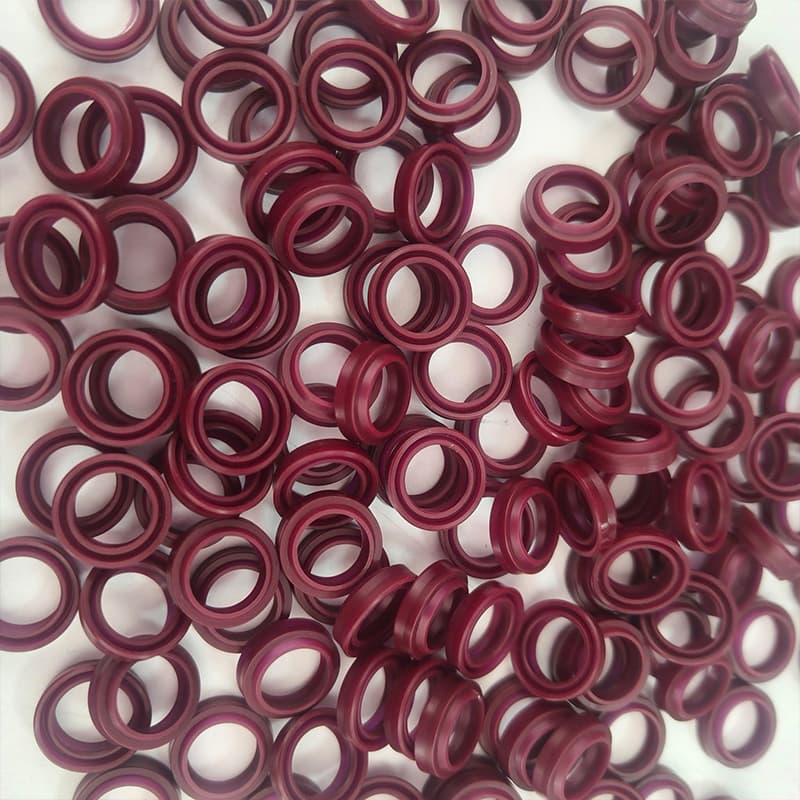
Several operating conditions determine how long a Rubber O Ring will perform effectively.
Material selection has the greatest impact on durability.
Excellent resistance to petroleum oils, hydraulic fluids, and fuels.
Ideal for automotive and industrial machinery.
Outstanding resistance to:
· High temperatures
· Chemicals
· Synthetic oils
· Aggressive fuels
Often chosen for demanding industrial environments.
Best suited for:
· Water
· Steam
· Outdoor applications
· Brake fluids
Not recommended for petroleum oils.
Provides excellent flexibility over a wide temperature range but is less suitable for continuous exposure to oils.
Choosing the correct Rubber O Rings material greatly extends service life.
Temperature directly affects rubber aging.
Excessive heat accelerates:
· Hardening
· Cracking
· Compression set
· Loss of elasticity
Conversely, extremely low temperatures may reduce flexibility and increase brittleness.
Operating within the recommended temperature range helps maximize O-ring longevity.
Chemical attack is one of the leading causes of premature failure.
Incompatible fluids may cause:
· Swelling
· Shrinkage
· Softening
· Surface cracking
· Material breakdown
Selecting compatible Rubber O Rings prevents unnecessary replacements.
High-pressure systems place greater stress on sealing components.
Without proper material selection or backup rings, excessive pressure may cause:
· Extrusion
· Permanent deformation
· Seal failure
Industrial hydraulic systems require carefully engineered sealing solutions.
Improper installation often shortens O-ring life dramatically.
Common mistakes include:
Twisted O-rings develop uneven stress.
Sharp edges may damage the seal during installation.
Excessive stretching permanently deforms the rubber.
Improper groove dimensions reduce sealing performance and increase wear.
Professional installation significantly extends service life.
Rather than replacing O-rings based solely on age, regular inspection provides the most reliable maintenance strategy.
Surface cracking indicates rubber aging or ozone damage.
A flattened O-ring has permanently lost elasticity.
Compression set is one of the most common reasons for seal replacement.
Chemical incompatibility often causes excessive expansion.
Swollen Rubber O Rings may no longer fit correctly.
A hardened O-ring cannot maintain sealing pressure effectively.
Fluid or air leakage is often the first operational sign of seal failure.
Replacing worn Rubber O Rings promptly helps prevent expensive equipment damage.
Following best practices can dramatically increase O-ring service life.
Always match the rubber compound to:
· Operating fluid
· Temperature
· Pressure
· Environmental conditions
Material compatibility is more important than simply choosing the most expensive rubber.
Proper cooling and temperature management reduce rubber aging.
Lubrication minimizes installation damage and reduces friction during operation.
Unused Rubber O Rings should be stored:
· Away from direct sunlight
· In cool, dry environments
· Away from ozone-generating equipment
· Inside sealed packaging whenever possible
Proper storage preserves elasticity and prevents premature aging.
Regular maintenance allows early detection of:
· Cracks
· Wear
· Swelling
· Compression set
Preventive replacement minimizes unexpected downtime.
Durable Rubber O Rings are critical across numerous industries.
Used in:
· Engines
· Fuel systems
· Oil filters
· Air conditioning systems
Essential for:
· Cylinders
· Pumps
· Control valves
· Hydraulic presses
Industrial machinery relies on dependable sealing for continuous production.
Reliable Rubber O Rings withstand demanding pressure, temperature, and chemical environments.
Food-grade O-rings ensure hygienic sealing while resisting cleaning chemicals and temperature changes.
Hongcan manufactures premium Rubber O Rings designed for extended service life and dependable sealing performance.
Hongcan offers:
· NBR
· FKM (Viton)
· EPDM
· Silicone
· Neoprene
· Customized rubber compounds
Each material is selected to meet specific application requirements.
Advanced production equipment ensures:
· Accurate dimensions
· Excellent surface finish
· Consistent product quality
Every Rubber O Ring undergoes comprehensive inspection for:
· Hardness
· Tensile strength
· Compression set
· Dimensional accuracy
· Material consistency
Hongcan supports OEM customers with customized sizes, colors, hardness levels, and material formulations for specialized sealing applications.
So, how long does a Rubber O-ring last? The answer depends on material selection, operating conditions, installation quality, and maintenance practices. While properly stored Rubber O Rings can remain usable for up to 20 years, their service life in active equipment may range from several months to more than a decade. Choosing the correct rubber compound, avoiding excessive heat and chemical exposure, and performing routine inspections are the best ways to maximize durability.
With premium materials, advanced manufacturing technology, and rigorous quality control, Hongcan supplies high-performance Rubber O Rings that deliver reliable sealing, longer service life, and reduced maintenance costs for industrial, automotive, hydraulic, and OEM applications worldwide.
Previous: None.
Copyright:@2020-2021

Comments Please sign in or sign up to post.
0
0 of 500 characters used