
As global demand for water storage, wastewater treatment, biogas applications, agricultural systems, and industrial liquid containment continues to rise, choosing the right tank material has become a critical engineering decision. Among the most commonly compared options are Glass-Fused-to-Steel (GFS) tanks and stainless steel tanks, both known for their durability, hygienic performance, and strong resistance to environmental challenges. However, their material properties, cost structures, maintenance requirements, and application strengths vary significantly.
This article provides an in-depth comparison to help buyers, engineers, and project planners make informed decisions.
GFS tanks are produced through a high-temperature enameling process where a protective glass layer is fused to steel substrates. This creates a durable, chemically inert barrier that resists corrosion, abrasion, and chemical attack. The glass surface is non-reactive and maintains stability even under aggressive pH conditions.
Stainless steel tanks rely on chromium-rich alloys to form a passive oxide layer that protects the metal from corrosion. Common grades such as 304 or 316 stainless steel provide strong resistance to many chemicals and environments, although the degree of protection varies based on alloy composition and exposure conditions.
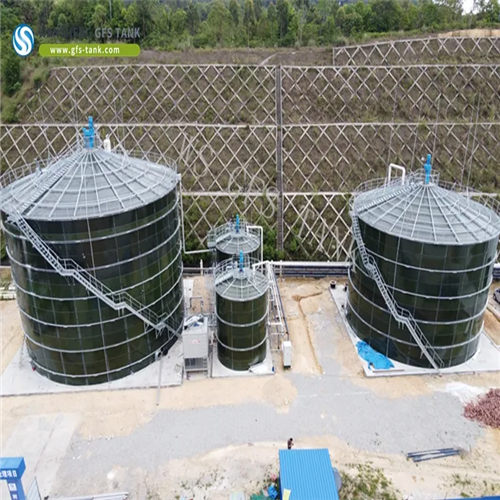
The fused glass layer offers exceptional resistance to highly corrosive environments, including acidic wastewater, alkaline industrial effluent, and biogas byproducts. Unlike coatings or paints, the glass surface does not peel, degrade, or require recoating.
Stainless steel is highly resistant to oxidation but can be vulnerable to chloride-induced corrosion, pitting, and stress cracking. In high-salinity, high-chloride, or sulfur-rich environments, additional safeguards, chemical controls, or higher alloy grades may be required to maintain performance.
GFS tanks are modular systems. Prefabricated steel panels and bolted designs allow rapid on-site assembly without welding. Installation time is short, predictable, and minimally affected by weather. This makes GFS a strong option for remote sites or projects with tight deadlines.
Stainless steel tanks often require more complex fabrication and can involve extensive welding, polishing, and quality control work on-site. For large-capacity structures, installation typically takes longer compared to GFS tanks.
Both tank types deliver excellent structural strength, but their design flexibility differs.
Modular construction allows tanks to be expanded, relocated, or partially reconstructed when operational demands change. This flexibility is particularly valuable for wastewater projects, agricultural facilities, or industrial sites where future capacity adjustments are anticipated.
Stainless steel tanks are usually manufactured as welded units or sectional structures with limited potential for relocation or redesign. While structurally robust, they lack the modular agility offered by GFS systems.
The glass-lined interior is smooth, non-porous, and naturally resistant to bacterial and microbial attachment. These properties suit applications in potable water, irrigation water, and industrial liquids requiring stable chemical conditions.
Stainless steel is well-established in industries demanding strict hygiene control, including food, beverage, and pharmaceuticals. Stainless steel is suitable for potable water, but water chemistry (pH, chloride levels) must be controlled to prevent corrosion.
Glass surfaces maintain their integrity without repainting or recoating. Maintenance is minimal and typically limited to routine inspections and gasket checks. Lifecycle costs remain low.
Stainless steel tanks require ongoing monitoring for pitting, staining, or corrosion, especially in environments containing chlorides or corrosive chemicals. Polishing, passivation, and repairs may be needed over time, adding to maintenance expenses.
Stainless steel tanks, especially higher-grade alloys, generally require higher upfront investment due to material cost and fabrication complexity.
GFS tanks provide a more cost-efficient solution for large-volume storage or infrastructure projects where corrosion resistance and rapid installation are critical.
Because GFS tanks demand minimal maintenance and avoid recoating or corrosion-related repairs, their long-term operational cost is significantly lower. Stainless steel tanks may have higher maintenance and repair expenditures depending on usage environment.
Highly suitable for harsh, variable, and corrosive environments such as wastewater, industrial effluent, biogas digesters, and agricultural storage. The glass layer ensures chemical stability across wide pH ranges.
Ideal for clean-water environments, food-grade applications, and settings with strict hygiene requirements. However, environments containing chlorides or sulfur compounds may accelerate corrosion unless higher-grade alloys are used.
Factory-controlled enameling ensures consistent coating thickness, adhesion, and surface hardness. Quality is highly standardized across all panels.
Quality depends on alloy composition, welding standards, and surface finishing. Variations in fabrication practices can influence long-term performance.
Known for durability, corrosion resistance, and predictable lifespan even in demanding industrial conditions. Their modular nature supports long operational cycles with minimal downtime.
Reliable in clean-water or controlled environments, but long-term stability depends heavily on alloy selection, water chemistry, and maintenance practices.
Choosing between a Glass-Fused-to-Steel tank and a stainless steel tank requires careful evaluation of the application environment, chemical exposure, budget, installation timeline, long-term maintenance expectations, and operational flexibility needs. Both tank types offer strong performance, but GFS tanks excel in harsh, variable, and large-scale applications, while stainless steel tanks remain preferred for high-hygiene or specialized industrial uses. A clear understanding of lifecycle cost, corrosion behavior, and structural flexibility is essential for selecting the most suitable solution for your project. Contact Wansheng to solve your concern!
Previous: Benefits to Using Ground Protection Mats
Next: Dairy Equipment Manufacturer for Reliable Milk Processing Solutions, Yunfan New Material
Copyright:@2020-2021

Comments Please sign in or sign up to post.
0
0 of 500 characters used