
Agriculture is entering a new era in which fuel efficiency, productivity, sustainability, and intelligent farm management are becoming increasingly important. As farmers face rising fuel costs, stricter environmental requirements, and growing pressure to produce more with fewer resources, tractor manufacturers are developing technologies that combine conventional diesel power with electric propulsion and energy recovery systems.
A hybrid tractor represents one of the most promising developments in modern agricultural machinery. By combining an internal combustion engine with an electric motor, battery system, or other energy-management technologies, hybrid tractors can deliver power more efficiently while maintaining the performance required for demanding field operations.
We see hybrid tractor technology becoming particularly valuable for farms that require tractors to perform multiple tasks, from soil preparation and planting to spraying, transportation, and precision agriculture.
A hybrid tractor is an agricultural tractor that uses two or more sources of power, typically a diesel engine combined with an electric propulsion or auxiliary system. Unlike a conventional tractor that relies almost entirely on an internal combustion engine, a hybrid model can intelligently distribute power between mechanical and electrical systems according to operating conditions.
The basic concept is similar to hybrid technology used in other types of vehicles. However, agricultural tractors have unique requirements because they must provide high torque, continuous power, hydraulic performance, PTO output, and reliable operation under heavy loads.
A typical hybrid tractor may include:
A diesel internal combustion engine
One or more electric motors
A battery or energy-storage system
Power electronics and inverters
An electronic control unit
Regenerative energy recovery systems
A conventional or continuously variable transmission
Electric or hydraulic auxiliary systems
The objective is not necessarily to eliminate the diesel engine. Instead, we optimize how the available energy is generated, stored, converted, and delivered to the wheels and implements.
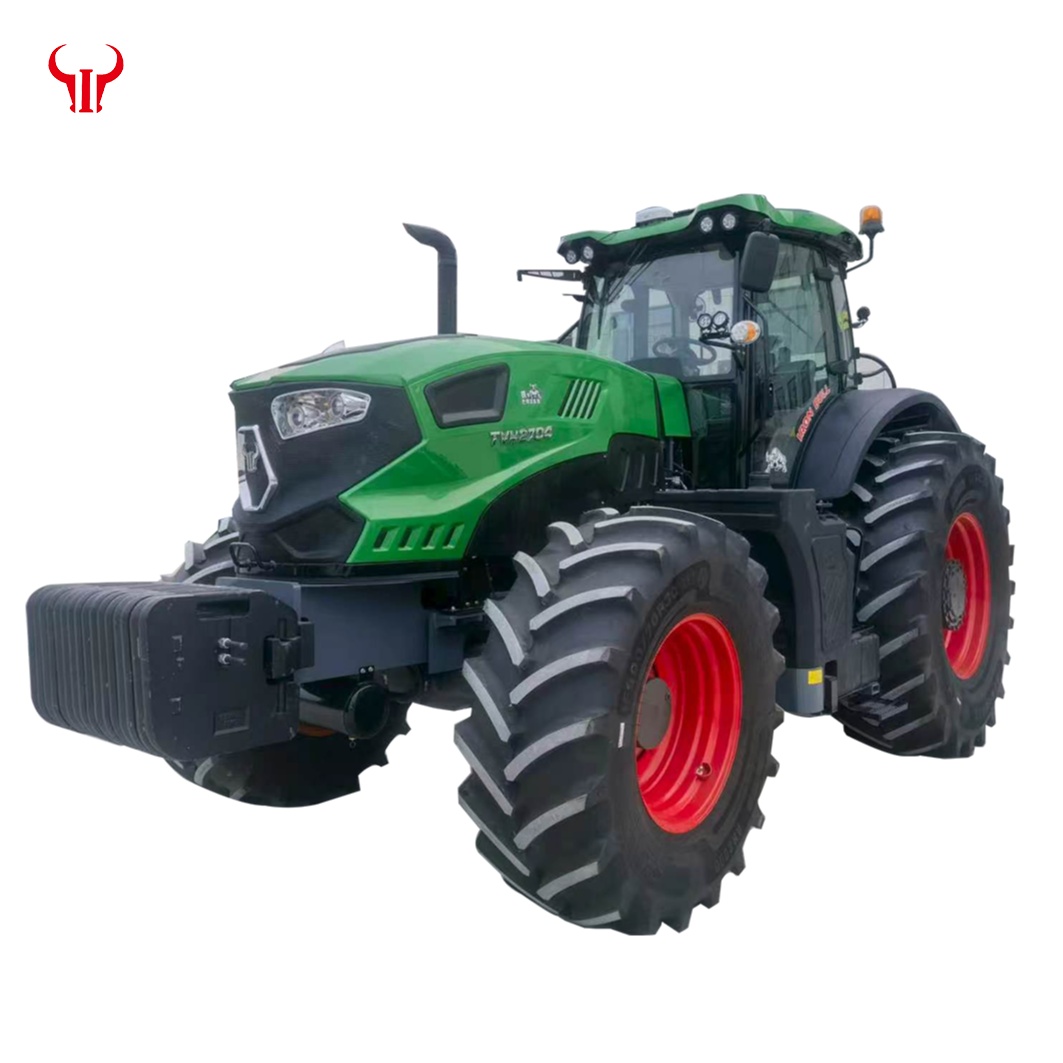
The operating principle of a hybrid tractor depends on its specific architecture, but most systems use an electronic control system to determine how much power should come from the engine and how much should come from the electric system.
During high-load operations, such as deep plowing or heavy tillage, the diesel engine can provide substantial continuous power. The electric motor can supplement the engine when additional torque is required.
During lighter operations, the tractor may rely more heavily on electric power. This can improve efficiency because the engine does not always need to operate at maximum output.
We can also recover energy that would otherwise be wasted. For example, when the tractor decelerates, an electric motor can operate as a generator and transfer part of the kinetic energy back into the battery. This process is commonly known as regenerative braking.
The stored electrical energy can then be used during subsequent acceleration or auxiliary operations.
One of the most important advantages of a hybrid tractor is its potential to reduce fuel consumption.
Conventional diesel engines can become less efficient when operating significantly below their optimal load range. Hybrid systems allow the tractor to use electrical power when appropriate, helping the engine operate closer to efficient conditions.
For farms with extensive annual tractor operating hours, even modest efficiency improvements can translate into meaningful reductions in fuel expenditure.
Reduced fuel consumption can also lead to lower greenhouse gas and exhaust emissions.
A hybrid tractor can reduce the amount of diesel required for specific operations, particularly where electrical assistance can replace inefficient engine operation. This can support farms and agricultural contractors working toward lower-carbon farming practices.
Hybridization can also complement other emissions-reduction technologies, including modern diesel engines, exhaust after-treatment systems, and alternative fuels.
Electric motors have an important characteristic for agricultural applications: they can deliver high torque from very low rotational speeds.
This can be particularly useful when a tractor starts moving with a heavy implement or encounters a sudden increase in soil resistance.
Instead of relying entirely on the diesel engine to respond to the changing load, the electric motor can provide rapid torque assistance.
Modern farms rarely operate tractors under identical conditions throughout the day. A tractor may travel between fields, operate an implement at constant speed, perform hydraulic work, or pull a heavy load.
Hybrid powertrains allow us to manage power according to each situation.
The electronic control system can continuously evaluate parameters such as engine speed, vehicle speed, battery state of charge, load demand, and power requirements. It can then determine the most efficient power distribution.
The development of hybrid tractors is closely connected with the broader trend toward precision agriculture.
Modern tractors increasingly incorporate GPS guidance, telematics, automatic steering, implement control, machine monitoring, and data collection. These systems require electrical power and sophisticated electronic architecture.
A hybrid tractor can provide an electrical power platform for these technologies.
In some advanced designs, electrical energy can also be supplied directly to implements. This creates opportunities for more precise control of agricultural equipment.
Instead of relying exclusively on mechanical PTO power or hydraulic systems, future agricultural machinery may increasingly use electrified implements with independently controlled motors.
This approach could improve precision, reduce mechanical losses, and make agricultural operations more flexible.
Conventional diesel tractors remain highly capable and are widely used because diesel technology offers high energy density, established infrastructure, long operating ranges, and proven durability.
However, hybrid tractors introduce additional advantages.
| Feature | Conventional Diesel Tractor | Hybrid Tractor |
|---|---|---|
| Primary power source | Diesel engine | Diesel + electric system |
| Fuel efficiency | Good | Potentially higher |
| Low-speed torque | Engine-dependent | Electric assistance available |
| Regenerative energy recovery | Generally unavailable | Possible |
| Electrical power availability | Limited | Higher |
| Emissions reduction potential | Moderate | Higher potential |
| System complexity | Lower | Higher |
| Battery requirements | Minimal | Required |
| Maintenance considerations | Conventional | Engine + electrical systems |
We should therefore view hybridization as a complementary technology, particularly during the transition toward increasingly electrified agricultural machinery.
Hybrid tractors can be suitable for a wide range of agricultural operations.
Heavy tillage requires substantial traction and continuous power. Hybrid assistance can provide additional torque during demanding sections of the field while allowing the diesel engine to operate efficiently.
Planting equipment often requires consistent forward speed and precise implement control. Hybrid power systems can provide stable energy for electrical equipment while maintaining reliable traction.
Spraying typically requires precise speed control and hydraulic or electrical power. Hybrid systems can help reduce unnecessary engine loading during operations where full engine power is not continuously required.
During road transportation, the tractor frequently experiences changing loads and repeated acceleration and deceleration. These conditions can create opportunities for energy recovery and electric assistance.
Farm tractors used for feeding, material handling, and other repetitive tasks may also benefit from hybrid technology, particularly where the tractor spends considerable time at partial load.
Despite its advantages, hybrid tractor technology also presents several challenges.
The first is initial purchase cost. Batteries, electric motors, power electronics, sensors, and control systems increase manufacturing complexity and can raise the upfront price.
Battery durability is another consideration. Agricultural machinery frequently operates in dusty, wet, hot, cold, and highly variable environments. Battery systems must therefore be designed to withstand vibration, temperature fluctuations, moisture, and demanding duty cycles.
Maintenance and technician training are also evolving. Agricultural service personnel increasingly need knowledge of both mechanical systems and high-voltage electrical components.
Weight can be another concern. Battery packs add mass to the tractor, although additional weight may sometimes contribute positively to traction. Engineers must carefully balance battery capacity, vehicle weight, payload, and operating efficiency.
When evaluating a hybrid tractor, we recommend looking beyond engine horsepower alone.
Understand whether the tractor uses mild hybridization, parallel hybrid technology, series hybrid architecture, or another configuration. The architecture directly affects how electrical power contributes to propulsion and auxiliary systems.
Battery capacity determines how much electrical energy can be stored and used. However, a larger battery is not automatically better. The ideal capacity depends on the tractor's operating profile.
Purchase price should be compared with fuel consumption, maintenance, expected operating hours, battery service life, and energy costs.
A sophisticated hybrid tractor requires reliable technical support. We should evaluate the availability of trained technicians, replacement components, diagnostic equipment, and warranty services.
Implement compatibility is essential. Before purchasing, we should confirm PTO specifications, hydraulic capacity, electrical interfaces, hitch requirements, and compatibility with precision-agriculture equipment.
Hybrid tractors are likely to become increasingly sophisticated as agricultural machinery moves toward electrification and automation.
Future systems may combine hybrid propulsion, autonomous driving, artificial intelligence, precision agriculture, connected farming, and electrified implements into a single agricultural platform.
Energy-management software will become increasingly important. Instead of simply controlling engine and motor output, intelligent systems may analyze field conditions, implement requirements, terrain, route information, and historical operating data to determine the most efficient power strategy.
We can also expect improvements in battery energy density, charging technology, electric motors, power electronics, and thermal management.
For smaller tractors and specialized applications, fully electric models may become increasingly practical. For larger tractors performing extremely demanding fieldwork, hybrid powertrains can provide a useful balance between diesel range and electric efficiency.
The hybrid tractor is an important step in the evolution of agricultural machinery. By combining the proven capabilities of diesel engines with the efficiency and instant torque of electric systems, hybrid tractors can address several major challenges facing modern agriculture.
We can use hybrid technology to improve fuel efficiency, reduce emissions, enhance low-speed torque, support precision-agriculture equipment, and optimize power distribution across different farming operations.
Although higher initial costs, battery technology, system complexity, and service requirements remain important considerations, continued advances in electrification are likely to make hybrid tractors increasingly practical.
For more details please visit www.farmtiantuoagri.com
Previous: None.
Next: What to Look for in a Forged Steel Valve Manufacturer?
Copyright:@2020-2021

Comments Please sign in or sign up to post.
0
0 of 500 characters used