
Geomembranes and geotextiles are two widely used geosynthetic materials in civil engineering, environmental protection, agriculture, mining, transportation, and water management. Although both materials are commonly installed in soil and containment systems, they perform fundamentally different functions.
The simplest distinction is that a geomembrane is primarily a barrier, while a geotextile is primarily a separation, filtration, drainage, reinforcement, or protection material. Understanding this difference is essential when designing landfill liners, ponds, reservoirs, drainage systems, roads, retaining structures, and other geotechnical applications.
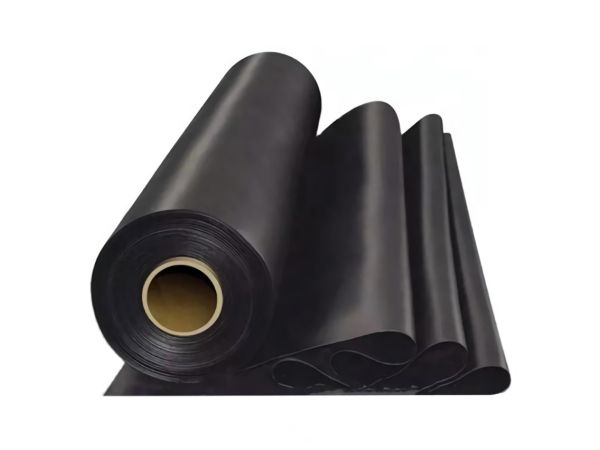
A geomembrane is a low-permeability synthetic membrane designed primarily to prevent liquids or gases from passing through a structure. It is generally manufactured from polymeric materials such as HDPE (high-density polyethylene), LDPE (low-density polyethylene), LLDPE (linear low-density polyethylene), PVC, and EPDM.
Geomembranes are produced in sheets or rolls and are typically joined using thermal welding, hot-wedge welding, extrusion welding, or other specialized techniques. When properly installed, welded, and tested, a geomembrane can create a continuous containment barrier.
The main purpose of a geomembrane is fluid containment and leakage prevention.
Typical geomembrane applications include:
Landfill liners and caps
Wastewater treatment ponds
Agricultural irrigation ponds
Aquaculture ponds
Reservoirs and canals
Mining heap-leach pads
Secondary containment systems
Industrial wastewater storage
Oil and chemical containment
Waterproofing systems
Biogas and environmental containment systems
For applications where leakage control is critical, geomembranes are often selected because their very low permeability provides a reliable barrier against water, wastewater, chemicals, and other fluids.
A geotextile is a permeable textile material manufactured primarily from synthetic fibers such as polypropylene or polyester. Unlike geomembranes, geotextiles are intentionally designed to allow water or other fluids to pass through under controlled conditions.
Geotextiles can be manufactured using different production methods, including woven, nonwoven, and knitted structures. Each structure provides different mechanical and hydraulic characteristics.
The main functions of geotextiles include:
Separation
Filtration
Drainage
Reinforcement
Protection
For example, a geotextile placed between aggregate and soil can prevent the two materials from mixing while still allowing water to move through the structure. In drainage applications, geotextiles can help retain soil particles while permitting water to flow.
Common applications include:
Road and highway construction
Railway construction
Drainage systems
Erosion control
Retaining walls
Landfills
Coastal engineering
Riverbank protection
Foundation stabilization
Soil reinforcement
Landscaping
Construction site drainage
The fundamental difference between geomembrane and geotextile is permeability and primary function.
A geomembrane is designed to be highly impermeable. Its purpose is to contain fluids and prevent unwanted migration.
A geotextile is permeable. Its purpose is generally to manage soil, water, and aggregate interaction through separation, filtration, drainage, reinforcement, or protection.
| Feature | Geomembrane | Geotextile |
|---|---|---|
| Primary function | Barrier and containment | Separation, filtration, drainage, reinforcement, protection |
| Permeability | Very low | Relatively high |
| Typical material | HDPE, LLDPE, PVC, EPDM | PP, PET |
| Structure | Continuous membrane sheet | Woven or nonwoven textile |
| Water flow | Designed to restrict flow | Designed to permit controlled flow |
| Main application | Fluid containment | Soil and water management |
| Installation | Seams are commonly welded | Usually overlapped, sewn, or mechanically secured |
| Typical role in landfill | Liner or cap barrier | Protection, filtration, drainage, reinforcement |
This comparison demonstrates why the two products should not normally be considered direct substitutes. They solve different engineering problems.
Material selection significantly affects the performance and service life of both geosynthetics.
HDPE geomembranes are widely used for demanding containment applications. They offer excellent chemical resistance, durability, tensile strength, and environmental stress crack resistance.
They are commonly used in landfills, mining facilities, wastewater systems, reservoirs, and industrial containment projects.
LLDPE geomembranes generally provide greater flexibility than HDPE. This flexibility can be advantageous where the membrane must accommodate settlement, deformation, or irregular substrates.
PVC geomembranes are flexible and can be suitable for waterproofing and containment applications where flexibility and ease of installation are important.
Polypropylene is commonly used in geotextiles because of its favorable combination of chemical resistance, durability, low density, and cost-effectiveness.
Polyester geotextiles can provide high mechanical strength and are used in applications requiring significant reinforcement or filtration performance.
Not every geotextile performs the same function. The manufacturing structure is an important consideration.
Woven geotextiles are manufactured by interlacing yarns in a controlled pattern. They typically provide high tensile strength and are often selected for reinforcement and separation applications.
Nonwoven geotextiles are manufactured by bonding fibers mechanically, thermally, or chemically. Their three-dimensional structure makes them particularly useful for filtration, drainage, and cushioning or protection applications.
For example, a woven geotextile may be appropriate beneath a road aggregate layer where reinforcement and separation are important. A nonwoven geotextile may be more suitable for protecting a geomembrane from puncture or creating a filtration layer around a drainage system.
Yes. In many engineering projects, geomembranes and geotextiles work together rather than replacing one another.
A typical containment system may use a geotextile as a protective layer beneath a geomembrane. The geotextile helps reduce the risk of puncture or damage caused by sharp stones, uneven surfaces, or other materials.
For example, a simplified pond liner system could consist of:
Prepared soil subgrade
Nonwoven geotextile protection layer
Geomembrane barrier
Optional upper geotextile protection layer
Soil, aggregate, or other cover material
In landfill engineering, more complex multilayer systems can incorporate geomembranes, geotextiles, geocomposites, drainage layers, and compacted clay components.
The combination provides both hydraulic containment and mechanical protection.
There is no universal answer because they are designed for different purposes.
If the primary requirement is preventing water, wastewater, chemicals, or other liquids from passing through a system, a geomembrane is generally the appropriate material.
If the primary requirement is separating soil layers, filtering water, reinforcing soil, or protecting another geosynthetic layer, a geotextile may be the better choice.
In many projects, however, the best solution is not geomembrane versus geotextile. Instead, the two materials are incorporated into the same engineered system.
Geomembranes are commonly used as low-permeability liner and cover components to control the migration of landfill leachate and gases.
Geotextiles can provide protection, filtration, drainage, and reinforcement functions within the same landfill system.
For irrigation ponds, wastewater lagoons, reservoirs, and aquaculture facilities, geomembranes are commonly used to reduce seepage.
Geotextiles can be installed beneath or above the membrane to protect it from mechanical damage.
Geotextiles are frequently used in roads to separate aggregate from weak subgrade soils, improve drainage, and enhance structural performance.
Geomembranes are less commonly required unless the project includes a specific waterproofing or containment requirement.
Mining operations can require geomembranes for containment and leakage control, particularly in applications involving process water or chemical solutions.
Geotextiles may be incorporated for protection, drainage, filtration, and reinforcement.
Material selection should begin with the engineering function, rather than simply comparing product prices.
Consider the following factors:
If the system needs to prevent fluid migration, permeability is a critical parameter and a geomembrane may be required.
If water needs to pass through the material while retaining soil particles, a geotextile may be more appropriate.
Consider tensile strength, puncture resistance, tear resistance, elongation, and resistance to installation damage.
For industrial, mining, and wastewater applications, chemical compatibility should be evaluated carefully. The selected polymer must withstand the expected chemical environment over the intended service life.
Temperature, ultraviolet exposure, soil characteristics, groundwater conditions, settlement, slope geometry, and installation conditions can all influence product selection.
A geosynthetic system should be selected according to its expected service life rather than only its initial purchase price. Material durability, seam performance, installation quality, and environmental exposure all affect long-term performance.
Geomembranes can provide excellent containment performance, but their thin flexible structure can be vulnerable to puncture and mechanical damage during installation.
Sharp aggregate, rocks, construction debris, and uneven subgrades can create localized stresses.
A properly selected geotextile protection layer can distribute these stresses and reduce the likelihood of damage.
The required geotextile depends on factors such as membrane thickness, subgrade conditions, loading, aggregate characteristics, and installation procedures. A thicker geotextile is not automatically better; the engineering design should determine the appropriate combination of mass per unit area, puncture resistance, tensile strength, and other performance properties.
The difference between geomembrane and geotextile can be summarized simply: geomembranes primarily provide impermeable containment, while geotextiles provide separation, filtration, drainage, reinforcement, and protection.
A geomembrane is the preferred solution when controlling fluid migration is the main objective. A geotextile is generally selected when managing the interaction between soil, aggregate, and water is the primary requirement.
However, many advanced geotechnical and environmental projects use both materials together. A geotextile can protect the geomembrane, provide filtration or drainage, and improve system durability, while the geomembrane supplies the essential low-permeability barrier.
For more details please visit www.pennplan.com
Previous: The Characteristics of Glass Fused to Steel Water Storage Tanks
Next: How to Choose the Right Glass Wool Density for HVAC Duct Insulation Applications
Copyright:@2020-2021

Comments Please sign in or sign up to post.
0
0 of 500 characters used