
A gas-fired steam boiler is a thermal energy device that uses natural gas or other combustible gases as fuel. Through combustion, it generates heat energy to heat water to boiling and convert it into steam. In a steam system, it plays a core role in heat energy supply and is a crucial link connecting energy input and steam output. In the current global industrial development context focusing on energy conservation and environmental protection, gas-fired steam boilers, with their high energy conversion efficiency and low pollutant emissions, have become important equipment for promoting the green transformation of the industrial sector. In industrial production processes, many processes, such as material heating and chemical reaction driving, rely on a stable steam supply; in heating systems, it can provide a continuous heating source for large building complexes or industrial parks; simultaneously, as traditional high-pollution energy sources are gradually replaced, gas-fired steam boilers occupy an irreplaceable position in the process of energy structure optimization and transformation, laying the foundation for a further in-depth discussion of its technical characteristics and application value.
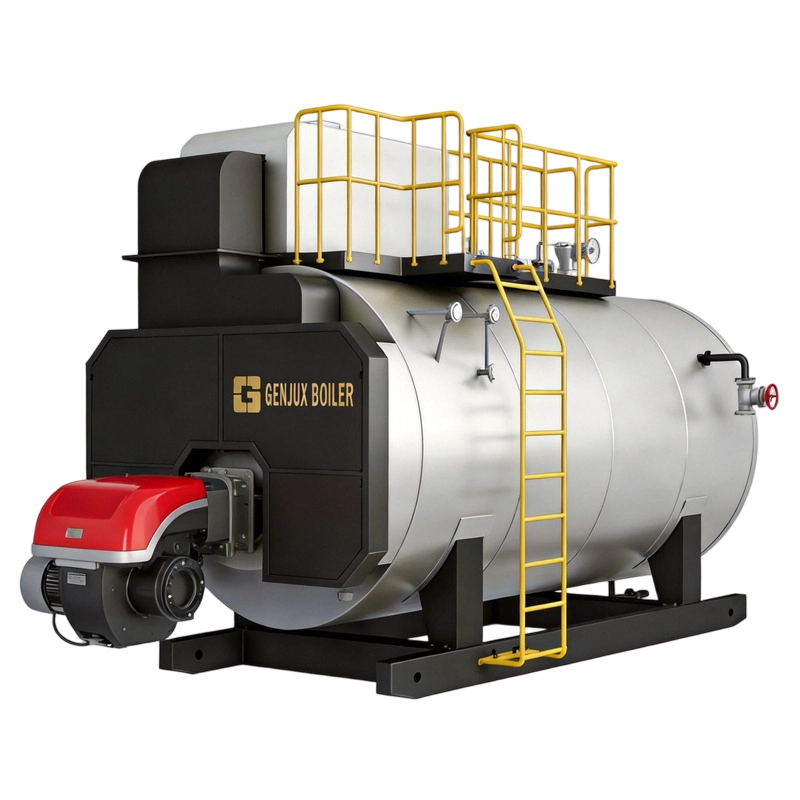
A gas-fired steam boiler refers to a special device that utilizes the heat energy released from the combustion of gas, which is transferred to the water in the boiler drum through a heating surface, causing the water to reach a certain temperature and pressure to generate steam. Its structure is intricately composed, with each part working in concert to ensure the stable operation of the boiler. The combustion system is the starting point for energy conversion in the boiler. Its main function is to mix fuel gas and air in a precise ratio, and then achieve complete combustion within a specific space, releasing high-temperature heat energy to provide the energy source for subsequent heat transfer processes. The boiler body, as the core component for steam generation, contains key components such as the furnace, water pipes, and steam drum. The furnace provides a closed space for fuel gas combustion, while the water pipes serve as the main heat-receiving surfaces, responsible for efficiently transferring the heat energy generated by combustion to the flowing water. The steam drum is used to store and separate steam and water, ensuring the quality of the output steam. The control and safety system plays a dual role in intelligent regulation and safety assurance during boiler operation. It can monitor key parameters such as pressure and temperature inside the boiler in real time, and automatically adjust the fuel gas supply, air ratio, and combustion status according to set values. At the same time, it activates the protection mechanism when parameters are abnormal, achieving safe and efficient operation of the boiler. The flue gas and waste heat recovery system is responsible for the safe discharge of flue gas generated after combustion, while simultaneously recovering the waste heat carried in the flue gas through specific heat exchange devices. This waste heat can then be reused for heating feedwater or other process steps, further improving the overall energy efficiency of the boiler.
The working process of a gas-fired steam boiler is a continuous and efficient energy conversion and transfer process. First, the gas is delivered to the burner under pressure. The burner mixes the gas with precisely metered air and injects it into the furnace for ignition, forming a stable combustion flame. During this process, the chemical energy of the gas is converted into heat energy, producing high-temperature flue gas. Next, the high-temperature flue gas flows within the furnace and flue, undergoing thorough heat exchange with the heating surfaces in the boiler body. The heat energy of the flue gas is transferred to the water flowing in the water pipes through the heating surfaces, gradually increasing the water temperature. As heat energy is continuously input, water absorbs heat within the boiler drum. When the temperature reaches the saturation temperature at the corresponding pressure, vaporization begins, gradually forming saturated steam. If the process requires steam with higher parameters, the saturated steam will further enter the superheater, continuing to absorb heat and rising above the saturation temperature, becoming superheated steam. Finally, the generated saturated or superheated steam is transported to various steam-using equipment through steam pipelines. In these devices, the steam releases heat energy to achieve functions such as material heating, driving process reactions, or providing power, completing the final utilization of energy. The steam after releasing heat energy condenses into water, and some of the condensate, after treatment, can be returned to the boiler feedwater system, realizing the recycling of water resources. Throughout the entire operation, the boiler's control and safety system continuously monitors various operating parameters in real time, ensuring the stability and safety of combustion, heat exchange, and steam delivery, demonstrating the significant characteristics of efficient energy conversion and automatic control.
The efficiency and performance of gas-fired steam boilers are core indicators for evaluating their technological level and application value. They directly relate to energy consumption costs, environmental benefits, and production stability in industrial production. Therefore, in-depth analysis and discussion from multiple key dimensions are necessary.
Boiler thermal efficiency refers to the ratio of the effective heat output of the boiler to the total heat input of the fuel. Its level is affected by a combination of factors. Complete combustion is the primary factor. If the gas and air are not mixed evenly or the amount of air during combustion is insufficient, the gas will not burn completely, and some of the fuel's energy will be emitted with the flue gas as unburned products, resulting in energy loss. Conversely, if there is too much air, it will lower the furnace temperature and increase flue gas heat loss, also affecting thermal efficiency. Controlling the air-to-gas ratio is crucial. Only by maintaining the optimal air-fuel ratio can complete combustion of the gas be ensured while minimizing additional energy loss. The insulation of a boiler also significantly affects its thermal efficiency. Damage or poor insulation of the boiler body and flue insulation layer can lead to substantial heat loss through the walls, reducing the boiler's effective heat output. The rationality of the heating surface design directly determines the heat exchange efficiency. The size, arrangement, material selection, and surface cleanliness of the heating surface all affect the heat transfer between flue gas and water. Insufficient heating surface area results in inadequate heat exchange, causing the flue gas to carry a large amount of waste heat during emission. Scale or ash buildup on the heating surface increases thermal resistance, hindering heat transfer and reducing thermal efficiency. Therefore, optimizing combustion control technology to ensure the optimal air-fuel ratio and combustion completeness, while improving heating surface design, increasing the effective heat exchange area, and strengthening the cleaning and maintenance of the heating surface, can significantly improve the boiler's thermal efficiency.
Condensation technology is one of the important advanced technologies for improving the thermal efficiency of gas-fired steam boilers. Its core principle is the recovery and utilization of the latent heat of water vapor in the flue gas. During gas combustion, a large amount of water vapor is generated, carrying a significant amount of latent heat. In traditional boilers, due to the high flue gas temperature, this water vapor cannot condense, and the latent heat is directly discharged with the flue gas, resulting in energy waste. Boilers using condensing technology are equipped with condensing heat exchangers, typically located at the end of the flue. When high-temperature flue gas flows through the condensing heat exchanger, the low-temperature feedwater or other cooling medium inside the exchanger exchanges heat with the flue gas, gradually lowering the flue gas temperature below the dew point. At this point, the water vapor in the flue gas condenses into water, releasing a large amount of latent heat during condensation. This released latent heat is absorbed by the medium in the condensing heat exchanger and used to heat the feedwater or directly provide heat energy for other processes, thus recovering and utilizing this previously wasted latent heat. Through this energy recovery mechanism, the thermal efficiency of gas-fired steam boilers can be significantly improved, reaching up to 98%. Meanwhile, condensation technology also plays a crucial role in reducing flue gas temperature. Lower flue gas temperatures not only reduce heat loss but also lower the high-temperature resistance requirements of flue materials, extending their service life. Furthermore, due to improved heat recovery efficiency, the amount of gas required to produce the same amount of steam is significantly reduced, effectively lowering fuel costs and carbon emissions, bringing significant economic and environmental benefits to industrial enterprises.
To ensure the long-term efficient and stable operation of gas-fired steam boilers and extend their service life, it is essential to develop a scientific and reasonable maintenance strategy. Regular inspections are the foundation of maintenance work. Personnel need to conduct comprehensive inspections of all systems and components of the boiler according to prescribed cycles. This includes checking for blockages, wear, or leaks in the burners of the combustion system; corrosion, deformation, or cracks in the boiler body's furnace, water pipes, and steam drum; proper functioning of sensors, controllers, and safety valves in the control and safety system; and ensuring the flue gas ducts of the exhaust and waste heat recovery system are unobstructed and that the condensing heat exchanger is free of scale. Regular inspections allow for the timely detection of potential faults and the implementation of corresponding repair measures to prevent the escalation of problems. Cleaning heat exchange surfaces is a crucial part of maintenance. During boiler operation, scale or ash easily accumulates on the heating surfaces. This scale increases thermal resistance, reduces heat exchange efficiency, and leads to a decrease in boiler thermal efficiency. It can also cause localized overheating of the heating surfaces, accelerating corrosion and damage. Therefore, it is necessary to regularly clean heating surfaces such as water pipes and condensing heat exchangers. Depending on the type and extent of the scale, appropriate cleaning methods such as chemical cleaning and high-pressure water jet cleaning should be used to remove the scale from the heating surface and restore good heat exchange performance. Controlling water quality is also an important measure to ensure the long-term performance of the boiler. If the boiler feedwater contains too many impurities, salts, or oxygen, scale will form on the heating surfaces and inside the pipes, corroding metal surfaces and affecting the safe operation and service life of the boiler. Therefore, strict treatment of boiler feedwater is required, such as using ion exchange to remove salts and adding deoxygenating agents to remove oxygen. Regular monitoring of boiler water quality indicators is also necessary to ensure that the water quality meets the boiler's operating requirements. By implementing the above maintenance strategies, boiler malfunctions can be effectively prevented, downtime reduced, and boiler lifespan extended, while ensuring the boiler maintains high thermal efficiency and provides long-term, stable heat support for industrial production.
Previous: None.
Next: Channel Letter Bending Machine Maintenance Tips: The Ultimate Long-Term Guide
Copyright:@2020-2021

Comments Please sign in or sign up to post.
0
0 of 500 characters used