
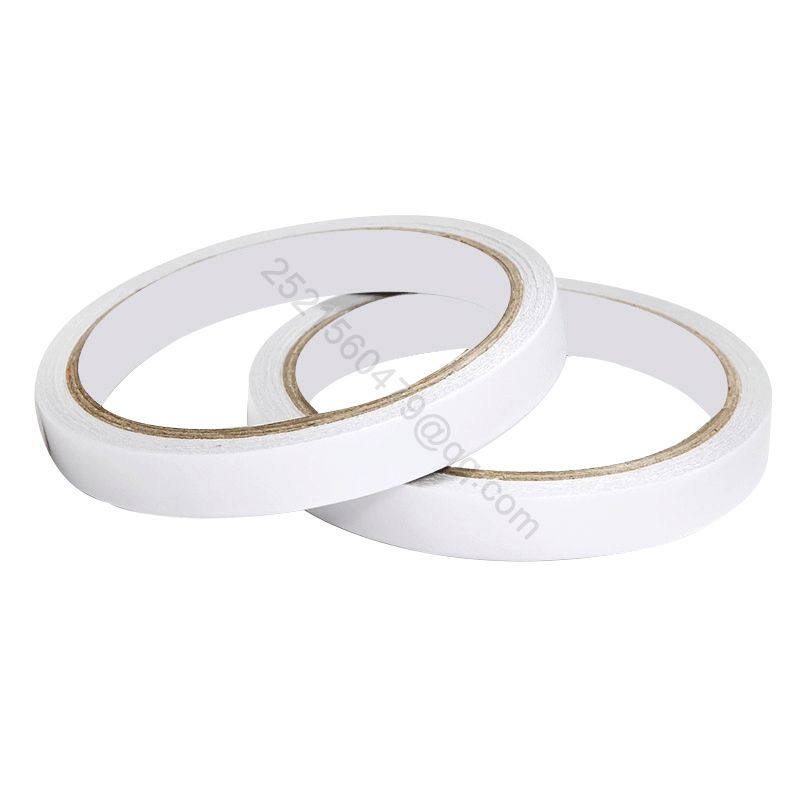
Double sided tissue tape is a pressure-sensitive adhesive tape with a thin, porous tissue carrier coated with adhesive on both sides. It bonds two surfaces together while remaining more conformable and easier to convert than many thick plastic-film tapes. I recommend selecting it by substrate, required holding performance, application temperature, and removal or aging requirements rather than by adhesive name alone.
You can find more information on our web, so please take a look.
At STICK TO THE SKY, we supply adhesive tape, film, and paper solutions for industrial, packaging, printing, converting, and assembly applications. Because double sided tissue tape is available in many adhesive chemistries, thicknesses, liners, and widths, a small sample trial is usually the most reliable way to confirm suitability.
Double sided tissue tape consists of a tissue-paper carrier coated on both sides with pressure-sensitive adhesive. The carrier gives the tape structure during coating, slitting, die cutting, and application, while the adhesive creates contact with the two surfaces being joined. A release liner normally protects one or both adhesive faces before use.
The tissue carrier is typically thin and flexible, allowing the tape to follow moderate surface contours. Depending on the construction, the adhesive may be water-based, solvent-based, hot-melt, acrylic, or another formulated system. The final performance depends on the complete structure, including adhesive type, carrier, liner, thickness, coat weight, and converting quality.
The main function is to create a clean adhesive bond between two surfaces without visible mechanical fasteners. It can join paper, cardboard, films, foams, textiles, plastics, wood, painted surfaces, and selected metals when the adhesive is matched correctly. Surface energy, roughness, cleanliness, and contact pressure all influence the result.
Tissue tape is commonly used for mounting labels, signs, posters, trims, nameplates, and lightweight components. In converting operations, it may also be used to laminate paper or film layers and to attach materials before die cutting. Its thin profile can help reduce the visible edge of a bond compared with thicker foam-based tape.
Compared with liquid adhesive application, pressure-sensitive tape can simplify handling because it is supplied in a ready-to-use format. It does not require mixing, drying equipment, or wet-adhesive cleanup. However, operators still need controlled alignment, suitable pressure, and enough bonding time to achieve consistent results.
Printing and paper converting: splicing, mounting, label construction, and paper-to-paper bonding.
Packaging: envelope closure, carton components, promotional packaging, and lightweight inserts.
Signage and displays: mounting printed graphics, small panels, and point-of-sale materials.
Industrial assembly: attaching trims, nameplates, gaskets, and low-weight components.
Textile and craft production: temporary positioning, fabric attachment, and decorative assembly.
Electronics and appliance support: selected lightweight internal or external bonding tasks where the specification permits.
These applications should not be treated as automatic approvals for every grade. For high-temperature, outdoor, high-load, or safety-critical use, I recommend requesting technical documentation and conducting application-specific testing before production release.
Water-based systems are often considered for general-purpose paper, printing, and packaging applications. They can offer a practical balance of adhesion, coating processability, and cost, but their resistance to moisture, heat, and demanding plastics must be evaluated for each grade.
Hot-melt adhesive can provide strong initial tack and efficient coating performance for selected applications. It may be suitable for fast assembly and general mounting, although the acceptable service temperature and long-term aging behavior depend on the formulation and substrate combination.
Solvent-based and acrylic systems may be selected when stronger aging resistance, cleaner bonding, or broader substrate compatibility is required. These options can involve different cost, processing, and lead-time considerations. The adhesive choice should follow the actual environment rather than a general assumption that one chemistry is always superior.
The tissue carrier can be selected for flexibility, tear behavior, and converting requirements. Release liners may be made from paper or film and can be chosen according to dispensing, die cutting, printing, or automatic application needs. Commercial tissue tape constructions may range from approximately 50 to 200 microns in total thickness, but the correct value must be confirmed from the product specification.
Link to STICK TO THE SKY
| Specification | Why It Matters | What to Confirm |
|---|---|---|
| Total thickness | Influences conformity, edge visibility, and material usage | Thickness tolerance and measurement method |
| Adhesion or peel performance | Indicates how well the tape bonds to a specified surface | Test substrate, dwell time, peel angle, and test speed |
| Shear resistance | Helps assess resistance to sliding under a sustained load | Load, temperature, contact area, and test duration |
| Service temperature | Shows whether the tape may suit the operating environment | Short-term and long-term temperature limits |
| Roll and sheet dimensions | Determines production compatibility and material yield | Width, length, core size, and tolerance |
For meaningful comparison, test conditions must remain consistent. For example, a buyer may condition samples for 24 hours before measuring adhesion, but the exact test method should be agreed with the supplier. A reported value without its substrate, dwell time, temperature, and test speed may not predict performance in the finished product.
Start by recording the exact materials, surface coatings, texture, and cleanliness of both substrates. Smooth paper and untreated cardboard may require a different adhesive balance from low-surface-energy plastics, powder-coated metals, or painted panels. If either surface contains dust, oil, plasticizer, or release agent, cleaning and compatibility testing become especially important.
Estimate whether the tape will carry a constant load, resist peeling, absorb vibration, or simply hold a lightweight item in place. A wider bond area may improve load distribution, while a narrow strip may be more sensitive to edge lifting. Tissue tape is not automatically the best option for heavy loads or thick components that need gap filling.
Review exposure to heat, humidity, water, ultraviolet light, chemicals, and repeated temperature changes. Indoor paper assembly may need only general adhesion, while outdoor signage or industrial equipment may require a more weather-resistant adhesive construction. If the application must remain removable, permanent, or repositionable, state that requirement before sampling.
For high-volume production, consider whether the tape will be supplied in jumbo rolls, narrow rolls, sheets, slit rolls, or die-cut pieces. A liner that releases too easily can create dispensing problems, while one that releases too heavily can slow application. Confirm roll length, core dimensions, packaging method, storage conditions, and acceptable defect limits with the supplier.
Double sided tissue tape offers a thin construction, clean application, flexible converting options, and compatibility with many paper and lightweight assembly processes. It can reduce the need for mechanical fasteners and may support efficient manual or automated application. Its porous carrier can also be easier to tear or die cut than some thicker film structures.
Its limitations are equally important. Tissue tape may have lower moisture resistance than a suitable film carrier, and it may not provide the gap-filling capability of foam tape. Bond performance can also decrease when surfaces are contaminated, application pressure is insufficient, or the selected adhesive is exposed beyond its intended temperature range.
At STICK TO THE SKY, I help B2B buyers translate their application requirements into a practical adhesive tape specification. We can discuss adhesive type, tissue carrier, liner, thickness, width, roll length, die-cut format, packaging, and private-label or converting requirements according to the project scope.
For new projects, I recommend sharing the substrate materials, intended application, target dimensions, expected monthly quantity, operating environment, and required delivery schedule. We can then arrange suitable samples or discuss a comparable construction for evaluation. Any final selection should be confirmed through the buyer’s own application test and agreed technical specifications.
Double sided tissue tape uses a tissue-paper carrier with adhesive on both sides.
It is commonly used for paper converting, packaging, mounting, labeling, and lightweight assembly.
Adhesive chemistry, thickness, liner, substrate, temperature, and load determine suitability.
Typical total thickness may fall within approximately 50–200 microns, but product data must be confirmed.
A controlled sample test, often including a 24-hour dwell period, is more reliable than selecting by product name alone.
Double sided tissue tape is a practical bonding solution when you need a thin, flexible, and convertible adhesive for paper, film, packaging, signage, or lightweight assembly. It is most suitable when the substrates are compatible, the environmental demands are defined, and the required holding performance can be verified through testing. It may not be the correct choice for heavy loads, large gaps, severe moisture, or high-temperature service without a specially developed grade.
Your next step should be to define the two substrates, bond size, application method, operating environment, roll format, and annual demand. Send these details to STICK TO THE SKY for a focused product discussion and sample evaluation. I can help you compare adhesive and carrier options so your purchasing decision is based on measurable requirements rather than a generic double sided tape description.
If you are looking for more details, kindly visit Double Sided Tissue Tape
Previous: How to Evaluate Shopping Bag Quality Before Bulk Orders?
Next: None.
Copyright:@2020-2021

Comments Please sign in or sign up to post.
0
0 of 500 characters used