
To select the right PXIe embedded controller, I recommend starting with four factors: PXI Express slot compatibility, processor and memory requirements, operating-system and software support, and long-term supply needs. The controller must provide enough processing capacity for your measurement workload without creating unnecessary cost, heat, or integration complexity. You should also confirm communication interfaces, storage, synchronization requirements, environmental conditions, and the supplier’s ability to support configuration and delivery. In this guide, I explain how I evaluate these points for automated test, measurement, validation, and analysis systems.
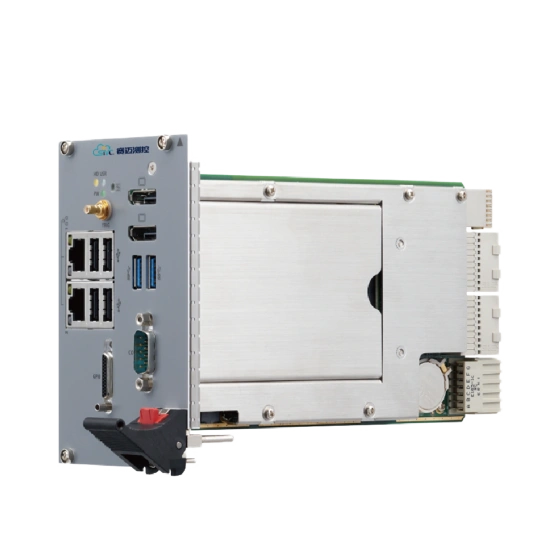
This guide is intended for engineers, system integrators, laboratory managers, procurement teams, and OEM designers sourcing a PXIe embedded controller for a new or existing PXI Express platform. It is especially relevant when the controller will operate multiple PXI or PXIe instruments inside one chassis. I also recommend using this guide when replacing an older controller or comparing different processor configurations for a production test system.
Because every application has different workload, software, and environmental requirements, I do not treat one controller configuration as universally suitable. Instead, I match the controller to the actual test sequence, instrument count, data volume, control software, and expected service life. This approach helps reduce both under-specification and unnecessary over-investment.
A PXIe embedded controller is a computer module installed directly into the system controller slot of a PXI Express chassis. It manages the operating system, test application, instrument communication, data processing, user interface, storage, and external connectivity. Unlike a separate desktop computer connected to the chassis, an embedded controller is designed to operate as an integrated part of the PXIe platform.
Booting and running the selected operating system and application software.
Controlling PXI and PXIe measurement instruments through the chassis backplane.
Processing measurement data locally and coordinating test sequences.
Communicating with external devices through interfaces such as Ethernet, USB, serial ports, or display connections.
Saving test programs, configuration files, measurement results, and system logs.
Supporting synchronization and coordinated operation between instruments when required by the test architecture.
In a measurement and analysis system, the controller is more than a general-purpose computer. Its processor, memory, storage, firmware, and software environment can influence test throughput, startup reliability, data handling, and maintenance effort. I therefore recommend evaluating it as part of the complete PXIe system rather than as an isolated computer module.
PXIe embedded controllers are commonly differentiated by processor class, memory capacity, storage type, operating-system support, peripheral interfaces, and environmental design. Entry-level configurations may be appropriate for instrument control, basic automation, and moderate data processing. Higher-performance configurations are more suitable for demanding analysis, multi-instrument coordination, image processing, or applications that run several software services at the same time.
Processor selection should reflect the number of parallel tasks and the complexity of the application. A controller running a simple sequential test may not require the same processing capacity as one performing real-time calculations, large waveform analysis, or simultaneous data logging. Memory requirements also depend on the operating system, development environment, instrument drivers, data buffers, and user applications.
As a practical planning reference, I suggest estimating the application’s normal memory use and then allowing additional capacity for future software updates and concurrent processes. For example, a system that normally consumes 8 GB of RAM should not automatically be specified with only 8 GB if the equipment is expected to remain in service for several years. The final configuration should be confirmed through application testing rather than based on memory size alone.
Solid-state storage is often preferred where faster startup, lower mechanical sensitivity, and reliable data access are important. However, storage capacity should be matched to the amount of local data retained before transfer to a server or external storage system. I also check whether the controller provides the required number and type of Ethernet, USB, display, serial, or other interfaces, because adding external adapters can increase integration effort.
Some projects require a controller with additional networking, remote management, or specialized I/O capability. Others place greater emphasis on compact integration, low power consumption, or operation in a controlled laboratory environment. The correct design depends on the complete system architecture, not simply on the highest available processor specification.
| Application Profile | Recommended Selection Focus | Key Verification Point |
|---|---|---|
| Basic automated measurement | Stable processor, adequate memory, standard interfaces | Driver and software compatibility |
| High-volume production test | Fast startup, reliable storage, network communication | Test-cycle timing and data-transfer performance |
| Advanced waveform or signal analysis | Higher CPU capacity, larger memory, fast local storage | Processing time under representative workloads |
| Long-term OEM deployment | Stable configuration and lifecycle planning | Availability, revision control, and service support |
For example, a production test system may prioritize repeatable startup and communication with factory databases, while a laboratory analysis platform may prioritize processing capacity and storage flexibility. A controller that performs well in one environment may not be the best choice in another. I recommend documenting the test sequence, instrument count, software stack, data volume, and external interfaces before requesting a quotation.
First, I verify the PXIe chassis model, system controller slot, mechanical format, cooling arrangement, and backplane requirements. The controller must be physically and electrically compatible with the target chassis. I also check whether the chassis provides the required power and cooling conditions for the intended configuration.
Semi-mile Technology supply professional and honest service.
Next, I list the operating system, application software, development tools, instrument drivers, and data-management software that the system must run. Compatibility should be confirmed with the actual versions planned for deployment. If the application depends on proprietary drivers or legacy software, I recommend validating those requirements before selecting the final controller.
I then evaluate processor utilization, memory consumption, storage requirements, communication traffic, and test-cycle timing under realistic conditions. It is useful to measure the heaviest expected workload instead of relying only on average usage. As a reference point, a 1 Gb/s Ethernet connection provides a theoretical maximum of 1 gigabit per second, but practical application throughput can be lower because of protocol overhead, software design, and network conditions.
Temperature, humidity, vibration, installation location, maintenance access, and operating hours can affect the suitable configuration. A laboratory system with stable ambient conditions may have different requirements from a factory system operating continuously. If the controller will be deployed for 5 years or longer, I also recommend discussing revision stability, spare-unit planning, and future availability with the supplier.
Before placing a larger order, I recommend a sample evaluation using the actual chassis, instruments, software, and test sequence. The validation should cover startup, communication, data storage, thermal behavior, software stability, and recovery from normal fault conditions. A pilot unit can reveal integration issues that are difficult to identify from a specification sheet alone.
Processor: Compare processor generation, core count, clock capability, and expected workload rather than selecting by brand name alone.
Memory: Confirm installed capacity, expansion options, and compatibility with the operating system and application.
Storage: Review capacity, interface, endurance considerations, replacement method, and data-retention requirements.
Interfaces: Check Ethernet speed, USB availability, display outputs, serial communication, and other required connections.
Software support: Verify operating-system compatibility, drivers, firmware tools, and remote-management requirements.
Thermal design: Confirm the controller is suitable for the chassis airflow and the intended operating environment.
Mechanical and electrical compatibility: Confirm slot format, power requirements, and chassis integration details.
Lifecycle support: Ask about configuration control, replacement options, technical documentation, and future supply planning.
Specification comparison should also include measurable system requirements. For example, if the test sequence must complete within 2 seconds, the controller should be evaluated using the complete sequence rather than a general benchmark. If local result files average 500 MB per day, storage planning should account for retention policy, backups, and unexpected data growth.
The purchase price of a PXIe embedded controller depends on processor configuration, memory, storage, interfaces, customization, order quantity, and validation requirements. For business-to-business projects, I recommend requesting a quotation that separates the standard configuration from optional upgrades and engineering services. This makes it easier to compare suppliers on an equivalent basis.
Minimum order quantity and lead time may vary according to whether the requested controller is a standard product or a customized configuration. Before purchasing, I ask the supplier to confirm sample availability, production schedule, packaging, inspection scope, warranty terms, and replacement procedures. These details are particularly important for OEM projects and systems that must remain consistent across multiple production batches.
Can the supplier confirm compatibility with the target PXIe chassis?
Can the supplier provide a clear configuration sheet and revision record?
Can the supplier support the required operating system and software environment?
Are sample units available for application-level validation?
Can the supplier explain MOQ, lead time, packaging, warranty, and after-sales procedures?
Can the supplier support repeat orders with consistent specifications?
At Semi-mile Technology, I recommend sharing the chassis model, instrument list, software environment, workload description, quantity, and delivery expectations before final selection. As a supplier serving measurement and analysis instrument applications, we can use this information to clarify configuration options and identify the questions that require technical verification. The final recommendation should be based on confirmed application requirements rather than an unsupported performance promise.
One common mistake is choosing the highest-performance controller without checking software compatibility, thermal limits, or actual workload. Another is focusing only on the purchase price while overlooking storage replacement, validation, downtime, and lifecycle support. Buyers also sometimes confirm processor and memory but fail to check external interfaces, chassis compatibility, or the availability of matching spare units.
I also advise against treating a prototype configuration as automatically suitable for volume production. A prototype may tolerate manual setup or short-term component substitutions, while an OEM deployment may require stable revisions and repeatable procurement. These requirements should be discussed early with the supplier.
The best PXIe embedded controller is the one that matches your chassis, software, processing workload, interfaces, environment, and lifecycle plan. I recommend confirming compatibility first, measuring the real application workload second, and validating a sample configuration before volume purchasing. Processor capacity, memory, storage, networking, thermal design, and supplier continuity should all be evaluated together.
To begin a sourcing discussion with Semi-mile Technology, prepare your PXIe chassis model, required controller slot, operating system, instrument configuration, application software, data volume, quantity, and target delivery schedule. We can then review the available configuration and identify which specifications require sample testing or technical confirmation. This structured process gives your team a clearer basis for selecting a reliable PXIe embedded controller for measurement and analysis applications.
If you want to learn more, please visit our website PXIe Embedded Controller.
Copyright:@2020-2021

Comments Please sign in or sign up to post.
0
0 of 500 characters used