
To choose the right environmental test chamber, I recommend starting with the test profile rather than the chamber size or price. Define the required temperature and humidity range, sample dimensions, test standard, load characteristics, measurement accuracy, and operating schedule before comparing models. For example, a chamber designed for temperature cycling may not be suitable for high-humidity condensation testing, while a chamber selected only by internal volume may struggle with product heat load or airflow requirements. The correct choice is the chamber that can reproduce your required environment consistently, safely, and economically.
In this guide, I explain how I evaluate environmental test chambers for electronics, automotive components, batteries, materials, packaging, and other industrial products. I also cover chamber types, application matching, specifications, supplier support, purchasing considerations, and common selection mistakes. The goal is to help you prepare a practical specification before requesting a quotation from Satake or another qualified supplier.
Define the complete test profile, including temperature, humidity, ramp rate, dwell time, and cycling sequence.
Match the chamber working volume to the product and fixtures, while allowing space for airflow around the samples.
Check heat load, humidity control, recovery performance, safety functions, data recording, and facility requirements.
Ask the supplier to confirm the proposed configuration against your test standard and operating conditions.
Evaluate total cost of ownership, service support, spare parts, installation, and validation—not only the purchase price.
This guide is intended for quality managers, laboratory engineers, product development teams, purchasing departments, and distributors sourcing environmental test chambers. It is also useful for manufacturers that need to test products before production release or shipment. Different industries may use similar chamber types but require different test profiles, fixtures, safety controls, and documentation. I therefore recommend treating the application specification as the starting point for every purchase.
An environmental test chamber is an enclosed piece of equipment that controls one or more environmental conditions around a test sample. Depending on the design, it may regulate temperature, relative humidity, light, altitude, vibration, or other factors. Temperature and humidity chambers are among the most widely used configurations because they help users evaluate product performance, reliability, storage behavior, and resistance to environmental stress.
The chamber does not replace a test method or laboratory procedure. Instead, it provides a controlled environment in which the user can apply a defined test sequence. The final result also depends on sample preparation, sensor placement, fixture design, calibration, test duration, and correct interpretation of the applicable standard.
A suitable chamber should control the required environmental variables within the working space and maintain stable conditions during the test. Important functions may include programmable temperature and humidity control, automatic cycling, alarm management, sample observation, data logging, and recovery after door opening. I also examine whether the controller supports the number of programs and steps required by the customer’s test procedure.
For example, a test involving repeated temperature changes may require reliable ramp control and stable dwell periods, while a constant humidity test may place greater emphasis on humidity generation, condensation management, and water quality. If the sample produces heat, the refrigeration and airflow system must also accommodate that load. These factors should be confirmed with the supplier rather than assumed from the chamber’s nominal volume.
These chambers are used when a product must be exposed to controlled combinations of temperature and relative humidity. Typical applications include electronics, automotive parts, plastics, coatings, packaging, and reliability testing. A buyer may specify a range such as -40°C to +150°C and humidity control from approximately 10% RH to 98% RH, but the actual achievable range depends on the chamber design, temperature point, load, and operating conditions.
Temperature cycling chambers are intended for repeated transitions between defined temperature levels. They are often selected for solder joints, connectors, electronic assemblies, materials, and components affected by thermal expansion and contraction. When evaluating one, I check transition requirements, product heat load, sample mass, fixture design, and whether the test requires rapid changes or controlled ramp rates.
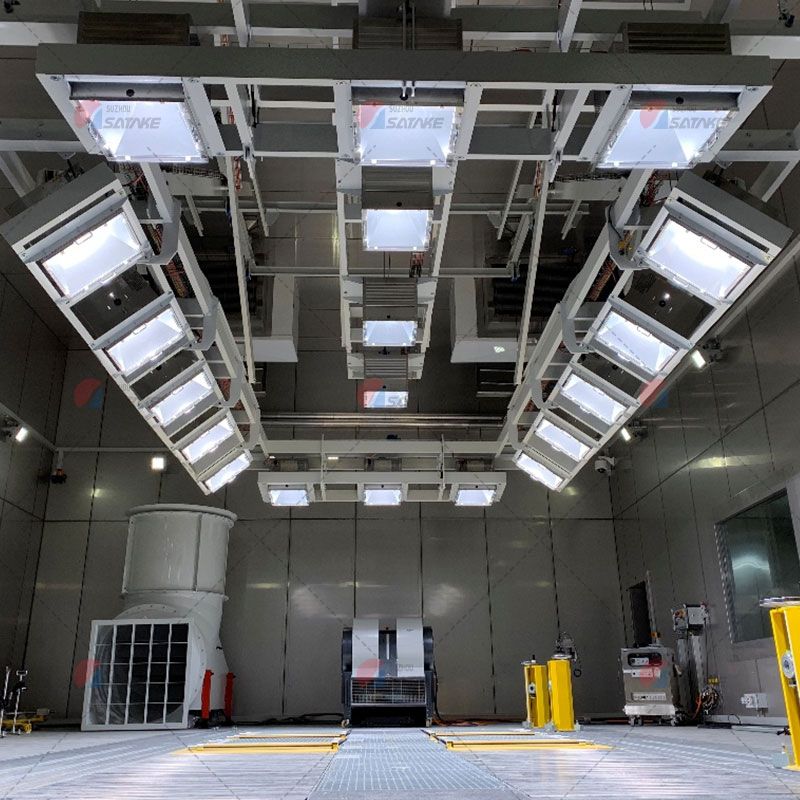
Large products, production batches, vehicle components, and test assemblies may require a walk-in or drive-in chamber. These systems can offer more usable space, but they also require more facility planning, including floor loading, access clearance, power, ventilation, drainage, and operator safety. For unusual sample sizes or integrated test equipment, a custom chamber may be more practical than adapting a standard cabinet.
I first document the minimum and maximum temperature, humidity range, exposure time, number of cycles, ramp or transition rate, and recovery requirements. I also record whether the test is constant-condition, cyclic, condensation-based, or combined with another stress. If the test standard specifies environmental tolerances, those requirements should be included in the request for quotation.
Working volume should be based on the actual sample arrangement, not simply the outside dimensions of the products. I allow sufficient clearance around samples so that air can circulate and so that sensors can measure representative conditions. A chamber advertised as 1,000 L, for example, may provide less practical capacity after shelves, fixtures, product spacing, and airflow clearances are considered.
Satake Product Page
Some products generate heat during operation, particularly powered electronics, batteries, motors, and lighting assemblies. The supplier needs the product wattage, operating state, fixture details, and quantity to assess whether the chamber can maintain the required condition. If heat load is not provided, the selected system may be over-specified, under-specified, or difficult to evaluate accurately.
Ask how temperature and humidity are measured, where sensors are positioned, how data is recorded, and what alarms are available. For regulated or customer-audited testing, I also request information about calibration procedures, verification records, controller access, and test data export. The appropriate accuracy and documentation depend on the customer’s quality system and the applicable test method.
| Selection Area | Questions to Ask |
|---|---|
| Environmental range | What are the required minimum, maximum, stability, and recovery conditions? |
| Capacity | Will the chamber fit the sample, fixtures, sensors, and required airflow clearances? |
| Test sequence | How many steps, cycles, dwell periods, and transitions are required? |
| Product load | Does the sample generate heat, moisture, gas, or other operational stress? |
| Facility conditions | Are power, water, drainage, ventilation, room temperature, and access suitable? |
| Serviceability | Are maintenance access, spare parts, training, and technical support available? |
I also compare chamber construction, insulation, door sealing, interior materials, shelving capacity, observation windows, lighting, and communication interfaces. Stainless steel interiors are commonly considered where corrosion resistance and cleanability are important, but the best configuration depends on the application and exposure conditions. For battery or chemically active samples, I request a specific safety discussion instead of assuming that a standard chamber is appropriate.
One common mistake is choosing a chamber by nominal temperature range alone. A chamber may reach a specified setpoint without meeting the required stability, humidity condition, recovery time, or product load. Another mistake is selecting the smallest possible volume, which can restrict airflow and make future testing difficult.
Buyers also sometimes overlook facility requirements and ongoing maintenance. Refrigeration systems, humidification systems, water treatment, exhaust, electrical capacity, and room temperature can affect installation and operation. I recommend requesting a complete utility schedule and installation checklist before issuing a purchase order.
A further risk is specifying a test standard without discussing how the standard applies to the actual product. The chamber supplier can help identify equipment capabilities, but the product owner or laboratory remains responsible for the test method, acceptance criteria, and final result interpretation. Clear responsibility at the planning stage helps avoid rework.
Environmental test chamber pricing depends on chamber size, temperature and humidity range, refrigeration architecture, controller functions, safety options, sensor systems, and customization. Standard cabinet models may be easier to quote and produce, while large or application-specific systems usually require additional engineering review. Minimum order quantity is often less important than configuration confirmation, installation planning, and service availability for this type of equipment.
Lead time should be discussed together with technical approval, component availability, factory testing, shipping, installation, and commissioning. I suggest asking the supplier to separate equipment price, optional functions, packaging, delivery terms, installation, training, and after-sales service. This makes different quotations easier to compare and reduces the risk of selecting a low initial price with high later costs.
Can the supplier review your test profile and recommend a suitable chamber configuration?
Will the quotation clearly state temperature, humidity, stability, uniformity, capacity, and load assumptions?
Can the supplier explain controller operation, alarm functions, data recording, and communication options?
Are installation documents, operating instructions, maintenance guidance, and spare-parts information available?
Can the supplier support customization for sample fixtures, access ports, safety requirements, or chamber dimensions?
Is there a practical plan for inspection, commissioning, training, troubleshooting, and ongoing communication?
At Satake, I recommend beginning the discussion with a structured application brief rather than a general request for a chamber. The brief should include sample dimensions, weight, quantity, operating power, test standard, environmental profile, cycle count, facility conditions, and expected use frequency. With this information, our team can evaluate whether a standard environmental test chamber or a customized solution is more appropriate.
Before requesting a quotation, prepare a one-page specification covering the required environmental range, test sequence, sample details, capacity, utilities, safety concerns, documentation, and delivery expectations. If any requirement is uncertain, identify it as an open question instead of selecting an arbitrary value. This gives the supplier a clear basis for technical review and helps prevent avoidable changes after ordering.
The right environmental test chamber is therefore not simply the model with the widest range or largest capacity. It is the system that matches your test method, sample load, operating environment, documentation needs, and long-term support plan. Contact Satake with your application details so we can help assess the appropriate chamber type, configuration, and next steps for your project.
Contact us to discuss your requirements of Environmental Test Chambers. Our experienced sales team can help you identify the options that best suit your needs.
Previous: How to Choose Servo vs Pneumatic Feeder
Next: When Rotary Drilling Outperforms DTH and Top-Hammer in Large-Diameter Hole Mining
Copyright:@2020-2021

Comments Please sign in or sign up to post.
0
0 of 500 characters used