
Selecting the right farm tractor for orchard and vineyard work requires careful consideration of factors such as tractor size, horsepower, maneuverability, ground clearance, hydraulic performance, and implement compatibility. Unlike open-field farming, orchards and vineyards often involve narrow working spaces, delicate crops, uneven terrain, and specialized operations that require a more flexible and compact tractor solution.
A properly selected orchard tractor or vineyard tractor can significantly improve productivity in tasks such as soil cultivation, spraying, mowing, fertilizing, pruning support, and material transportation while reducing labor costs and crop damage.
For agricultural equipment buyers, dealers, and distributors, understanding these key selection criteria is essential when choosing reliable tractors for orchard and vineyard applications.
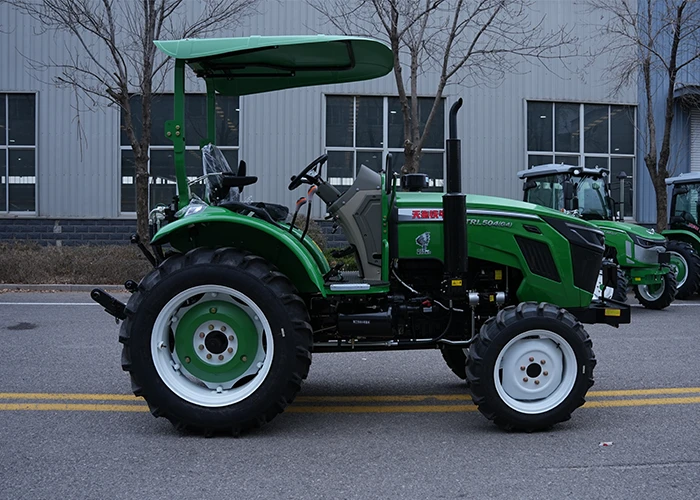
Traditional large field tractors may not always be suitable for orchards and vineyards because they are often designed for wide-open farmland.
Orchard and vineyard environments typically require tractors with:
Compact dimensions
Excellent maneuverability
Narrow turning radius
Suitable ground clearance
Strong hydraulic performance
Low crop damage risk
Versatile attachment compatibility
A suitable farm tractor for orchard and vineyard work should provide enough power for demanding tasks while remaining agile enough to operate between rows.
One of the most important factors when selecting an orchard or vineyard tractor is overall size.
Many orchards and vineyards have limited row spacing, making tractor width a critical consideration.
Before purchasing, measure:
Row spacing
Turning areas
Gate widths
Storage spaces
Working paths
A compact farm tractor helps operators:
Move easily between trees and vines
Reduce crop damage
Access narrow areas
Improve operational efficiency
For vineyards, narrow tractors are especially important because vines are often planted in closely spaced rows.
The required horsepower depends on the size of the orchard, vineyard area, terrain, and implements being used.
Recommended:
20–50 HP
Suitable for:
Grass mowing
Light cultivation
Spraying
Fertilizing
Transporting small loads
Recommended:
50–100 HP
Suitable for:
Heavy cultivation
Larger sprayers
Soil preparation
Trailer operations
More intensive farm work
Recommended:
100 HP+
Suitable for:
Large-scale vineyard management
Heavy implements
Difficult terrain
Continuous commercial operations
Choosing the correct horsepower prevents unnecessary fuel consumption while ensuring sufficient working capability.
Orchard and vineyard work requires frequent movement between rows.
A tractor with excellent maneuverability provides:
Easier row navigation
Faster operation
Reduced plant damage
Improved operator efficiency
Important features include:
Compact wheelbase
Hydraulic steering
Adjustable wheel spacing
Good visibility
Flexible steering angle
A smaller turning radius is particularly valuable when working at the end of rows.
Ground clearance is another important factor for orchard and vineyard tractors.
Higher clearance helps prevent:
Damage to crops
Soil contact problems
Interference with roots
Difficult operation on uneven terrain
For vineyards and orchards with taller plants, adequate clearance allows tractors to operate safely throughout different growth stages.
Advantages:
Lower purchase cost
Simple maintenance
Lower operating expenses
Suitable for:
Flat farmland
Dry soil
Light-duty operations
Advantages:
Stronger traction
Better stability
Improved climbing ability
Reduced wheel slip
Recommended for:
Sloped vineyards
Wet soil
Mountain orchards
Uneven terrain
For challenging environments, a 4WD farm tractor provides better productivity and safety.
The Power Take-Off (PTO) system is essential for orchard and vineyard operations.
Common PTO-driven implements include:
Sprayers
Rotary mowers
Shredders
Tillers
Fertilizer spreaders
Mulchers
Post hole diggers
When selecting a tractor, confirm:
PTO speed options
PTO horsepower output
Implement compatibility
A versatile PTO system allows one tractor to perform multiple tasks throughout the year.
Modern orchard and vineyard operations rely heavily on hydraulic-powered equipment.
A strong hydraulic system supports:
Hydraulic sprayers
Front loaders
Specialized vineyard equipment
Lifting systems
Transport attachments
Important specifications include:
Hydraulic flow rate
Lift capacity
Number of hydraulic outlets
Three-point hitch capability
Better hydraulic performance improves efficiency when using advanced agricultural attachments.
Tire selection directly affects traction, soil protection, and operating efficiency.
Common options include:
Best for:
Soil cultivation
Muddy conditions
Field operations
Suitable for:
Grass areas
Landscaping
Reduced soil damage
Ideal for:
Vineyards
Fruit orchards
Tight planting rows
The correct tire configuration helps balance traction and crop protection.
Orchard and vineyard work often requires long operating hours.
Important comfort features include:
Ergonomic seat
Low vibration design
Easy controls
Good visibility
Climate-controlled cabin options
Safety features may include:
ROPS protection
Reliable braking systems
Stable chassis design
Emergency controls
Comfortable operators can maintain higher productivity during intensive seasons.
Choosing the right manufacturer is just as important as choosing the right tractor model.
A reliable tractor supplier should provide:
Consistent product quality
Technical support
Spare parts availability
Custom configurations
Export experience
After-sales service
For distributors and importers, partnering with an experienced manufacturer reduces risks and improves long-term business value.
A versatile tractor should support multiple attachments, including:
| Attachment | Application |
|---|---|
| Rotary Tiller | Soil preparation |
| Sprayer | Pest and disease control |
| Mower | Grass management |
| Fertilizer Spreader | Nutrient application |
| Trailer | Material transportation |
| Mulcher | Weed control |
| Front Loader | Handling materials |
| Post Hole Digger | Fence installation |
| Cultivator | Soil management |
Avoid these mistakes:
An oversized tractor may:
Increase fuel costs
Reduce maneuverability
Damage crops
Increase purchase expenses
A tractor that is too wide may not fit the working environment.
Always confirm dimensions before purchasing.
The cheapest tractor may result in:
Higher maintenance costs
Limited spare parts availability
Reduced productivity
Consider total ownership cost instead.
Choose a tractor that can handle potential growth in:
Farm size
Additional implements
Increased workload
Tianjin Tractor Manufacturing Co., Ltd. (TIANTUO) has more than 70 years of tractor manufacturing experience.
Founded in 1956, TIANTUO produced China's first tractor in 1958 and has continued developing reliable agricultural machinery solutions for global markets.
Since establishing a strategic partnership with John Deere in 2000, TIANTUO has combined traditional manufacturing expertise with advanced engineering technologies. Models such as the TieNiu 55, Deere TianTuo 720, and 824 represent the company's commitment to quality and innovation.
Today, TIANTUO supplies:
Compact tractors
Low horsepower tractors
Medium horsepower tractors
High horsepower tractors
Hybrid tractors
E-Mark certified tractors
for agricultural distributors, commercial farms, and machinery buyers worldwide.
Choosing the right farm tractor for orchard and vineyard work requires balancing power, size, maneuverability, traction, hydraulic performance, and implement compatibility.
The ideal tractor should:
Fit your row spacing
Provide sufficient horsepower
Protect crops
Support multiple attachments
Deliver reliable performance
Reduce operating costs
By carefully evaluating your farming environment and selecting a trusted tractor supplier, you can invest in equipment that improves productivity and supports long-term agricultural success.
Copyright:@2020-2021

Comments Please sign in or sign up to post.
0
0 of 500 characters used