
Common Filter Press Problems and How to Fix Them is a practical guide for operators who want to identify leaks, poor cake formation, pressure loss, and other performance issues before they lead to downtime. A Filter Press Machine usually fails in predictable ways, which means the fastest fix is often a symptom-to-root-cause check, not a full teardown. This article explains the most common faults, the first 15 minutes of diagnosis, and the maintenance actions that reduce repeat failures in slurry filtration for industrial processing. It is written for plant operators, maintenance teams, and buyers comparing filter press troubleshooting options for Jingwo equipment and similar systems.
A useful filter press maintenance guide starts with symptoms, not assumptions. In most plants, pressure loss, wet cake, cloth blinding, and leakage are the four issues that account for the majority of unplanned stoppages in solid-liquid separation. The correct response depends on slurry solids loading, feed pressure, cloth condition, plate sealing, and hydraulic system health. If you treat every problem as a pump issue, you will miss structural faults, cloth fouling, or a damaged gasket.
When evaluating a fix, check whether it restores stable pressure, clean cake release, and repeatable cycle time. A practical repair should also reduce recurring downtime, because repeated short stops often cost more than a single planned maintenance window. For operators, the best method is a filter press comparison between symptom, likely cause, and the lowest-risk corrective action.
Pressure behavior: indicates pump, air, valve, or hydraulic pressure issues in filter presses.
Cake moisture: shows whether filter cake formation and dewatering are working correctly.
Leak pattern: helps identify cloth misalignment, seal wear, or plate damage.
Cloth condition: reveals blinding, scale buildup, or fine particle overload.
Cycle history: shows whether the fault is recurring or linked to a recent slurry change.
The fastest way to solve common filter press problems is to check the symptom first, then test the most likely cause in order. Start with pressure readings, visible leaks, cake moisture, and cloth condition, because these four indicators usually narrow the fault faster than random part replacement. If the machine will not build pressure, focus on feed supply, air entry, valve position, and hydraulic closure. If the cake is too wet, review feed solids, cloth permeability, cycle time, and wash sequence before changing hardware.
A press that refuses to build pressure often has a restriction before the chamber is fully loaded, or a leak that prevents pressure rise. First confirm that the feed pump is reaching the target flow and that the inlet valve is fully open. Then inspect for air in the feed line, because air pockets compress and delay pressure rise. If the pump is delivering flow but the pressure stays low, inspect the plate pack for incomplete closure or a damaged seal.
Why this matters: without pressure, slurry cannot fill the chambers evenly, which means the cake will form unevenly or not at all. That creates longer cycle times and more solids in the filtrate, which raises disposal and rework costs. In pressure-driven filtration, even a small seal defect can stop the system from reaching the normal operating range.
Common mistakes to avoid:
Replacing the pump too early: verify valves, air bleed, and closure force first.
Ignoring hydraulic closure settings: low closing force can prevent sealing across the plate stack.
A wet cake is usually caused by insufficient filtration time, low feed solids, poor cloth permeability, or a slurry that is too fine to drain quickly. If the cake moisture rises after a raw material change, compare the new slurry particle size, viscosity, and pH against the previous batch. In many plants, a wet cake is not a press fault at all but a process mismatch between slurry chemistry and the selected cloth media. For this reason, filter press troubleshooting should always include slurry type and application-specific guidance.
Why this matters: wet cake increases hauling cost, reduces dry solids recovery, and can make discharge sticky or incomplete. If the press uses the same cycle on every slurry, performance will vary as feed characteristics change. A fixed time setting that worked for one product may be too short for another product with finer particles or higher viscosity.
Common mistakes to avoid:
Shortening cycle time to increase throughput: this usually raises moisture and reduces solids recovery.
Using one cloth specification for every slurry: cloth porosity must match particle distribution.
Filter cloth blinding happens when fine particles, oils, scale, or precipitates block the cloth pores and reduce drainage. The first signs are slower filtrate flow, rising feed pressure without better dryness, and increasingly difficult cake release. Start by washing the cloth, checking the slurry pH, and confirming whether the feed contains excessive fines or sticky solids. If the cloth blinds repeatedly, the issue may be upstream in the process chemistry rather than in the press itself.
Why this matters: blinded cloth reduces throughput and increases energy use because the pump works harder for the same filtrate output. It also changes cake formation, which can lead to uneven filling and more residual moisture. In a filter press maintenance guide, cloth condition should be checked as often as pump performance.
Common mistakes to avoid:
Cleaning only after severe blinding: preventive rinsing is easier than recovery cleaning.
Ignoring process chemistry changes: a pH shift can cause faster scaling or coagulation.
Leakage can come from plate misalignment, worn gaskets, torn cloth edges, damaged feed ports, or uneven hydraulic closure. Check whether the leak occurs at the corner, along the plate edge, or at the feed hole, because each pattern points to a different root cause. If the leak starts after plate installation or cloth replacement, verify that the cloth is seated correctly and not pinched. If leakage continues after closure adjustment, inspect the plate faces for warping or debris on the sealing surfaces.
Why this matters: leakage reduces filtration efficiency and can create safety and housekeeping issues around the press. It also signals that chamber pressure is escaping, which can lower cake dryness and increase cycle inconsistency. A correct diagnosis prevents unnecessary replacement of plates, cloth, or hydraulics.
Common mistakes to avoid:
Tightening the hydraulic system without cleaning sealing surfaces: trapped solids can keep the plates from sealing.
Assuming every leak is a gasket failure: cloth positioning and plate damage are often the real source.
When filtrate becomes cloudy or contains more fines, the issue may be cloth damage, seal bypass, or improper preconditioning of the slurry. Verify whether the cloth has holes, tears, or worn seams, and inspect the plate seal line for slurry bypass. Then compare the current solids concentration with historical data, because a sudden increase in feed fines can overwhelm the cloth selection. This is one of the most common filter press problems and solutions scenarios in mineral, chemical, and wastewater plants.
Why this matters: poor filtrate quality can violate downstream process requirements and increase recycling or treatment cost. If fines pass through the system, the fault can spread into pumps, tanks, or polishing equipment. The best response is to isolate the defect before it becomes a plant-wide contamination issue.
If a filter press is not building pressure, the most likely causes are air in the feed line, an open bypass valve, inadequate hydraulic closure, or a feed pump that cannot maintain the target pressure. Begin by confirming the inlet valve position, checking for trapped air, and verifying that the plate stack is fully closed. If those items are correct, inspect the pump curve against the actual slurry viscosity, because a pump that works on water may fail on thick slurry.
The answer is usually found in the first five checks, not in major disassembly. In a good filter press maintenance guide, pressure loss is treated as a system diagnosis, not a single-part failure. For operators, the fastest route is to confirm feed integrity, sealing force, and air removal before replacing mechanical components.
A strong maintenance plan prevents many common filter press problems before they stop production. The most effective routine is a daily visual check, weekly cloth inspection, monthly sealing review, and scheduled hydraulic and pump verification. If your plant handles abrasive slurry, fine solids, or sticky organic feed, shorten those intervals because wear and blinding rates rise faster. Preventive care is usually cheaper than emergency repair because it avoids unscheduled shutdowns, product loss, and cleanup labor.
Use this filter press maintenance guide as a working checklist during each shift change or planned stop.
Inspect cloths for tears, seam wear, and blinding.
Check plate faces for solids buildup and seal wear.
Verify hydraulic closing force and pressure stability.
Confirm feed valves, air vents, and drain paths are clear.
Review cycle time, filtrate clarity, and cake moisture trends.
Wash or replace cloths based on actual performance data.
Record leakage location, pressure rise time, and discharge behavior.
The first 15 minutes should follow a symptom-to-root-cause decision tree. Start with what changed: slurry composition, pressure setting, cycle time, cloth cleaning, or plate installation. Next, inspect the machine in this order: feed line, valve position, hydraulic closure, cloth condition, and plate sealing surfaces. That order avoids wasted work because it checks the highest-probability faults first.
A practical operator checklist should also separate mechanical faults from process faults. If the problem started after a raw material change, the slurry may be the cause. If the problem started after maintenance, the cloth, plate alignment, or seal may be the cause. This is the clearest way to reduce guesswork in plate and frame filter press troubleshooting.
A filter press works by forcing slurry into sealed chambers where liquid passes through the cloth and solids remain as a cake. As pressure rises, the cake thickens and becomes the main filtering medium, improving solids capture over the cycle. The quality of cake formation depends on feed solids, cloth permeability, pressure profile, and the chemistry of the slurry. If any one of these variables changes significantly, the machine may show longer cycle times, wetter cake, or lower filtrate clarity.
This matters because filter press troubleshooting only works when the operator understands the filtration sequence. The press does not simply “separate liquid and solids”; it also depends on cake resistance, pressure hold, and drainage rate. In industrial processing, that means the right fix may be adjusting operating conditions rather than replacing equipment.
Sometimes the repeated problem is not a defect but a mismatch between the press and the application. In a filter press comparison, the main question is whether the slurry is suitable for chamber filtration, or whether another dewatering method would reduce operating friction. Fine, sticky, oily, or highly variable slurries may require different cloths, plate designs, or cycle settings. For some plants, the real decision is between upgrading the press configuration and changing the separation method.
| Issue pattern | Likely cause | Best first action | When to escalate |
|---|---|---|---|
| Pressure will not rise | Air, valve, pump, closure fault | Check feed line and closure force | If pressure still stays low after sealing checks |
| Cake too wet | Short cycle, cloth mismatch, fine slurry | Extend cycle and review cloth selection | If moisture stays high after process adjustment |
| Leakage at plate edge | Seal, alignment, debris | Clean sealing surfaces and inspect cloth seating | If plate faces are warped or damaged |
| Slow filtrate flow | Cloth blinding or scale | Wash cloth and check slurry chemistry | If blinding returns after cleaning |
| Uneven cake discharge | Blinding, moisture, cloth wear | Inspect cloth and optimize cycle | If discharge remains sticky after cleaning |
A filter press is used when a plant needs controlled solid-liquid separation with recoverable cake and relatively dry solids. It is often chosen for slurry filtration for industrial processing where clarity, cake dryness, and material recovery matter more than continuous throughput. The system is also attractive when downstream disposal cost depends on moisture content, because drier cake often reduces hauling and handling volume. For many operations, the question is not whether a press exists, but whether the operating team can maintain it consistently.
The answer to is a filter press worth it depends on slurry behavior, maintenance discipline, and the cost of moisture in the final cake. If your feed changes often, the machine must be paired with a disciplined testing and adjustment routine. Without that routine, the same press may perform well one week and poorly the next.
Different slurries fail in different ways, so the same symptom can have different causes. In mineral slurry, pressure loss and cloth blinding often come from fine particles and scale. In wastewater sludge, wet cake may be linked to compressibility and variable solids loading. In chemical processing, leakage and cake consistency can shift with pH, temperature, and polymer dosing.
That is why filter press troubleshooting should include application-specific guidance by industry or slurry type. A one-size-fits-all fix often solves the symptom for one cycle and creates a new problem in the next. For example, a cloth that works on coarse mineral solids may blind quickly on sticky biological sludge. The best practice is to keep records by slurry type, batch name, pressure curve, and cake moisture.
Filter cloth blinding is caused by fine particles, sticky solids, oil, scale, or incompatible cloth selection for the slurry. If the slurry contains very small particles, they can pack into the weave and reduce permeability. If the feed chemistry encourages precipitation, scaling can harden on the cloth and make normal washing ineffective. The longer the cloth stays blinded, the more the system behaves as if the press is undersized.
The fix depends on the cause. Wash the cloth before blinding becomes severe, review slurry pH and dosing, and match the cloth weave to particle size. If the same cloth blinds repeatedly in the same service, the problem is often process-related rather than mechanical.
The right maintenance plan depends on operating hours, slurry type, downtime cost, and available staff. A plant with one shift and stable feed can usually rely on weekly inspection and monthly deeper checks. A plant with abrasive or highly variable slurry needs shorter inspection intervals and more frequent cloth washing. If the press is central to production, keeping spare cloths, seals, and key hydraulic parts on site can reduce the time lost to waiting.
| Need | Choose this maintenance approach | Because |
|---|---|---|
| Stable slurry and low wear | Weekly inspection | Faults develop slowly and are easier to catch early |
| Fine or sticky slurry | Daily cloth and seal checks | Blinding and leakage occur faster |
| High downtime cost | Spare parts stocking | Reduces delay during urgent repairs |
| Variable feed chemistry | Batch-based records | Helps link symptoms to process changes |
| Small team operation | Simple checklist routine | Improves consistency during shift changes |
Jingwo supplies Filter Press Machine solutions for plants that need structured separation, repair support, and application matching. When evaluating company information, buyers should look for part compatibility, plate and cloth options, and the ability to align machine design with slurry characteristics. For troubleshooting, that support matters because many faults are not isolated machine failures but combinations of feed chemistry, closure force, and cloth selection. If the supplier can help match the press to the slurry, recurring faults are usually easier to control.
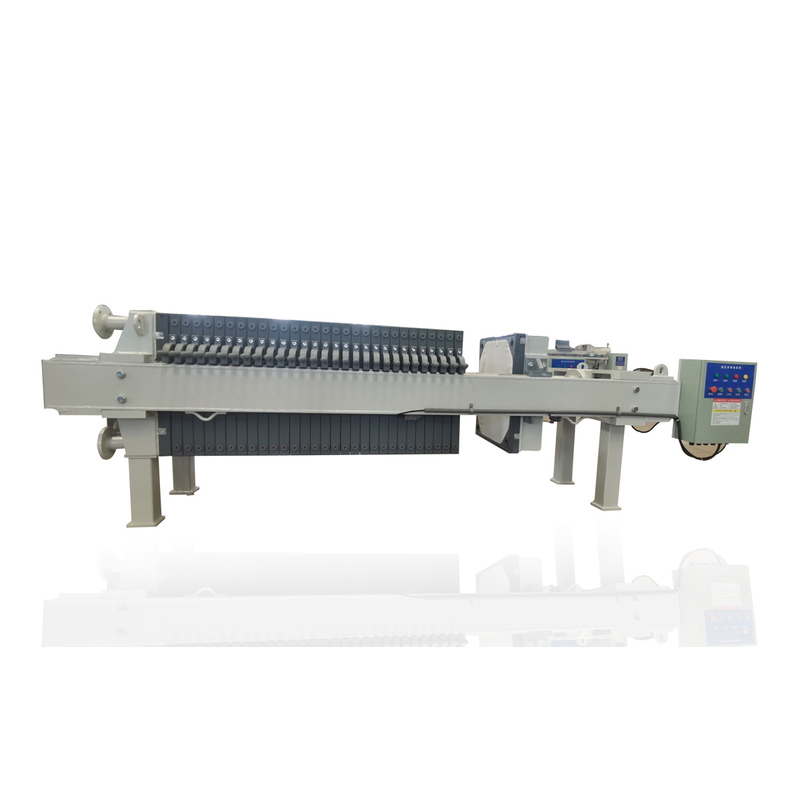
For reference and product information, see Jingwo and the company’s filter press resources. The image below can also be used as a visual reference for machine layout and troubleshooting orientation.
The filter cake is too wet when drainage is incomplete, cycle time is too short, cloth permeability is reduced, or the slurry is not conditioned correctly. If the cake stays wet after a normal cycle, first check whether pressure has reached the expected range and held long enough for dewatering. Then inspect cloth condition and the solids distribution in the feed, because very fine or compressible solids retain water more easily. In many cases, the fault is not the cake itself but the process settings that created it.
A wet cake is a clear signal that the machine and slurry are not balanced. The most practical response is to compare current operating data with a known good cycle. That comparison usually shows whether the issue is a timing problem, cloth problem, or slurry change.
To fix a filter press leak, identify the leak location first, then match the fix to the source. Edge leaks usually point to sealing surfaces, plate alignment, or cloth seating. Feed-port leaks often suggest worn seals or solids trapped at the inlet area. Corner leaks can indicate damaged plates, uneven closure, or cloth misplacement.
Start by cleaning the sealing surfaces and checking whether the cloth is pinched or folded. If the leak remains after cleaning and repositioning, inspect the plate faces and hydraulic closure pressure. This sequence prevents unnecessary part replacement and keeps the repair focused on the actual fault.
Common Filter Press Problems and How to Fix Them are easier to solve when you use a symptom-to-root-cause method instead of guesswork. The main issues are pressure loss, leakage, wet cake, and cloth blinding, and each one has a short list of first checks that can identify the fault within minutes. If you follow the troubleshooting order in this guide, you can reduce downtime, avoid repeat failures, and keep dewatering performance more consistent. The key is to record each fault, compare it with slurry type and operating conditions, and turn those records into preventive maintenance actions.
By following these troubleshooting steps, you can solve common filter press problems faster, reduce downtime, and keep your system running efficiently. For the best results, combine daily inspection, scheduled cloth washing, seal checks, and pressure monitoring with a maintenance log. If your plant uses a Filter Press Machine from Jingwo or another supplier, keep the machine data, slurry type, and failure pattern together so that every repair improves the next cycle.
Copyright:@2020-2021

Comments Please sign in or sign up to post.
0
0 of 500 characters used