
Choosing the right ultrasonic cleaning machine is essential for achieving consistent cleaning results, improving production efficiency, and protecting valuable components from damage. Ultrasonic cleaning technology is widely used in industries such as automotive manufacturing, medical equipment, electronics, aerospace, jewelry, precision engineering, and laboratory research. By using high-frequency sound waves to generate microscopic bubbles in a cleaning liquid, ultrasonic cleaners can remove oil, grease, dust, polishing compounds, metal chips, and other contaminants from complex surfaces and hard-to-reach areas.
However, not every ultrasonic cleaning machine is suitable for every application. The ideal equipment depends on several factors, including the type of contaminants, the material being cleaned, the dimensions of the workpieces, the required cleaning precision, and the production environment.
We need to evaluate these factors carefully before investing in an ultrasonic cleaning system. In this guide, we explain how to select the most suitable ultrasonic cleaning machine for your application, from determining the correct tank capacity to evaluating frequency, power, temperature control, cleaning solutions, and automation requirements.
Before comparing ultrasonic cleaning machines, we should clearly define the cleaning task. Different industries have different cleanliness standards, and the equipment must be capable of meeting the specific requirements of the application.
For example, automotive manufacturers often need to remove machining oils, grease, carbon deposits, and metal particles from engine components, fuel injectors, and transmission parts. Electronics manufacturers may require precise cleaning of circuit boards, connectors, and electronic assemblies without damaging sensitive components. Medical device manufacturers typically need reliable cleaning processes that prepare instruments and components for subsequent inspection, disinfection, or sterilization.
We should consider the following questions:
What components need cleaning? Identify the shape, size, material, and structural complexity of the workpieces.
What contaminants must be removed? Determine whether the primary challenge involves oil, grease, dust, rust, polishing residue, or fine particles.
What cleanliness level is required? Establish whether ordinary industrial cleaning or high-precision contaminant removal is necessary.
How many components must be cleaned per cycle? Estimate the daily workload and expected production volume.
Are there special process requirements? Consider material compatibility, temperature restrictions, regulatory requirements, and downstream manufacturing processes.
Defining these requirements helps us narrow the selection to machines with appropriate technical specifications rather than paying for unnecessary features.
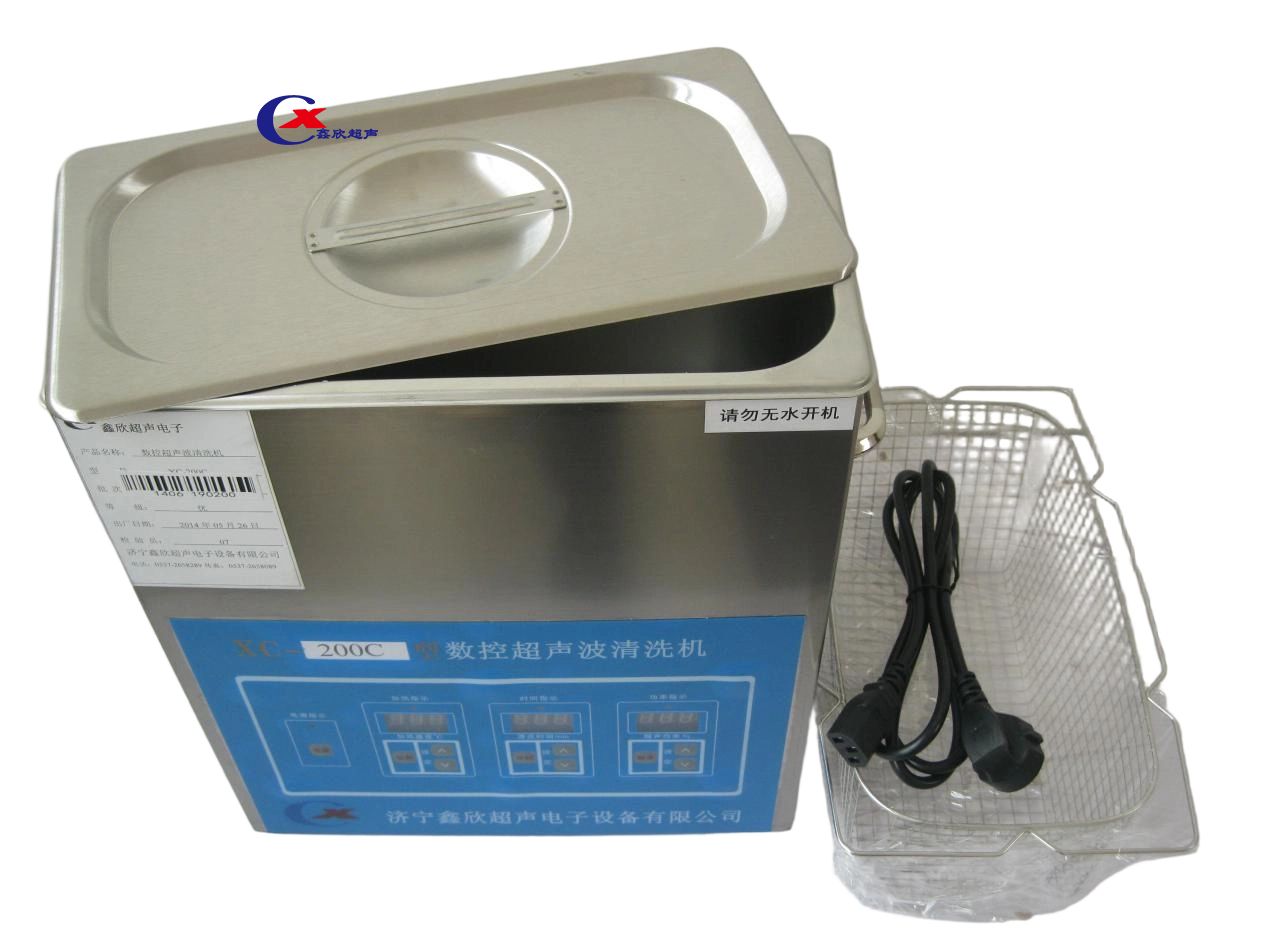
Ultrasonic frequency is one of the most important factors influencing cleaning performance. Frequency determines the characteristics of cavitation bubbles formed in the cleaning liquid and affects how cleaning energy interacts with different surfaces.
Common ultrasonic cleaning frequencies include 20 kHz, 28 kHz, 40 kHz, 80 kHz, and higher frequencies used for specialized precision applications.
Low-frequency systems, commonly operating around 20–28 kHz, generally produce stronger cavitation effects and relatively energetic bubble collapse. These machines are suitable for removing stubborn contaminants from durable components.
Typical applications include:
Heavy-duty metal parts and machined components
Automotive engine components
Industrial tools and mechanical assemblies
Metal parts contaminated with grease or machining oils
Robust components requiring intensive cleaning
Low-frequency ultrasonic cleaning can provide effective contaminant removal, but its stronger cavitation effects may be unsuitable for delicate surfaces or certain sensitive materials.
Machines operating around 40 kHz are widely used because they offer a practical balance between cleaning effectiveness and surface protection.
Common applications include precision metal components, laboratory equipment, jewelry, optical accessories, and general industrial parts.
For many standard manufacturing applications, a 40 kHz ultrasonic cleaning machine is a useful starting point. Nevertheless, we should verify the required cleaning performance through practical testing, especially when workpieces have delicate coatings, narrow channels, or complex geometries.
Higher-frequency systems, including 80 kHz and above, can produce smaller cavitation bubbles that may improve cleaning in certain fine structures and delicate applications.
These systems are commonly considered for:
Precision electronic components
Fine mechanical parts
Small components with narrow gaps
Delicate instruments
Certain optical and precision-engineering applications
Higher frequency does not automatically guarantee better cleaning. The result also depends on the contaminant, cleaning chemistry, temperature, component geometry, and ultrasonic power.
Our recommendation: Choose frequency according to the sensitivity of the workpiece and the type of contamination. When the application involves delicate or high-value components, test different frequencies before selecting the final equipment configuration.
The cleaning tank must accommodate the largest workpieces or baskets while allowing the cleaning liquid to circulate effectively around the components.
Choosing a tank that is too small can restrict production capacity, while an unnecessarily large tank may increase equipment costs, energy consumption, and cleaning-solution requirements.
We should begin by measuring the maximum length, width, and height of the parts to be cleaned. The dimensions of the cleaning basket should also be considered because the workpieces must fit comfortably inside it.
The tank should provide sufficient clearance between the components, basket, and tank walls. Overloading the basket or placing parts too close together can restrict cavitation and reduce cleaning consistency.
Tank capacity should be selected according to the number of components processed per cycle and the arrangement of the workpieces.
For example, a small benchtop ultrasonic cleaner may be sufficient for laboratory samples, jewelry, or small precision components. Medium-sized industrial tanks are more appropriate for production workshops handling batches of metal parts. Large industrial ultrasonic cleaning systems may be necessary for automotive components, manufacturing fixtures, and bulky assemblies.
We should also distinguish between the overall tank capacity and the usable cleaning volume. The usable volume must account for the recommended liquid level, basket dimensions, workpiece displacement, and operating requirements.
If production demand is expected to increase, it may be more economical to select a slightly larger tank or a modular cleaning system from the beginning.
For continuous production, we should evaluate whether a single-tank machine is sufficient or whether a multistage system with separate cleaning, rinsing, and drying stations would provide better throughput.
Ultrasonic power affects how energy is delivered into the cleaning liquid and influences the intensity of cavitation. However, selecting a machine based solely on its advertised wattage can lead to poor results.
We should distinguish between generator electrical power, transducer output, and effective acoustic energy delivered to the cleaning bath. These values are related but are not necessarily interchangeable.
Higher ultrasonic power may be beneficial when removing stubborn oils, heavy contamination, or residues from dense batches of durable components. Delicate workpieces may require a more controlled cleaning process to minimize the risk of surface damage.
The appropriate power density depends on tank geometry, liquid volume, transducer arrangement, frequency, and the characteristics of the workpieces.
Even a high-power ultrasonic cleaning machine may perform poorly when the basket is overloaded. Components can shield one another from ultrasonic energy, while trapped air and restricted liquid circulation can reduce cleaning effectiveness.
We should arrange workpieces so that cleaning solution reaches all relevant surfaces and contaminants can be carried away efficiently.
Adjustable ultrasonic power can improve process flexibility when the machine must handle different materials or contamination levels.
For manufacturers processing several types of components, adjustable output and programmable operating parameters can be more valuable than simply choosing the machine with the highest rated power.
An ultrasonic cleaning machine does not remove every contaminant through sound waves alone. The cleaning liquid plays a critical role in loosening, dissolving, emulsifying, or dispersing unwanted substances.
The correct cleaning solution depends on both the contaminant and the material being cleaned.
Water-based detergents are widely used for removing machining oils, grease, dust, and general industrial contamination. Depending on their formulation, they may be suitable for stainless steel, aluminum, certain plastics, and other compatible materials.
We should select a detergent designed for ultrasonic applications and follow the manufacturer's recommended concentration, operating temperature, and handling instructions.
Certain specialized industrial applications require solvent-based cleaning. However, solvent compatibility with ultrasonic equipment must be evaluated carefully.
Flammable solvents can create significant fire and vapor hazards when used in unsuitable ultrasonic tanks, particularly when equipment is not designed for those liquids. We should never assume that a standard ultrasonic cleaner can safely operate with any solvent.
For specialized solvent cleaning, the equipment, ventilation, electrical components, and process controls must be designed for the specific chemical and applicable safety requirements.
Different materials react differently to cleaning chemistry. Aluminum and other sensitive metals may require specially formulated solutions to prevent discoloration, corrosion, or surface etching. Certain plastics, elastomers, coatings, and adhesives may soften, swell, or degrade when exposed to incompatible chemicals.
Selecting the correct cleaning solution is as important as choosing the ultrasonic cleaning machine itself. We should validate material compatibility and cleaning performance before introducing a new process into production.
Many ultrasonic cleaning machines include heating systems because temperature can significantly influence cleaning performance.
Increasing the temperature may reduce liquid viscosity, improve the action of some detergents, and help loosen oil or grease. However, the ideal temperature depends on the cleaning solution, contaminant, workpiece material, and required process outcome.
A heated ultrasonic cleaner may be particularly useful for removing:
Lubricating oils and machining fluids
Grease and wax residues
Certain polishing compounds
Industrial process residues
Contamination that responds better to warm cleaning solutions
Higher temperatures are not always better. Some cleaning solutions become less effective outside their recommended operating range, and excessive heat may damage sensitive materials or accelerate the evaporation of volatile ingredients.
Temperature can also influence cavitation behavior. Under some conditions, excessive heating can reduce effective cavitation intensity.
We should therefore choose a machine with a temperature range appropriate for the application and, where necessary, accurate temperature control and over-temperature protection.
For repeatable production processes, consistent temperature is especially important because it helps reduce variations between cleaning cycles.
Freshly prepared cleaning liquid often contains dissolved gases. These gases can interfere with the formation and collapse of cavitation bubbles, reducing cleaning performance.
Degassing involves allowing dissolved gases to escape from the liquid before or during the initial stages of operation.
Some ultrasonic cleaning machines provide a dedicated degassing function, while other systems rely on an operating procedure that allows the liquid to stabilize before production begins.
Degassing may be especially valuable when cleaning precision components, small parts with complex geometries, or products that require consistent results across repeated cycles.
We should consider this feature when process repeatability is important or when the cleaning solution is frequently replaced.
Tank material directly affects equipment durability, chemical compatibility, and service life.
Stainless steel is widely used in industrial ultrasonic cleaning machines because it offers good mechanical strength, corrosion resistance, and compatibility with many aqueous cleaning solutions.
However, not all stainless steel grades provide identical corrosion resistance. The appropriate grade should be selected according to the cleaning chemistry, operating temperature, contamination type, and maintenance conditions.
When evaluating tank construction, we should also examine:
Tank wall thickness and structural rigidity
Weld quality and leak resistance
Transducer mounting and protection
Drain valve design and accessibility
Basket material and load capacity
Ease of cleaning and routine maintenance
Industrial equipment should be designed for the expected workload rather than occasional light-duty use.
For demanding manufacturing environments, robust construction and readily available replacement components can help reduce downtime and long-term maintenance costs.
The required cleaning process may determine whether a basic single-tank machine or a more advanced multistage system is appropriate.
A single-tank ultrasonic cleaner combines ultrasonic cleaning and, in some models, heating in one unit. It is suitable for smaller production volumes, laboratories, maintenance workshops, and applications that do not require extensive downstream processing.
Its main advantages include a relatively simple operating process, compact design, and lower initial investment.
A multistage ultrasonic cleaning system can combine several operations, such as:
Preliminary cleaning to remove heavy contamination
Ultrasonic cleaning to dislodge remaining contaminants
Rinsing to remove detergent and loosened residues
Final rinsing with a suitable water quality
Hot-air or other compatible drying
The exact configuration depends on the cleanliness requirements and the components being processed.
Multistage systems are particularly useful in precision manufacturing, automotive production, and applications where residual detergent, water spots, or recontamination must be controlled.
For high-volume production, automated systems may integrate conveyors, robotic handling, programmable recipes, liquid filtration, and automatic drying.
Although the initial investment is higher, automation can reduce manual handling, improve throughput, and support more consistent process control.
We should compare the expected production volume, labor requirements, footprint, and operating costs before choosing between manual and automated equipment.
Cleaning solution gradually accumulates particles, oils, and other contaminants during operation. If these substances remain in the bath, they may redeposit on workpieces and reduce cleaning quality.
For industrial applications, we should consider whether the ultrasonic cleaning machine requires filtration, oil separation, or other liquid-management equipment.
Filtration helps remove suspended particles from the cleaning liquid. The required filter rating depends on the size of the contaminants and the cleanliness target.
Fine filtration can be beneficial for precision applications, but the system must be configured to provide sufficient flow without interfering with ultrasonic operation.
When cleaning parts contaminated with machining oils, a suitable oil-separation system can help extend bath life and reduce the frequency of complete solution replacement.
Its effectiveness depends on the type of oil, detergent formulation, temperature, and degree of emulsification.
Even with filtration, the cleaning solution must be monitored and replaced according to its condition and the manufacturer's instructions.
We should establish a maintenance schedule covering liquid concentration, contamination levels, filtration components, tank cleanliness, and periodic performance checks.
Effective liquid management can improve process stability and reduce unnecessary operating expenses.
Ultrasonic cleaning is suitable for many metal and nonmetal components, but the process must be validated for sensitive materials.
Certain soft metals, thin coatings, fragile assemblies, and delicate surfaces may be damaged by excessive cavitation, unsuitable cleaning chemistry, or incorrect temperature settings.
Electronic assemblies also require special attention because cleaning compatibility depends on component construction, protective coatings, residues, and subsequent drying requirements.
Before selecting an ultrasonic cleaning machine, we should assess:
The mechanical strength of the workpiece
Surface finish and coating requirements
Presence of adhesives, seals, or bonded components
Sensitivity to heat and chemicals
Possibility of trapped liquid inside cavities
Required drying and post-cleaning inspection procedures
For delicate products, testing a representative sample is preferable to assuming that ultrasonic cleaning will be safe under all conditions.
We should also follow applicable manufacturer instructions, especially when cleaning medical devices, precision instruments, and electronic assemblies.
Modern ultrasonic cleaning machines may include digital temperature displays, adjustable ultrasonic power, programmable timers, liquid-level sensors, and automated operating sequences.
These features can improve process repeatability and reduce the risk of operator error.
Programmable controls allow operators to establish cleaning recipes for different products. Each recipe may define cleaning duration, temperature, ultrasonic output, and other available parameters.
This is useful when one machine handles multiple product types or when a manufacturing process requires documented operating conditions.
We should examine whether the machine includes appropriate safeguards, such as:
Over-temperature protection
Low-liquid-level protection
Electrical protection
Emergency stopping arrangements where applicable
Appropriate ventilation provisions
Clear operating indicators and alarms
The required safeguards depend on the equipment design, cleaning chemicals, installation environment, and applicable regulations.
Some production environments require records of cleaning parameters for quality assurance or process validation.
Where necessary, we should consider systems that support recipe management, cycle records, alarms, and integration with factory production controls.
These capabilities are especially useful when cleaning quality must be demonstrated consistently across production batches.
Previous: What Makes a Vickers Hardness Tester the Most Versatile Tool for Material Hardness Testing?
Copyright:@2020-2021

Comments Please sign in or sign up to post.
0
0 of 500 characters used