
Marine beacon towers for bridges and marine structures are critical safety and navigation aids that improve visibility, guide vessel traffic, and help protect infrastructure in challenging waterfront environments. They are used on bridge piers, approach spans, quay walls, breakwaters, offshore platforms, and other structures where vessels need a clear visual reference. In practice, a Marine Navigation Beacon Tower combines elevation, light distribution, and mounting stability to support both daytime marking and night-time guidance. For site owners, engineers, and contractors, the main decision is not just whether to install a beacon tower, but how to match the tower type, light source, mounting height, and maintenance plan to the actual waterway conditions.
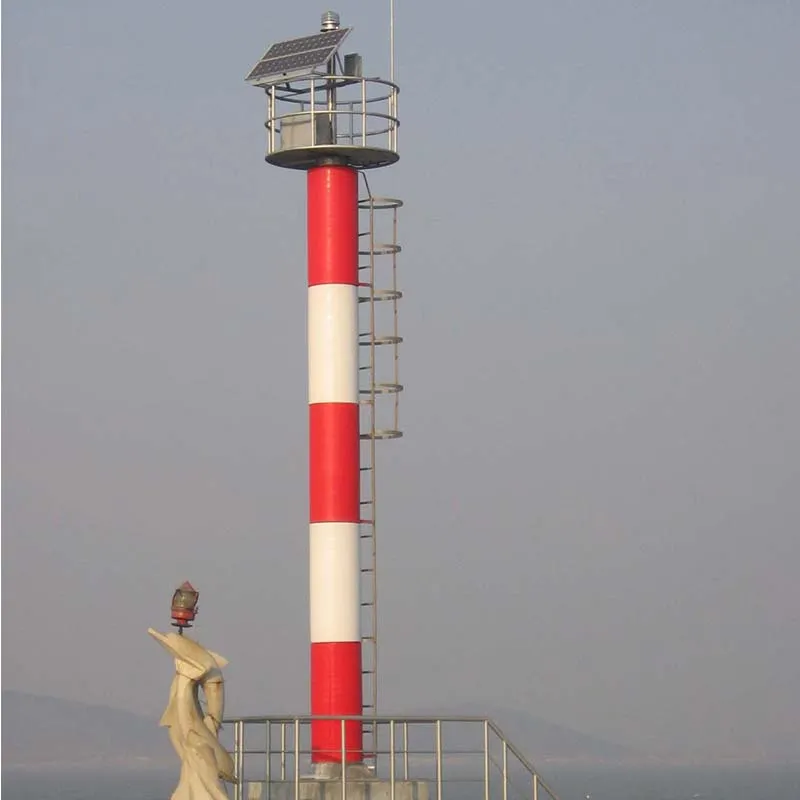
Marine beacon towers for bridges and marine structures are elevated lighting and marking systems installed on infrastructure that interacts with vessel traffic. Their purpose is to make fixed objects easier to identify at a distance, especially where channel width, current, fog, glare, or nighttime traffic increases collision risk. They are part of a broader family of marine navigation lighting for bridges and marine obstruction lighting systems, and they are often specified alongside reflectors, racons, and electronic aids. For many projects, the tower is the physical platform, while the beacon, lantern, or radar aid is the functional device mounted on it.
These systems are not one-size-fits-all. A tower used on a low-clearance bridge may need a different luminous intensity, color code, and mounting height than one installed on an offshore pile cluster or a coastal navigation marker. The correct selection depends on the waterway classification, vessel profile, visibility requirements, and local regulatory rules. That is why bridge safety lighting for waterways is usually treated as an engineering decision, not a standard catalog purchase.
Marine beacon towers support three practical objectives: vessel guidance, structure marking, and operational risk reduction. When a bridge pier or marine platform is clearly visible, mariners have more time to correct their course, and the probability of impact drops. For asset owners, that can translate into fewer emergency repairs, less downtime, and lower inspection burden after impact events. For contractors, it also means fewer redesign changes after site review.
They are especially relevant where marine traffic is mixed, fast-moving, or affected by changing tides and currents. In river mouths, harbor entrances, and narrow channels, even a well-built structure can become a navigation hazard if it is not visually obvious. Marine structure beacon towers are also common in coastal infrastructure warning lights applications where waves, spray, corrosion, and strong winds require a more durable elevated mounting strategy. The result is a system that serves both compliance and physical safety objectives.
A typical tower-based beacon system includes a structural mast or tower, a lighting head, a control cabinet, cabling, and sometimes power backup or remote monitoring. The tower height is selected to provide an unobstructed line of sight over nearby obstructions, while the light output is chosen to meet the visibility range needed at the site. In many projects, LED-based systems are preferred because they can support lower power consumption and longer maintenance intervals than legacy lamp technologies.
Compatibility matters as much as brightness. Some bridge beacon tower systems must integrate with dusk sensors, photocells, remote alarms, solar charging, or existing marine control networks. In larger harbor or offshore installations, the beacon may also need to work alongside electronic navigation systems such as racons or synchronized light arrays. If the tower cannot support the required cable routing, wind load, or access method, the project cost rises during installation and later maintenance.
| Beacon Type | Best Use Case | Range / Visibility | Tower Compatibility |
|---|---|---|---|
| Rotating beacon | Long-range directional marking | Medium to very high, depending on optics | Good for tall towers and open approaches |
| Racon | Radar identification for navigation | Radar-visible rather than visual range | Installed on towers with stable power and antenna space |
| Directional lantern | Channel-specific alignment and bridge marking | Defined sector visibility | Common on bridge beacon tower systems |
| Fixed LED beacon | General marine marking and obstruction warning | Short to medium visual range | Flexible for compact tower designs |
Selecting the right system starts with the site, not the product brochure. The key questions are how far vessels must see the structure, whether the site demands visual marking, radar identification, or both, and how often maintenance crews can safely reach the installation. Marine beacon towers for bridges and marine structures should be reviewed against corrosion exposure, wind loading, access constraints, and local lighting codes. That approach reduces the risk of choosing a tower that meets one requirement but fails in long-term field use.
A practical evaluation method includes three layers. First, define the navigation function: warning, channel alignment, obstruction marking, or bridge pier visibility. Second, define the physical environment: salt spray, vibration, wave impact, ice, and lightning exposure. Third, define the operating model: remote monitoring, manual inspection, or scheduled preventive maintenance. These factors determine whether the best option is a simple fixed beacon, a directional lantern, or a more complex tower with integrated control hardware.
Marine beacon towers for bridges and marine structures are elevated marking systems that improve the visibility of fixed marine assets to vessels. They are used when low-profile lights are not enough to provide a clear line of sight or when the structure must be seen from a longer approach distance. In many cases, they are installed as part of marine navigation lighting for bridges and marine obstruction lighting systems. The main purpose is to reduce ambiguity in waterways where infrastructure and traffic paths are close together.
A tower becomes especially useful when the structure is tall enough to require a higher mounting point or when the beacon needs a controlled viewing angle. On bridges, this often means marking piers, openings, and approach hazards. On marine structures, it may mean identifying the perimeter of a platform, breakwater, or jetty. The tower itself is the structural support, while the beacon system provides the optical or electronic signal.
Procurement teams should review tower systems using measurable criteria rather than general claims. Useful specifications include mounting height, ingress protection rating, operating temperature range, wind load design, power supply type, and service access method. For marine environments, corrosion resistance and hardware grade are essential because salt exposure can shorten service intervals if the wrong material is specified. If a product does not document these parameters clearly, risk moves from the supplier to the owner.
For project comparison, the most relevant data often includes luminous intensity, beam angle, flash pattern, electrical consumption, and maintenance interval. LED beacon lighting for offshore structures can reduce lamp replacement frequency, but only if thermal design and sealing quality support continuous operation. A common procurement mistake is focusing only on brightness and ignoring control compatibility or spare-part availability. That can create a lower initial purchase price but higher lifecycle cost over the next five to ten years.
Tower-based beacons create a different maintenance profile from low-mounted wall lights. The installation usually needs access planning, inspection intervals, cable checking, seal verification, and periodic cleaning of lens surfaces. In exposed waterfront locations, even a well-specified system can accumulate salt film, bird droppings, or vibration-induced loosening, all of which reduce effective visibility. This is where lifecycle planning becomes part of the engineering scope rather than a secondary issue.
Remote monitoring can reduce unnecessary site visits by showing light failure, power loss, or control faults before the next scheduled inspection. For ports and bridge owners, that matters because access windows are often limited by tidal conditions, vessel traffic, or traffic lane closures. A system with alarm output or telemetry support can lower unplanned maintenance calls and shorten fault response time. From a total cost perspective, the cheapest tower at purchase may be the most expensive over time if inspection access is difficult.
Marine beacon towers and generic marine lighting systems solve related but different problems. A bridge-mounted marine light may improve local visibility, but it does not always provide the elevation, direction control, or identification strength needed for wider approaches. A tower system is more suitable when the object must be seen from an offset channel or where nearby infrastructure creates visual clutter. In other words, the tower adds geometric advantage, while the light provides the signal.
The difference becomes important in mixed-use waterways. Where vessels need to distinguish bridge piers from channel boundaries and nearby moorings, a tower can carry a dedicated visual marker with better separation from ambient lighting. In contrast, a simple lighting system may be enough for small docks or low-risk shore installations. Choosing between the two depends on distance, obstruction complexity, and whether the site functions as a bridge hazard, a marine obstacle, or a general perimeter marker.
Bridge applications often require the most careful alignment between public safety and regulatory compliance. For that reason, bridge safety lighting for waterways is usually specified with clear color, flash pattern, and location rules. Marine structures such as jetties or pile-supported platforms may prioritize corrosion resistance and access simplicity more heavily than optical range. Small coastal facilities may choose a compact tower if the navigation corridor is short and maintenance budgets are limited.
Contractors tend to prefer systems that are predictable to install and easy to commission. Engineers often prioritize beam geometry, structural load, and control integration. Port operators usually focus on uptime, spare parts, and maintenance access. These buyer differences matter because the “best” solution for a design consultant may not be the best solution for the facility owner.
Ports should start with operational continuity and maintenance access. If a tower is difficult to inspect after installation, even a technically compliant system can become expensive to maintain. Engineers should verify structural loading, lighting classification, and compatibility with existing control systems before finalizing the layout. Contractors should check foundation tolerances, cable routing, hoisting access, and commissioning sequence early in the schedule.
For teams comparing suppliers, the most useful review points are documented test data, material specifications, wiring diagrams, and replacement-part availability. If the project includes a tower in a corrosive environment, ask for coating details, stainless steel grades, and any field service history in similar conditions. This is where HUAZHONG is relevant as a manufacturing reference point for project teams that need a supplier able to discuss structure, illumination, and installation factors together. A buyer should still validate the final specification against the site drawings and compliance requirements rather than relying on general product naming.
Choosing the right solution begins with four variables: visibility distance, structural exposure, compliance requirements, and maintenance access. If the waterway is narrow and the hazard is close to traffic, a directional lantern may be more useful than a wide-angle beacon. If the site has radar-based vessel traffic concerns, a racon may be added to the tower alongside the visual light. If the site is remote or expensive to access, remote monitoring becomes more valuable than a small reduction in purchase price.
A simple decision framework can help procurement teams compare options. Use rotating beacons when long-range visual attention is needed across a broad approach corridor. Use racons when radar identification is required in addition to visual marking. Use directional lanterns when the priority is precise channel marking at a bridge opening or around a navigation-critical obstruction. Use a fixed LED beacon when the site is smaller, the approach is shorter, and the maintenance plan needs to stay simple.
| Project Need | Recommended System | Reason |
|---|---|---|
| Long-range bridge approach marking | Rotating beacon tower | Strong directional visibility over wider approaches |
| Radar identification at critical structures | Tower with racon | Supports vessel radar recognition in poor visibility |
| Channel alignment near bridge spans | Directional lantern | Concentrates light on specific sectors |
| Small coastal or marina structures | Fixed LED beacon tower | Lower complexity and easier maintenance |
The installation phase determines whether the design performs as intended. Contractors should confirm foundation geometry, anchor bolt layout, cable entry points, and access clearance before delivery to the site. The beacon should be tested for electrical continuity, control logic, and alignment after mounting. If the project uses solar or backup power, charge-state and autonomy tests should be completed before handover.
A practical checklist includes the following items:
Verify tower foundation dimensions and anchor bolt positions against approved drawings.
Confirm the beacon height supports the required sight line and clearance.
Check cable routing, grounding, and surge protection before energizing.
Test flash pattern, intensity setting, and control response under load.
Record as-built coordinates, maintenance intervals, and spare-parts list.
These steps reduce commissioning delays and make the system easier to maintain later. They also help avoid one of the most common field problems: a tower that is structurally installed but functionally misaligned. In marine projects, a small alignment error can matter because the beacon may be seen from a moving vessel at a shallow angle, not from a stationary inspection point.
The business case for tower-based marking should be measured over the full life of the asset, not just the first invoice. Initial hardware cost is only one part of the equation; installation labor, access equipment, electrical integration, inspection frequency, and replacement cycles can represent a larger share of total cost. A system that reduces call-outs by even one or two visits per year can offset a higher initial price if the site is difficult to reach. That is especially true for offshore, bridge, and tidal locations where access windows are limited.
Lifecycle cost analysis should include energy use, lamp or LED replacement intervals, corrosion mitigation, and remote fault detection. If two systems have similar upfront prices, the one with longer service intervals and better monitoring usually offers lower ownership cost over a five-year or ten-year period. Procurement teams should ask suppliers for a maintenance schedule, spare parts list, and any test evidence that supports long-term service claims. That makes it easier to compare systems on a total cost basis rather than a single purchase figure.
Manufacturer evaluation should focus on documentation, traceability, and fit for the actual site. For marine beacon towers for bridges and marine structures, the supplier should be able to provide technical drawings, material specifications, compatibility information, and maintenance guidance. Buyers should also confirm whether the company supports custom tower dimensions, lighting configurations, and installation accessories. If the supplier cannot explain how the system integrates with the project’s electrical and structural requirements, the risk moves downstream to the installer.
When comparing suppliers, include warranty terms, spare-part lead time, and field service capability. It is also useful to check whether the manufacturer has experience with bridge safety lighting for waterways or marine obstruction lighting systems in similar environments. That history matters because a tower that performs well in a sheltered harbor may not perform the same way on an exposed bridge pier. HUAZHONG can be considered in that evaluation process when the project needs a supplier that can discuss tower fabrication, beacon mounting, and application-specific setup together.
In real projects, the value of a beacon tower comes from how well it fits the site geometry. A bridge spanning a busy channel may require more than one tower if vessel traffic approaches from multiple directions. A coastal structure with changing water levels may need the beacon placed high enough to remain visible above spray and seasonal conditions. A port installation may integrate the tower with other aids so that inbound traffic sees a consistent marking sequence.
That is why marine beacon towers for bridges and marine structures should be evaluated as part of the larger navigation system. The tower, the light source, the power supply, and the maintenance method all influence reliability. If any one of those elements is underspecified, the visible result may still look acceptable on paper but fail under field conditions. Proper design reduces that mismatch and gives operators a more predictable safety outcome.
Before purchase, buyers should confirm the required marking function, the expected approach distance, the exposure class, and the preferred maintenance model. They should also verify whether the project needs a simple visual beacon, a directional lantern, a racon, or a combined arrangement. For bridges, compliance review is usually the first filter; for marine structures, maintenance access and corrosion resistance may carry more weight. The right decision depends on all of these variables together, not on one spec line.
For ports, engineers, and contractors, the best buying process is to compare tower height, light type, mounting hardware, monitoring options, and lifecycle cost in the same worksheet. That creates a clearer picture of procurement risk and reduces later redesign. It also helps separate a low initial price from a genuinely efficient long-term solution. When those factors are reviewed together, the selection process becomes more defensible and easier to document.
Marine Beacon Towers for Bridges and Marine Structures are chosen to improve vessel visibility, support navigation safety, and protect fixed infrastructure in waterways where standard lighting is not enough. The right system depends on site conditions, visibility targets, compatibility with lighting and electronic navigation systems, and the cost of long-term maintenance. For many projects, the deciding factors are not just brightness or tower height, but compliance documentation, installation complexity, and lifecycle cost.
A practical selection process starts with the navigation function, then checks structural exposure, power and control compatibility, and maintenance access. Rotating beacons, racons, directional lanterns, and fixed LED beacons each solve different parts of the problem, so the best option depends on the project’s geometry and operating requirements. If you are evaluating a supplier, compare technical data, field service support, and replacement-part availability before committing. In projects where bridge safety lighting for waterways or marine obstruction lighting systems are critical, that structured approach produces a clearer and more defensible buying decision.
Previous: How to Choose the Right Marine Beacon Tower for Coastal Navigation
Next: None.
Copyright:@2020-2021

Comments Please sign in or sign up to post.
0
0 of 500 characters used