
Marine Beacon Towers are navigational aids for ports that help vessels identify channels, turns, hazards, and safe approaches in low-visibility or high-traffic waters. The main Types of Marine Beacon Towers Used in Ports and Waterways include fixed towers, floating beacons, illuminated towers, and specialized channel-marking structures, each serving a different operational role. In practice, these systems form part of a wider aids-to-navigation network that also includes harbor navigation markers, buoys, and solar marine beacon lights.
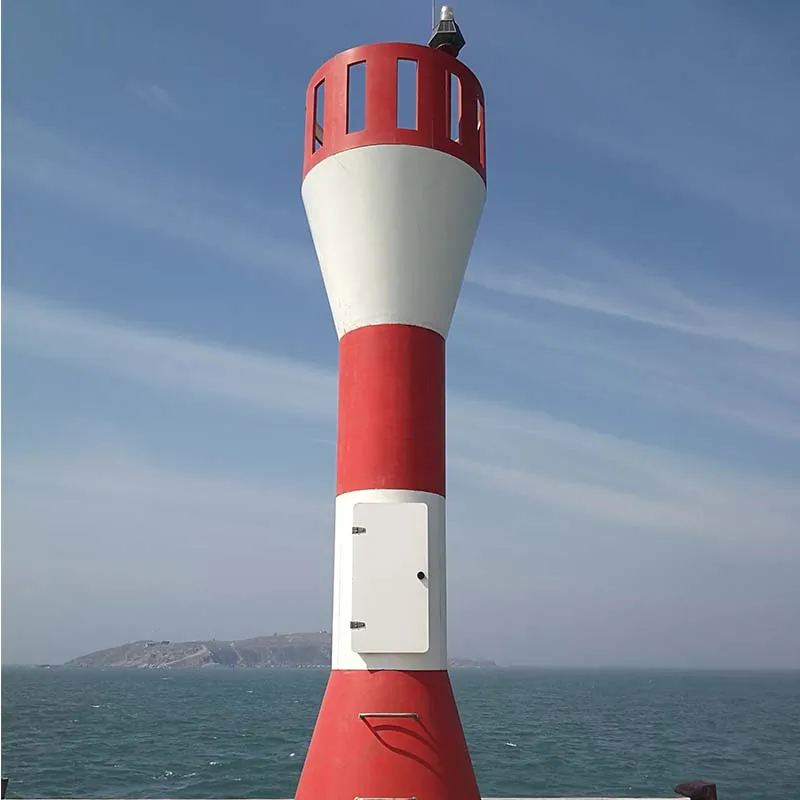
HUAZHONG marine navigation systems are typically evaluated on installation environment, mounting method, visibility range, power source, and maintenance interval. For ports, harbors, and inland waterways, the correct tower type depends on the channel layout, vessel size, traffic frequency, and the need for redundancy during power or weather events. This guide explains the main types, how they are used, and how procurement teams can compare options with fewer assumptions.
A marine beacon tower is a fixed or semi-fixed navigational structure that carries a light, reflector, daymark, or signal device to mark a route or hazard. In most ports and waterways, the tower is part of a channel marking system rather than a standalone asset. Its purpose is to give mariners a clear reference point for alignment, boundary recognition, and safe passage.
From a taxonomy standpoint, marine beacon towers are usually classified by installation environment, visual signaling method, and power configuration. That means a tower mounted on a pier, a pile-driven structure in shallow water, and a floating beacon all belong to the same functional family, but they solve different site constraints. For operators comparing marine beacon towers 2026 models or planning marine beacon towers for commercial waterways, the right category depends on the environment, not just the light output.
The main Types of Marine Beacon Towers Used in Ports and Waterways can be grouped into four practical categories: fixed towers, floating beacons, illuminated towers, and specialized rotating or directional visual aids. Each type has a different structural profile, maintenance burden, and visibility strategy. The right choice often depends on whether the channel is stable, tidal, dredged, ice-prone, or exposed to vessel wake.
Fixed beacon towers are installed on land, piles, breakwaters, jetties, or permanent marine foundations. They are chosen when the marking point does not need to move and when the port wants consistent alignment over long periods. These towers are common in harbor entrances, turning basins, and channel bends because they hold position with minimal drift risk.
For ports with repeated traffic patterns, fixed towers reduce alignment uncertainty because the light or mark remains in the same spatial reference. They are often used with a solar-powered or grid-powered lantern head, depending on access to utility power. When comparing marine beacon towers for ports, fixed structures usually offer the strongest fit for stable infrastructure and lower relocation frequency.
Floating beacon towers sit on buoyant bases and are anchored in place with moorings or chains. They are useful where water depth changes, seabed conditions are difficult, or construction of a permanent base is not practical. In channels that shift due to dredging or sediment movement, floating beacons can be repositioned with less civil work than fixed structures.
The operational trade-off is that floating systems require more inspection because mooring wear, marine growth, and storm displacement can change their alignment. They are often selected for temporary navigation changes, approach lanes under maintenance, or seasonal routes. Compared with fixed units, floating aids offer flexibility, but they usually demand a tighter maintenance schedule and more frequent positional verification.
Illuminated beacon towers use a light source to improve detection at night, in rain, or in fog-prone zones. The light may be solar marine beacon lights, battery-backed LED modules, or grid-fed fixtures. In dense port traffic, illumination is not optional in many locations because visual recognition at night can determine whether a vessel stays in channel or clips an edge.
The most common modern configuration uses LED optics with solar charging and backup storage, which reduces wiring complexity in remote sites. For buyers reviewing marine beacon tower comparison data, illuminated systems are usually evaluated by luminous intensity, battery autonomy, lens pattern, and maintenance interval. If the site needs continuous visibility but has limited access for cabling, illuminated towers often become the default option.
Rotating or directional visual aids are used when a simple steady light is not enough to communicate route alignment or sector changes. These systems may use a rotating optic, sector light, or directional beam arrangement to indicate safe and unsafe bearings. In channel marking systems, this is valuable where a vessel must line up with a narrow corridor or avoid a shoal boundary.
These aids are less common than fixed or illuminated beacon towers, but they are important in specialized waterways with tight geometry. They help distinguish one route from another without adding more structures to the waterline. In a marine beacon tower guide, this category matters because it shows that beacon towers are not just poles with lights; they are functional signaling tools with distinct optical logic.
Marine beacon towers function as part of a layered aids to navigation system, not as isolated equipment. A port usually combines towers, buoys, signs, sound signals, and charts so that multiple cues point to the same safe route. This redundancy matters because fog, glare, wakes, and reflections can reduce the reliability of any single signal.
A beacon tower works through three linked elements: position, visibility, and interpretation. First, the tower is placed at a reference point that marks a boundary, turn, or hazard. Second, the tower uses a daymark, light, reflector, or sector signal to make it visible. Third, mariners read the signal against charted information and local rules to decide whether they are on the safe track.
For many ports, this is the difference between a purely visual marker and a true operational safety device. The tower is not just seen; it is read in relation to the channel geometry. That is why marine signaling equipment must be selected with the channel width, approach speed, and vessel draft in mind.
Installation environment is one of the most important differences among marine beacon towers because it determines foundation type, service access, and expected wear. A tower installed on a quay faces different loads than one mounted offshore or on a floating platform. Wind exposure, salt spray, splash zone corrosion, and impact risk all affect the design.
For small ports, a compact fixed tower may be enough if the approach is short and the turning radius is wide. For commercial waterways with longer ranges and deeper traffic lanes, taller structures or elevated light heads may be needed. In practical procurement, the installation environment often decides the design before optical performance is even compared.
Material selection has a direct effect on service life, corrosion rate, and inspection cost. Marine beacon towers are often built with hot-dip galvanized steel, stainless steel components, aluminum, or reinforced concrete, depending on load and exposure. Towers near saltwater usually need corrosion-resistant finishes and fasteners because chloride exposure accelerates degradation.
Mounting method is equally important. A pile-mounted tower can be suitable in shallow water, while a deck-mounted unit may be better on a pier or breakwater. Maintenance planning should also include access for lamp replacement, battery checks, seal inspection, and structural review after storms. For buyers comparing marine beacon tower pricing, the cheaper initial structure can become more expensive if access is difficult and inspection intervals are long.
Port planners usually choose beacon tower types by balancing visibility, power availability, and operational redundancy. Visibility depends on light intensity, mounting height, surrounding glare, and whether the site experiences fog or heavy rain. Power selection often comes down to solar, grid, or hybrid systems, with solar marine beacon lights being favored in remote or hard-to-wire locations.
Redundancy matters because navigation aids must remain visible during outages, battery failures, or maintenance windows. A port may use a fixed tower with solar backup, or combine a primary illuminated tower with secondary harbor navigation markers to preserve route awareness. In practice, the best solution is often the one that keeps visibility stable with the fewest intervention points over the full life cycle.
Marine beacon towers and lighthouses both support vessel guidance, but they operate at different scales and with different missions. A lighthouse usually serves a broader coastal or entrance-warning function with a long visual range, while a beacon tower is often placed to mark a specific channel, hazard, or alignment point. In other words, lighthouses are strategic coastal references, while beacon towers are operational markers inside a port or waterway system.
The difference also appears in structure, power, and maintenance scope. Lighthouses are often taller, more complex, and historically associated with full-time station infrastructure. Beacon towers are generally smaller, more site-specific, and easier to integrate into channel marking systems. For buyers asking “marine beacon towers vs lighthouses,” the answer is usually about use case, not superiority.
The most useful performance metrics for marine beacon towers are visibility range, signal clarity, autonomy time, structural stability, and service interval. Ports should ask for measurable data rather than general claims. For example, LED lantern modules are often compared by beam pattern, luminous intensity, and battery runtime, while tower structures are reviewed by load rating, corrosion protection, and mounting compatibility.
A practical evaluation table can help teams compare options before field testing.
| Evaluation Factor | What to Check | Why It Matters |
|---|---|---|
| Visibility | Light pattern, mounting height, daytime mark contrast | Determines whether mariners can identify the aid in poor conditions |
| Power | Solar, grid, or hybrid backup | Affects outage resilience and maintenance frequency |
| Structure | Fixed, floating, or directional design | Impacts stability and installation cost |
| Materials | Steel, aluminum, concrete, stainless hardware | Drives corrosion resistance and long-term upkeep |
| Maintenance | Access method, inspection interval, spare parts | Influences total cost of ownership |
| Redundancy | Backup power or secondary markers | Reduces single-point failure risk |
When evaluating solar marine beacon lights, ports often prefer systems with battery backup because a 24-hour visibility gap can create operational delays and rerouting. For marine beacon towers for waterways with limited shore access, solar power often reduces cabling work and eases installation. However, in shaded sites or high-latitude locations with weak winter irradiance, hybrid power may be more reliable than solar-only operation.
Small ports usually need one or two fixed beacons to define entry alignment and shallow-water boundaries. Commercial terminals often require a more complete network of channel marks, illuminated towers, and redundancy points to handle higher vessel volumes. Inland waterways may place more emphasis on flood resilience, current resistance, and seasonal repositioning.
For marine beacon towers for small ports, the simplest acceptable structure is often the most cost-effective one. For marine beacon towers for commercial waterways, the system must support larger vessels, wider approach angles, and longer sightlines. That is why a one-size-fits-all model rarely performs well across different maritime environments.
The right beacon tower should be judged by total cost of ownership, not only purchase price. Initial capital cost includes tower fabrication, foundations, transport, installation, and commissioning. Operating cost includes inspections, light replacement, battery replacement, corrosion treatment, and emergency repair after storms or impacts.
Solar-powered systems can reduce cabling and trenching costs, especially in remote locations or across difficult shorelines. But if the site has persistent shading or high seasonal cloud cover, additional batteries or hybrid power may raise the budget. A port that chooses the wrong tower type may spend less in year one but more over a 5- to 10-year operating period because of frequent maintenance and alignment corrections.
A useful procurement approach is to compare three figures: upfront build cost, annual maintenance cost, and expected service interval. If a floating beacon reduces installation work but needs more frequent repositioning, the total cost may exceed that of a fixed tower over time. That is why marine beacon tower pricing should always be analyzed together with maintenance access and duty cycle.
A structured checklist helps reduce selection errors and delivery risk. The first question is whether the site is fixed, tidal, dredged, or temporary. The second is whether visibility must be continuous at night or only during peak traffic windows. The third is whether the port has utility power, sufficient sunlight, or neither.
Use the checklist below during early planning.
Site condition: fixed shoreline, shallow water, soft seabed, or movable channel.
Visibility need: daytime marking, night marking, or 24-hour signaling.
Power source: grid, solar, or hybrid backup.
Maintenance access: boat access, dock access, or limited-access offshore site.
Redundancy requirement: single beacon, paired beacons, or layered channel marking systems.
These points help operators compare marine beacon tower examples without treating every site as identical. They also reduce the chance of choosing a structure that looks suitable on paper but fails in field maintenance. For procurement teams, this is often the most practical way to avoid design mismatch.
In a narrow harbor entrance, a pair of fixed illuminated towers may define the inbound line and the edge of the safe passage. In a dredged shipping channel, floating beacons can mark temporary route changes while construction is active. In a river port with strong current and seasonal water-level variation, hybrid systems can combine a fixed land tower with secondary floating marks.
These examples show that the tower type is tied to channel geometry and operating rhythm. They also show why channel marking systems are built as networks rather than isolated devices. A good layout does not just mark a point; it helps vessels understand direction, depth boundaries, and route continuity.
When assessing a supplier such as HUAZHONG, buyers should ask for material specifications, corrosion protection method, power configuration, and documented inspection procedures. A clear manufacturing file should include welding or fabrication standards, coating thickness targets, lamp module ratings, and spare-part availability. The goal is to reduce uncertainty before installation begins.
Quality control should cover dimensional checks, finish inspection, electrical verification, and simulated environmental exposure if available. Delivery risk management also matters because beacon towers are often tied to dredging schedules, berth openings, or seasonal navigation windows. A delayed tower can create temporary route ambiguity, so production lead time and shipping coordination should be evaluated alongside technical performance.
A practical marine beacon tower review should answer three questions: does the structure fit the site, does the light or mark remain visible in local conditions, and can the system be maintained without excessive access cost. These are the factors that affect compliance and operating expense over time. If any one of the three is weak, the system may still function, but the economics and reliability will change.
Ports should also check whether the supplier offers compatible components for future expansion. If a channel is likely to grow, the tower system should support additional beacons or upgraded lantern heads without complete replacement. That flexibility is especially important in expanding terminals and long-term waterway projects.
If your priority is stable route marking, choose a fixed beacon tower. If your priority is fast repositioning, choose a floating beacon. If your priority is night visibility with reduced cabling, choose an illuminated tower with solar marine beacon lights or hybrid power. If your priority is directional guidance, choose a specialized sector or rotating visual aid.
| If you need... | Choose... | Because... |
|---|---|---|
| Permanent channel marking | Fixed beacon tower | It stays aligned with the route and needs less repositioning |
| Temporary or changing channels | Floating beacon tower | It can be moved as the channel shifts |
| Low-cabling remote installation | Solar illuminated tower | It reduces grid dependency |
| Narrow or complex bearings | Directional visual aid | It communicates alignment more clearly |
| Lower life-cycle maintenance | Corrosion-resistant fixed structure | It can reduce repeat service work |
This decision logic works best when paired with local data on tides, vessel size, and seasonal weather. It also helps teams compare marine beacon tower alternatives without mixing up structural type and optical type. In most cases, the best answer is not one product family, but a combination of beacon tower types across the same waterway.
Understanding the Types of Marine Beacon Towers Used in Ports and Waterways helps operators, engineers, and port planners choose the safest and most effective navigation solution. Fixed towers, floating beacons, illuminated towers, and directional visual aids each solve a different operational problem, and the right selection depends on channel geometry, power availability, maintenance access, and redundancy needs. For ports, the key is to match the tower to the environment instead of choosing by appearance alone.
Marine beacon towers are most effective when they are treated as part of a broader navigation system that includes channel marking systems, harbor navigation markers, and other aids to navigation. For buyers comparing marine beacon towers for ports or marine beacon towers for waterways, the next step is to document site conditions, define visibility requirements, and compare life-cycle cost, not just purchase cost. That approach gives teams a clearer path to a compliant and maintainable solution.
Previous: None.
Next: How to Choose the Right Marine Beacon Tower for Coastal Navigation
Copyright:@2020-2021

Comments Please sign in or sign up to post.
0
0 of 500 characters used